.png)
Pitta imbalance symptoms: pitta imbalance symptoms explained
- DeVeNdRa NaTh
- Dec 20, 2025
- 11 min read

When your pitta dosha is out of kilter, you'll often notice symptoms tied to excess heat. Think fiery issues like acid reflux, angry skin rashes, and a short temper. These are all clues that your body's internal "fire" element is burning too hot, throwing your digestion, emotions, and overall health out of balance.
What Is Pitta And Why Does It Matter
Picture the Pitta dosha as your body's inner furnace. It's the powerful, transformative energy that governs your metabolism and digestion. When this fire is perfectly balanced, it's like a steady, controlled flame. It efficiently "cooks" your food, keeps your mind sharp, and gives you a vibrant glow and focused drive.
Someone with a healthy Pitta constitution often has natural leadership qualities, a quick wit, and a strong digestive system. Their inner fire fuels their vitality, helping them process not just meals, but thoughts and emotions with incredible precision.
But what happens when that flame roars into a blaze? That's when you get a pitta imbalance. Just like a wildfire can scorch the earth, too much Pitta can burn you out from the inside.
The Qualities of Pitta
To really get a handle on pitta imbalance, you need to understand its core nature. Ayurveda describes Pitta through a few key qualities that show up in both our physical and mental states:
Hot: This is the most obvious one! It governs body temperature, digestive fire (agni), and that feeling of warmth.
Sharp: This can mean a sharp, focused intellect, but when out of balance, it can turn into sharp, cutting words or a critical, judgemental attitude.
Light: Pitta carries an intensity that can sometimes lead to light-headedness or a strong sensitivity to bright light.
Oily: In balance, this gives us soft skin and smoothly functioning joints. In excess, it can show up as oily skin and hair.
When these qualities get dialled up too high, the well-tended flame becomes an inferno. The very same fire that fuels ambition and sharpens the mind can turn into burnout, frustration, and physical inflammation if left unchecked.
Recognising this is the first step. Once you understand these qualities, you can start to connect the dots and see the physical and emotional signals your body is sending you. For those needing a deeper reset, it's worth exploring what Panchakarma is in Ayurveda and its five ancient therapies, as these ancient practices offer a profound way to detoxify and bring the doshas back into harmony.
Recognising The Physical Symptoms Of A Pitta Imbalance
When your inner fire blazes out of control, your body is the first to send up smoke signals. Think of it like an engine running too hot—it starts to show signs of stress. These physical symptoms of a Pitta imbalance are tangible clues that things have become too heated internally, often showing up in predictable patterns tied to inflammation, acidity, and heat.
The first signs are usually felt in the digestive system, which is the very heart of Pitta's domain. When there’s too much fire, it can boil over, creating uncomfortable and acidic conditions throughout the body.
Fiery Digestion And Gut Distress
An aggravated Pitta can turn the gentle cooking fire of digestion into an absolute inferno. This excess heat translates directly into hyperacidity, which you’ll likely feel as a burning sensation in your stomach and chest.
Some of the most common digestive red flags include:
Heartburn and acid reflux: That frequent, sour, or burning feeling rising in your throat.
Loose or urgent stools: The internal heat can speed up digestion far too much, leading to diarrhoea or overly soft bowel movements.
Intense hunger or thirst: A raging internal fire demands constant fuel, leaving you feeling ravenous or unquenchably thirsty.
These aren't just minor annoyances; they're your body's way of telling you something is off-kilter. In India, digestive complaints like heartburn are consistently cited as primary indicators of Pitta aggravation, right alongside skin issues and emotional irritability.
Inflamed Skin And Irritated Eyes
The heat from a Pitta imbalance rarely stays contained in your gut. It tends to radiate outwards, often showing up on your skin. This internal inflammation looks for an escape route, which can result in red, angry skin conditions that are both frustrating and uncomfortable.
You might suddenly notice acne breakouts, mysterious rashes, rosacea, or even just a general reddish flush to your complexion. Your eyes, another key site for Pitta, can also give you clues. They might become bloodshot, feel gritty and irritated, or become extremely sensitive to bright light.
This concept map breaks down the core qualities of Pitta, showing how it manifests when both balanced and imbalanced.
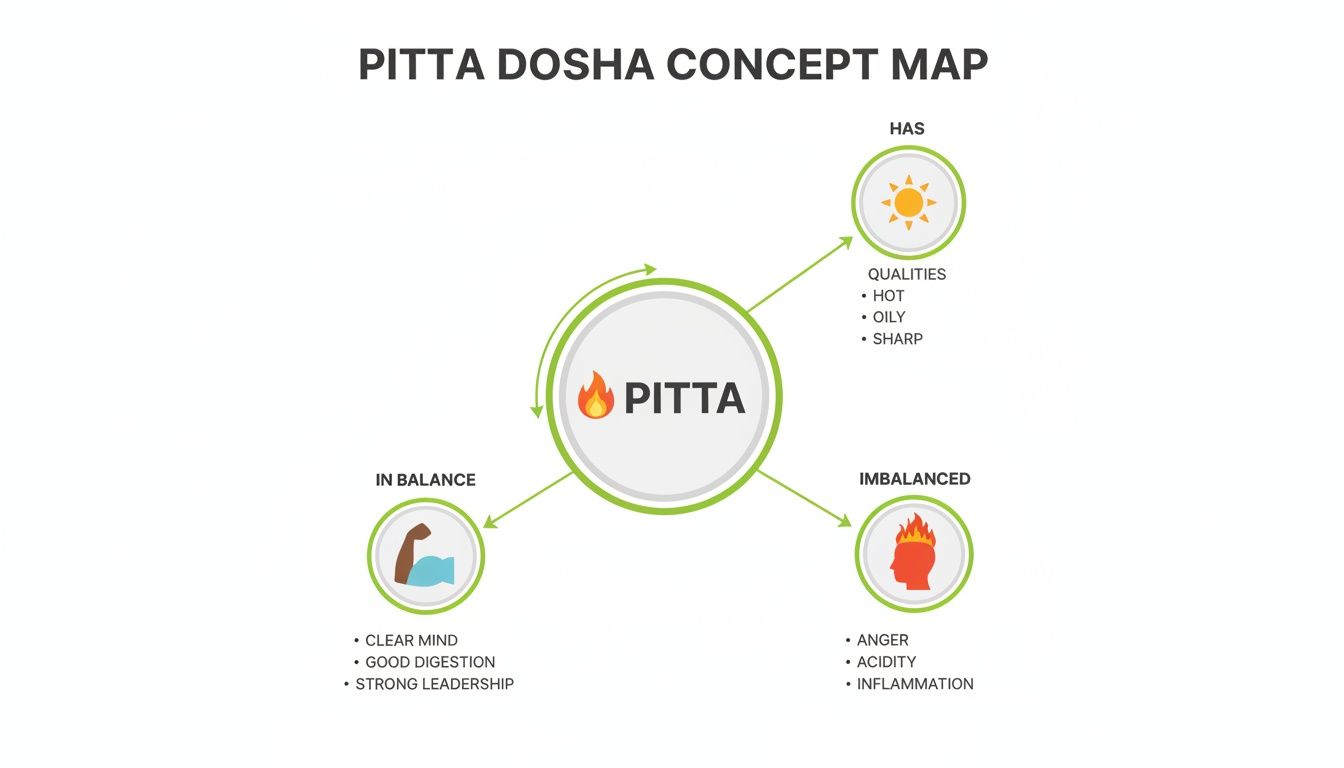
As the visual shows, there's a clear line connecting Pitta's fiery nature to imbalanced states like skin inflammation and acidity.
Widespread Bodily Heat And Inflammation
Beyond the gut and skin, excess Pitta can create a general feeling of being overheated from the inside out. You might find yourself sweating excessively even in cool weather, or feeling completely intolerant of the heat. This systemic heat can also settle into your joints, contributing to inflammatory conditions like arthritis.
A key takeaway is that most conditions ending in "-itis" (like gastritis or dermatitis) signal inflammation—a classic hallmark of high Pitta.
For a clearer picture, this table organises the physical symptoms by the body system they affect.
Common Physical Symptoms Of Excess Pitta
Body System | Primary Symptoms | Underlying Cause (Excess Heat/Acidity) |
|---|---|---|
Digestive System | Acid reflux, heartburn, diarrhoea, intense hunger/thirst | Excess stomach acid and accelerated metabolism. |
Skin & Hair | Rashes, acne, rosacea, skin inflammation, premature greying or hair loss | Internal heat trying to escape, damaging hair follicles. |
Eyes | Redness, irritation, light sensitivity, bloodshot appearance | Heat accumulating in one of the primary sites of Pitta. |
Circulatory System | Hot flushes, excessive sweating, strong body odour, feverish feelings | The body’s attempt to cool itself down by releasing heat. |
Musculoskeletal System | Joint inflammation (e.g., arthritis), tendonitis | Inflammation settling into the body's tissues and joints. |
Recognising these patterns is the first and most crucial step. Other systemic signs like strong, unpleasant body odour or premature hair thinning are also clear indicators. For specific concerns like this, exploring an Ayurvedic treatment for hair loss can offer targeted solutions. By learning to spot these widespread physical cues, you can begin the work of cooling the fire and restoring your body’s natural harmony.
How An Aggravated Pitta Affects Your Mood

When Pitta dosha flares up, it doesn't just warm your body; it can set your emotions ablaze. Think of it like having a perpetually short fuse. The same sharp, intense qualities that make you a focused and driven person when in balance can quickly morph into irritability and impatience when that inner fire gets out of control.
This emotional heat often shows up as frustration and a tendency to anger quickly. You might find yourself snapping over small things, speaking with a sharp, critical tone, or feeling a relentless urgency that makes relaxation feel impossible. These are the classic psychological pitta imbalance symptoms.
This internal intensity can also steer your behaviour. An out-of-balance Pitta might push you to become overly competitive, judgemental of yourself and others, or a relentless perfectionist. It can feel like your mind is always "on," making it difficult to switch off from work or quiet obsessive thoughts.
The Mind-Body Connection in Pitta Imbalance
In Ayurveda, the link between a fiery body and a fiery mood is direct and undeniable. The very same heat that can cause acid reflux is what fuels that feeling of impatience and a quick temper. When Pitta is high, your mind simply mirrors the body's state of agitation and inflammation.
This isn’t just ancient theory, either. Modern research has shown a significant link between Pitta imbalance and poorer mood, higher anxiety, and increased stress. You can discover more insights about these psychological findings from scientific studies.
When your system is overheated, your emotional responses become supercharged. Small sparks of annoyance can quickly become roaring fires of anger, making it difficult to maintain a calm and compassionate outlook.
This constant mental heat can leave you feeling perpetually on edge. Spotting these signs is the first step, because chronic stress is one of the biggest culprits behind doshic imbalances. Understanding this relationship is a key part of getting back to centre, which you can explore further in our practical guide to stress treatment in Ayurveda. By tackling the root cause—the excess fire—you can begin to cool both your body and your mind.
The Link Between Pitta Imbalance and Poor Sleep

If you're tossing and turning every night, that's a classic—though often overlooked—sign that your Pitta dosha is in overdrive. When that inner fire burns too brightly, it doesn't just switch off when your head hits the pillow. Instead, it fuels a busy, analytical mind, making it nearly impossible to drift off as you mentally replay the day's events or meticulously plan tomorrow.
This common pitta imbalance symptom leaves you feeling wired yet exhausted. Even if you manage to fall asleep, the excess heat can jolt you awake later on.
The Pitta Time of Night
According to Ayurveda's internal clock, the hours between 10 PM and 2 AM are governed by the Pitta dosha. If you find yourself consistently waking up during this specific window feeling hot, restless, or parched, it's a huge clue that your Pitta is out of balance. Your body is meant to be in a deep state of processing and metabolising, but the excess heat is literally waking you up.
This kind of fragmented sleep is something I see all the time in clients with high Pitta. It’s no surprise that studies show Pitta-dominant people frequently report disturbed sleep, vivid dreams, and generally poor sleep quality.
The sharp, intense nature of Pitta can also manifest as confrontational or overly vivid dreams, preventing your mind from ever reaching a state of true, restorative rest. This lack of quality sleep can create a vicious cycle, leading to feelings of nervous weakness during the day.
A simple yet effective way to manage the internal heat is to adjust your environment. Choosing specialised sheets designed for hot sleepers can make a world of difference in regulating your body temperature for a more comfortable night. For a deeper dive into managing daytime fatigue, take a look at our guide on https://www.jjherbals.com/post/nervous-weakness-treatment-in-ayurveda-a-holistic-guide.
Here's a rewritten version of the section, crafted to sound like it was written by an experienced human expert in Ayurveda.
Is It Your Nature, or an Imbalance?
Before we dive into the symptoms of an aggravated pitta, there’s a really important distinction to make. We need to tell the difference between your innate constitution (Prakriti) and a temporary state of imbalance (Vikriti).
Think of your Prakriti as your factory setting—the unique blend of doshas you were born with. If you're a pitta-dominant person, being driven, focused, and sharp-witted is just part of your DNA. It's who you are.
This fiery nature isn't a flaw; it's your superpower. The problem arises when this fire gets out of control. Your natural drive morphs into burnout, your sharp focus becomes harsh criticism, and that strong digestive fire flares into acid reflux or heartburn. Being a pitta type doesn’t mean you have a pitta problem.
Working With Your Blueprint, Not Against It
The goal is never to change who you are at your core. It's about spotting the signs when you've drifted too far from your natural, healthy balance. Interestingly, modern science is starting to catch up with this ancient wisdom. Research has found real genetic links to the traditional Prakriti types, suggesting there's a biological basis for these classifications.
One study on Indian groups found that people identified as pitta-types had symptom patterns that were statistically significant for that dosha. If you're curious about the science, you can read the full research about these genetic correlates for a deeper look.
Grasping this difference is truly empowering. It gives you permission to stop fighting your own nature and instead learn how to manage your inner fire. By honouring your core constitution, you can find wellness practices that feel right for you—gently guiding yourself back to balance without trying to be someone you're not.
Simple Lifestyle Changes To Pacify Pitta
Once you’ve started to recognise the tell-tale signs of excess heat, the next step is to cool those flames. The Ayurvedic approach is beautifully simple: use opposites to create balance. To counter the hot, sharp, and intense nature of an aggravated Pitta, you need to bring more cool, calming, and moderate influences into your daily life.
This doesn’t mean you have to overhaul everything overnight. In fact, small, consistent shifts in your routine can make a huge difference in managing the symptoms of a Pitta imbalance. It all starts with what you put on your plate and flows right into how you move, work, and rest.
Adopt a Pitta-Cooling Diet
What you eat is probably the most powerful tool you have for pacifying Pitta. The goal is to favour foods that are naturally cooling and hydrating while steering clear of things that just add more fire to your system. Imagine you’re trying to soothe a bonfire – you’d choose cooling logs, not flammable kindling.
Start by bringing more of these tastes into your meals:
Sweet: This doesn’t mean sugary junk food! Think of naturally sweet foods like ripe mangoes, sweet grapes, basmati rice, milk, and especially ghee.
Bitter: This taste is a lifesaver for Pitta. Leafy greens like kale, rocket, and dandelion greens are fantastic for cleansing the liver, which is a primary seat of Pitta in the body.
Astringent: Foods like beans, lentils, and pomegranates have a slightly drying, puckering quality that helps to absorb excess heat and oiliness.
At the same time, you'll want to reduce foods that are pungent (like spicy chillies), sour (think vinegar and heavily fermented foods), and overly salty. These tastes directly dial up the heat and acidity in your body.
Adjust Your Daily Routine
It's not just about food; how you live your day-to-day life matters immensely. A fast-paced, high-pressure, go-go-go lifestyle is pure fuel for a Pitta fire. Building in moments of genuine calm and moderation is absolutely essential for keeping your cool.
The core idea here is to release the pressure valve. Pitta thrives on intensity, so consciously choosing softness and ease in your activities provides the perfect antidote to burnout and irritation.
Think about moderating your exercise. High-intensity, competitive workouts, especially during the hottest part of the day, can send Pitta through the roof. Instead, why not opt for a swim, a gentle walk in nature first thing in the morning, or a calming yoga session?
Spending time near water—be it a lake, a river, or the ocean—is exceptionally soothing for an overheated system. And finally, prioritise actual downtime. Schedule breaks into your day where you do absolutely nothing, allowing your sharp, focused mind a chance to truly rest and recharge.
Got Questions About Pitta Imbalance? We've Got Answers
Let's tackle some of the most common questions that come up when you're trying to get a handle on an aggravated pitta dosha.
How Long Does It Take to Balance an Out-of-Whack Pitta?
This is a great question, but the honest answer is: it depends. Think of it like putting out a fire. A small spark can be doused in moments, but a bigger blaze takes more time and effort.
If you've just started noticing minor signs like a bit of heartburn or feeling irritable, you might feel a significant shift within a few weeks of making consistent changes. For more stubborn, long-standing issues, it could take several months of dedicated effort. The most important thing is consistency—and truly paying attention to how your body feels along the way.
Can I Have a Pitta Imbalance if My Main Dosha Isn't Pitta?
Yes, absolutely! Your primary constitution, or Prakriti, is your baseline, but any dosha can get thrown out of balance (Vikriti).
Imagine a naturally cool-natured Vata person. If they spend a summer eating spicy food, working under high-pressure deadlines, and spending too much time in the sun, they can easily develop classic pitta symptoms like skin rashes, acid reflux, or a short temper. Your environment and choices can aggravate any dosha, regardless of your inherent nature.
What Are the Absolute Worst Foods for a Pitta Imbalance?
When pitta is high, you want to avoid adding more fuel to the fire. The biggest culprits are foods that are excessively pungent (spicy), sour, and salty.
Steer clear of things like chilli peppers, heavy vinegar-based dressings, overly fermented foods, and very salty snacks. These foods directly increase heat and acidity in the body, which is exactly what you're trying to calm down.
For natural support in restoring your body's balance and vitality, explore the Ayurvedic solutions from JJ Herbals. Learn more about our wellness approach.
Comments