.png)
Treatment for infertility in ayurveda: A holistic path to conception

When you're trying to start a family, the road can sometimes feel longer and more complicated than you expected. Ayurveda offers a perspective that's both ancient and refreshingly different. It sees infertility not as a singular problem to be "fixed," but as a sign that the body's natural balance needs a little help.
The goal isn't a quick, temporary solution. Instead, Ayurveda works to restore your body’s innate harmony, creating a truly fertile and welcoming environment for conception. It's about strengthening your reproductive health from its very foundation.
Understanding Infertility Through The Ayurvedic Lens
In modern medicine, we tend to look at fertility through a microscope, focusing on specific hormones, sperm counts, and the physical mechanics of the reproductive organs. Ayurveda zooms out for a much wider view. It understands that fertility is the beautiful result of a body that's healthy and working in synergy.
Think of it like tending a garden. You wouldn't just toss a seed onto dry, nutrient-starved soil and hope for the best. You'd spend time preparing the ground first—enriching it, making sure it's watered, and clearing out any weeds. Ayurveda applies this exact logic to creating a new life. Before a healthy conception can happen, the body itself—the "soil"—has to be ready.
The Foundation of Fertility: Shukra Dhatu
At the very core of Ayurvedic reproductive health is the concept of Shukra Dhatu, the reproductive tissue. In Ayurveda, this is considered the seventh and most refined tissue that our body produces from the food we eat. It's the ultimate essence of our physical well-being.
According to Ayurvedic philosophy, the health of your Shukra Dhatu is a direct reflection of your overall vitality. When all preceding tissues are healthy, Shukra Dhatu thrives, paving the way for healthy sperm and ovum.
Getting this right depends on two critical factors working together:
Agni (Your Digestive Fire): A strong Agni is like a powerful, efficient furnace. It ensures your food is properly broken down so nutrients can be absorbed to build healthy tissues, all the way up to nourishing your Shukra Dhatu.
Balanced Doshas (Vata, Pitta, Kapha): These three fundamental energies govern every single function in your body. When they're in harmony, everything runs smoothly. But when they fall out of balance, they can disrupt menstrual cycles, cause inflammation, or create physical blockages that get in the way of conception.
Ayurvedic vs Conventional Approaches to Infertility
The focus on preparing the body's foundation is what truly sets Ayurveda apart. It doesn't just chase symptoms; it rebuilds health from the ground up. The following table gives a high-level comparison to help you understand the fundamental differences in philosophy between the two approaches.
Aspect | Ayurvedic Approach | Conventional Approach (ART/IVF) |
|---|---|---|
Core Philosophy | Treats the entire body as an interconnected system. Aims to restore natural balance for conception. | Focuses on overcoming specific reproductive obstacles (e.g., hormonal issues, blockages). |
Primary Goal | Enhance overall health to improve the body's innate ability to conceive and carry a pregnancy. | Achieve pregnancy, often through assisted reproductive technologies. |
Methodology | Uses diet, lifestyle changes, herbal remedies, and detoxification (Panchakarma) to prepare the body. | Employs hormonal stimulation, surgical procedures, and lab-based fertilization. |
Timeframe | A gradual process, often taking several months to see results as the body rebalances. | Follows a structured, cyclical timeline based on menstrual cycles and treatment protocols. |
Treatment Focus | Addresses root causes like poor digestion (Agni), Dosha imbalances, and toxin buildup. | Targets specific symptoms or diagnosed conditions like low sperm count or ovulatory dysfunction. |
Side Effects | Generally minimal and often results in improved overall well-being. | Can include hormonal side effects, emotional stress, and risks associated with medical procedures. |
Ultimately, Ayurveda's approach is empowering. In India, where primary infertility is estimated to affect 8-10% of couples, this holistic system offers a profound and effective alternative. It’s why you see Kerala-based brands like JJ Herbals drawing on these time-tested principles to help people with modern fertility challenges. You can explore more about Ayurvedic fertility success rates to get a better picture.
The core idea is both simple and powerful: a body in balance is a body ready for new life. By strengthening your digestive fire and harmonising your doshas, you create an internal ecosystem where your reproductive tissues are strong and conception can happen naturally.
Identifying The Root Causes of Infertility in Ayurveda
In Ayurveda, when we talk about fertility, we don't just jump to treating the symptoms. Instead, we ask, "Why is this happening?" This ancient practice views your body as a deeply connected system, where reproductive health isn't a separate issue but a reflection of your overall balance. The real answers are often found in subtle imbalances that quietly disrupt the body's natural harmony.
Think of the path to fertility as a chain reaction. It all starts with your digestive fire, known as Agni. A strong Agni ensures your body gets the deep nourishment it needs. This, in turn, keeps your three vital energies, or Doshas, in balance, which are the very forces responsible for creating healthy reproductive tissue, or Shukra Dhatu.
This simple map shows how everything flows together: a strong digestive fire supports balanced energies, which is the foundation for nourishing the reproductive system.
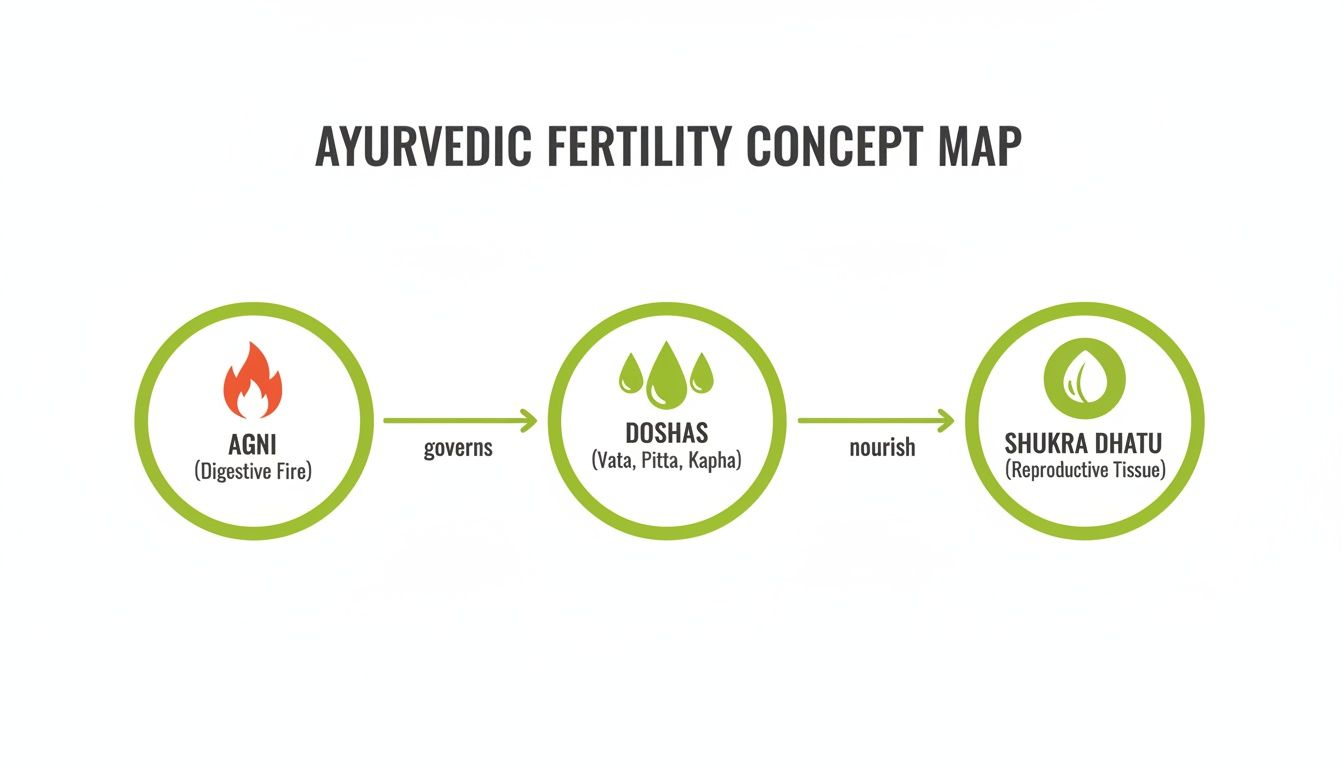
What this really tells us is that healthy reproduction is the final, most refined outcome of a body that's functioning beautifully from the inside out.
How Dosha Imbalances Affect Fertility
Every one of us has a unique constitution, a personal blend of the three doshas: Vata, Pitta, and Kapha. When any one of these energies gets thrown off kilter, it can show up as specific challenges with fertility. Pinpointing which dosha is aggravated is a massive first step towards healing.
Vata Imbalance: As the energy of air and space, Vata governs all movement—including ovulation and the journey of sperm. Too much Vata can create dryness, anxiety, irregular cycles, and make implantation difficult.
Pitta Imbalance: Made of fire and water, Pitta is in charge of hormones and metabolism. When it’s in overdrive, it can cause inflammation, hormonal chaos, heavy periods, or even conditions like endometriosis.
Kapha Imbalance: Representing earth and water, Kapha provides stability and lubrication. But an excess of Kapha can lead to blockages, cysts, weight gain, and a general feeling of sluggishness that obstructs the pathways needed for conception.
Understanding these links is incredibly empowering. For example, if you've noticed your cycle becomes unpredictable during stressful periods, that's often a sign of aggravated Vata. To see how this connects to modern physiology, exploring natural hormone balancing techniques can shed more light on the intricate systems that govern fertility.
The Role of Ama and Weak Digestion
Beyond the doshas, Ayurveda points to another huge roadblock for fertility: Ama. You can think of Ama as a sticky, toxic residue that forms when your digestive fire (Agni) is weak, a state called Mandagni. When food isn't digested properly, this gunk starts to accumulate.
Picture it like sludge building up in a pipe. This Ama can circulate throughout the body and clog the tiny channels (Srotas), including the ones that feed your reproductive organs. This blockage literally starves the reproductive tissues of nutrients and stops the whole system from working as it should.
In Ayurveda, Ama is seen as the seed of all disease. Before we can even think about nourishing or rejuvenating the body, we have to clear out this toxic build-up. It's an absolute must.
So, how do you know if you have Ama? Here are a few tell-tale signs:
A thick, white coating on your tongue, especially in the morning.
Feeling constantly tired or heavy.
Brain fog and a lack of mental sharpness.
Achy joints and general body stiffness.
Irregular digestion and bowel movements.
By reigniting your digestive fire and clearing out this Ama, you allow the body to unblock these crucial pathways. This means better nutrient absorption, clearer communication between hormones, and a far healthier environment for both sperm and ovum. This cleansing process is what prepares the ground, making sure the body is truly ready and receptive to healing.
Panchakarma: Creating Fertile Ground for Conception
Think about trying to grow a vibrant garden. If the soil is hard, weedy, and starved of nutrients, even the best seeds will struggle to take root. Ayurveda looks at fertility in much the same way. Before we can even think about adding nourishing herbs or changing your diet, we have to prepare the soil—your body.
This vital first step is called Shodhana Chikitsa, or purification therapy. The most powerful form of this is Panchakarma. This isn't just a simple detox; it's a complete reset for your entire system, designed to clear out toxins and restore your body's natural balance. It creates the perfect internal environment for conception to happen and is often the cornerstone of Ayurvedic infertility treatment.

So, how does it work? Panchakarma therapies gently coax deep-seated toxins, what we call Ama, out of your tissues. Once dislodged, these toxins are guided out of the body through its natural pathways. This deep cleanse does more than just purify; it calms aggravated doshas, reignites your digestive fire (Agni), and boosts circulation, ensuring nutrients reach every part of your body, especially your reproductive organs.
Key Panchakarma Procedures for Fertility
Panchakarma includes five core therapies, but a skilled practitioner will always tailor the treatment specifically for you. When it comes to fertility, a few procedures are particularly powerful because they directly target the reproductive system's health.
Virechana (Therapeutic Purgation): This medicated cleansing of the bowels is fantastic for pacifying Pitta dosha imbalances, which often show up as inflammation or hormonal problems. Virechana helps detoxify the liver and blood, which in turn helps regulate hormones and creates a healthier uterine environment.
Basti (Medicated Enema): Often called the "mother of all treatments," Basti is second to none for balancing Vata dosha—the key energy that governs the female reproductive system. It involves introducing herbal oils and decoctions into the colon, which has a direct nourishing effect on the pelvic organs. It helps regulate menstrual cycles and can even address issues like blockages and poor egg quality.
Uttara Basti: This is a much more specialised therapy where medicated oils are administered directly into the uterus. It's a powerful local treatment for cleansing the uterine cavity, helping to clear fallopian tube blockages, and strengthening the uterine lining to support implantation.
By methodically removing Ama and rebalancing the doshas, Panchakarma doesn't just address symptoms; it rectifies the root cause of reproductive dysfunction. It is the ultimate preparation for a healthy conception.
And this isn't just ancient wisdom; modern research is catching up. A systematic review highlighted just how effective these foundational therapies are. The research found that Ayurvedic treatments, including purification therapies like shodhana chikitsa and specific procedures like basti, can significantly improve sperm quality, promote ovulation, and boost conception rates. These treatments are shown to help regulate menstrual cycles and balance hormones, paving the way for healthy births. You can explore the full research on PMC NCBI to see the data for yourself.
The Goal: A Receptive and Balanced Body
Starting your fertility journey with Panchakarma is like clearing a path before you walk it. It removes all the blockages so that the nourishing herbs and lifestyle changes you introduce later can be fully absorbed and do their job properly. You can learn more about this in our guide on what Panchakarma is and its five ancient therapies.
The result? Your reproductive system becomes clean, receptive, and functions at its best. The uterus becomes a more welcoming place, hormonal signals become clearer, and the quality of reproductive tissues (Shukra Dhatu) in both men and women improves dramatically. This deep purification lays a strong, healthy foundation, significantly increasing your chances of a successful pregnancy.
Powerful Ayurvedic Herbs for Male and Female Fertility
After cleansing the body with purification therapies like Panchakarma, you’ve essentially prepared fertile ground. Now, it's time to sow the seeds of nourishment. This next phase, called Shamana Chikitsa, harnesses the power of nature's best allies—potent Ayurvedic herbs—to soothe any lingering imbalances and actively rejuvenate your reproductive system. Think of it less as a one-size-fits-all prescription and more as a tailored approach to strengthening and preparing the body for conception.
This is where the magic of Ayurvedic infertility treatment truly shines. Specific botanicals are chosen to support hormonal balance, improve the health of reproductive tissues, and boost overall vitality for both partners. It's a methodical way of rebuilding reproductive strength from the inside out.
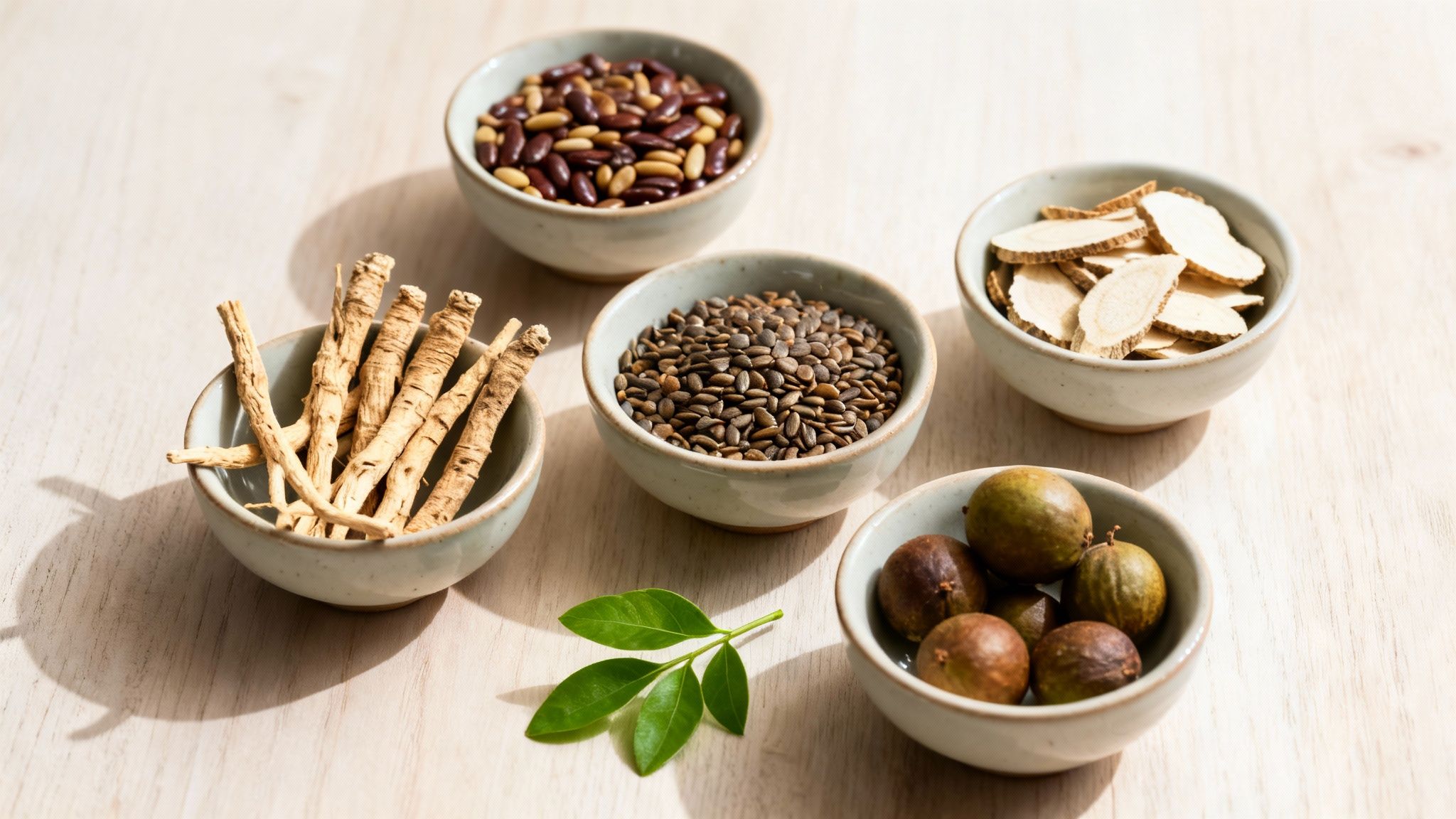
Essential Herbs for Enhancing Male Fertility
In Ayurveda, the health of male reproductive tissue, known as Shukra Dhatu, is paramount. A handful of specific herbs are celebrated for their ability to nourish this vital essence, which has a direct and positive impact on sperm count, motility, and testosterone levels.
Ashwagandha (Withania somnifera): Often called the "king of Ayurvedic herbs," Ashwagandha is a formidable adaptogen. It helps the body buffer the effects of stress, a huge factor in modern infertility. More directly, it's well-known for supporting healthy testosterone levels, improving sperm count, and giving motility a much-needed boost.
Gokshura (Tribulus terrestris): This herb is a classic when it comes to boosting libido and acting as a natural aphrodisiac. It works by supporting the production of luteinising hormone (LH), which in turn signals the testes to produce more testosterone, improving both sperm production and overall virility.
One of the most effective herbs for this purpose is Kapikacchu. You can dive deeper into these incredible botanicals in our guide to the top Ayurvedic herbs for male fertility.
Key Herbs for Supporting Female Fertility
For women, the focus of Ayurvedic herbal support is on creating hormonal harmony, strengthening the uterus, and ensuring the menstrual cycle is both regular and healthy. These botanicals offer gentle yet powerful support for every aspect of the female reproductive system.
Shatavari (Asparagus racemosus): If Ashwagandha is the king, Shatavari is the "queen of herbs." It is the foremost tonic for the female reproductive system, helping to regulate menstrual cycles, support the production of healthy cervical mucus (which is crucial for conception), and nourish the ovum itself.
Ashoka (Saraca asoca): The Ashoka tree is revered for its ability to strengthen the uterus. It helps tone the uterine muscles, regulate menstrual flow, and calm any inflammation in the pelvic region, creating a stable and welcoming environment for implantation.
Lodhra (Symplocos racemosa): This herb is especially brilliant at balancing female hormones, particularly progesterone and oestrogen. It's often used to support the development of a healthy uterine lining, making it helpful in conditions that might otherwise get in the way of a successful pregnancy.
Kapikacchu The Bio-Organic Powerhouse
Among the most prized herbs for fertility—for both men and women—is Kapikacchu (Mucuna pruriens). This remarkable legume is a natural source of L-DOPA, a direct precursor to the neurotransmitter dopamine. In the world of fertility, this is a big deal. It has a profound effect on the hormonal axis, helping to regulate reproductive hormones while reducing levels of prolactin, a stress hormone that can interfere with ovulation.
For men, Kapikacchu has been scientifically recognised for improving sperm concentration and motility. For women, it supports hormonal balance and overall reproductive function. This makes it a truly versatile ally on the journey to parenthood.
The Ayurvedic principle of using whole, natural ingredients ensures that the body receives these benefits in a form it can easily recognise and use, maximising efficacy without harsh side effects.
To give you a quick overview, here are some of the cornerstone herbs in Ayurvedic fertility treatment.
Key Ayurvedic Herbs for Reproductive Health
Herb | Primary Use in Men | Primary Use in Women |
|---|---|---|
Ashwagandha | Boosts testosterone, improves sperm count and motility | Reduces stress, supports overall hormonal balance |
Shatavari | Minor aphrodisiac properties | Regulates cycles, nourishes ovum, improves cervical mucus |
Gokshura | Increases testosterone production, enhances libido | Stimulates ovulation, supports hormonal regulation |
Kapikacchu | Improves sperm quality, reduces stress-related infertility | Regulates hormones (especially prolactin), supports ovulation |
Ashoka | Not primarily used | Strengthens uterine muscles, regulates menstrual flow |
Lodhra | Not primarily used | Balances female hormones, supports uterine lining |
This table shows how herbs are often chosen for their specific, targeted actions to address the unique needs of each partner.
This philosophy of using pure, potent botanicals is precisely what drives modern Ayurvedic formulations. For instance, Kerala’s JJ Herbals mirrors this ancient wisdom with Success Plus, their bio-organic supplement made from Mucuna pruriens grown on their own farms. This direct farm-to-bottle approach has helped them achieve a 68% success rate in boosting fertility and vitality for over 1,700 customers across more than two decades. As an additive-free, vegetarian formula for men and women over 21, it enhances testosterone, stamina, and energy. With options for 30-90 day packs and free doctor consultations available, it’s a modern application of a time-tested herb.
By carefully selecting and combining these herbs, an Ayurvedic practitioner can create a personalised plan that gets to the root of your specific imbalances, gently guiding your body back towards its natural, fertile state.
The Ayurvedic Diet and Lifestyle for Better Conception
In Ayurveda, we have a profound truth: our daily choices are the most powerful form of medicine we have. Once the body is cleansed and we’ve brought in supportive herbs, the next vital layer of any Ayurvedic infertility treatment is what you do every single day. It’s all about consciously shaping your diet (Ahara) and lifestyle (Vihara) to create an internal environment where fertility can truly thrive.
Think of it like preparing your home for a much-awaited guest. You wouldn’t just tidy one room; you’d make sure the entire house is warm, nourishing, and peaceful. In the same way, your daily routines are what make your body a receptive and harmonious place for a new life to begin.
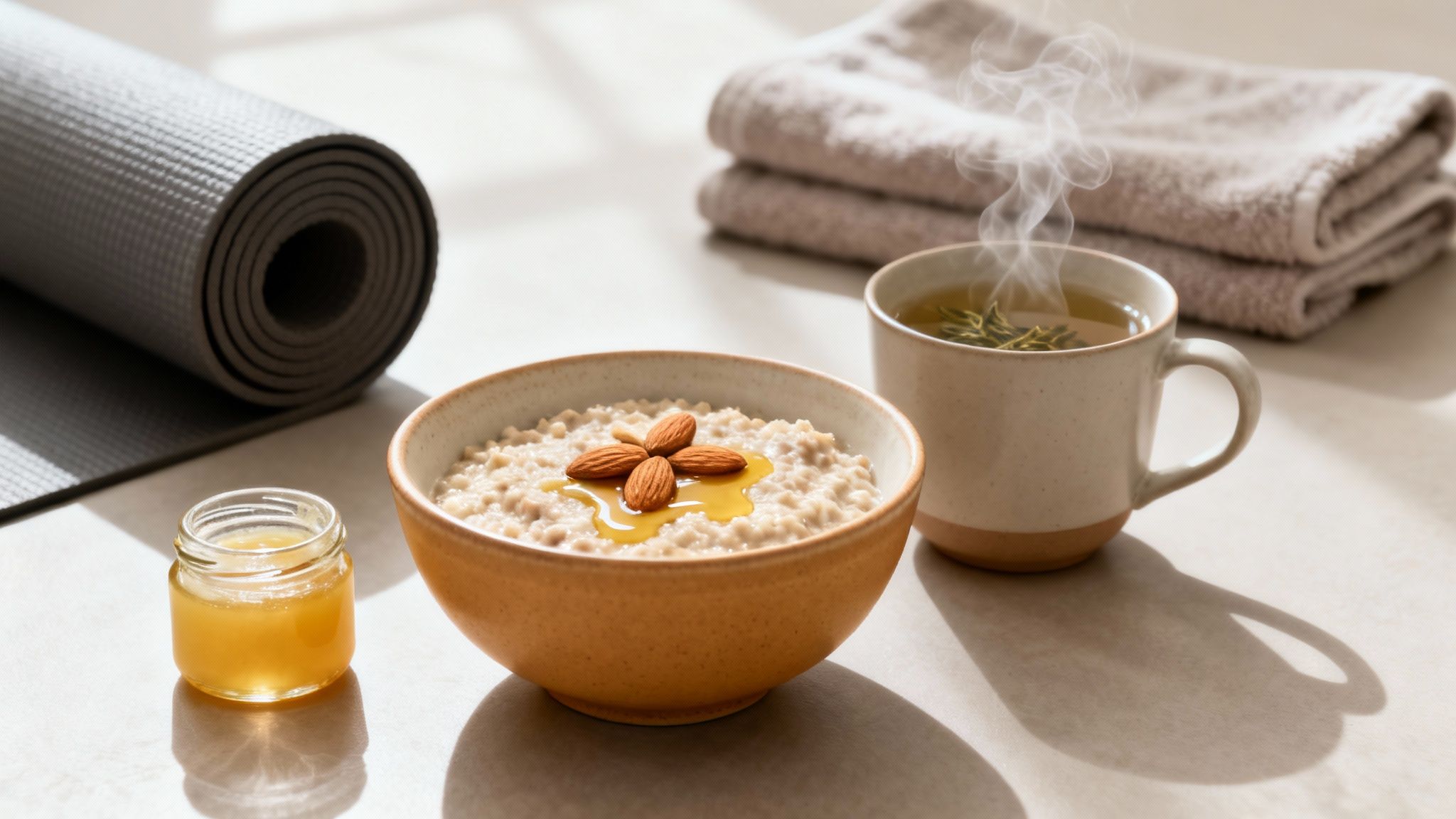
Nourishing Your Body with a Fertility-Boosting Diet
The Ayurvedic approach to a fertility diet isn't about counting calories. It’s about tending to your digestive fire, or Agni. When your Agni is strong, the food you eat is properly transformed into healthy tissues, including the all-important reproductive tissue, Shukra Dhatu. The goal is simple: eat in a way that’s easy to digest and deeply nourishing.
Here are some core principles to get you started:
Embrace Warm, Cooked Foods: Make meals that are warm, moist, and well-cooked—think soups, stews, and steamed vegetables. These are far easier on your digestive system than cold, raw foods like salads or iced drinks, which can dampen your Agni.
Incorporate Healthy Fats: Good quality fats are the literal building blocks of our hormones. Adding sources like pure ghee, avocados, nuts, and seeds into your daily diet helps support hormonal balance and lubricates the body's channels.
Favour Sattvic Foods: A Sattvic diet is one that promotes clarity, harmony, and balance. This means filling your plate with fresh fruits, well-cooked vegetables, whole grains like quinoa and basmati rice, and easy-to-digest legumes like moong dal.
Avoid Agni-Weakening Foods: It’s just as important to know what to avoid. Steer clear of processed foods, excessive sugar, deep-fried items, and stale leftovers. These create a toxic residue (Ama) that can clog the body's channels and throw your system out of balance.
Creating Rhythm and Calm with a Balanced Lifestyle
Your daily habits, known as Vihara, are every bit as crucial as your diet. A consistent routine helps to regulate your body’s internal clock, which in turn helps regulate your hormones and menstrual cycle. This is the practice of Dinacharya (daily routine).
"In Ayurveda, establishing a predictable daily rhythm is considered a cornerstone of health. It aligns our internal cycles with the larger cycles of nature, reducing stress on the nervous system and creating a foundation of stability necessary for conception."
A fertility-focused lifestyle also means getting a handle on stress, which is a major disruptor of hormonal balance. Here are a few simple yet powerful practices to weave into your day:
Mindful Movement: Gentle yoga asanas can work wonders. Poses like Baddha Konasana (Bound Angle Pose) and Paschimottanasana (Seated Forward Bend) are well-known for increasing blood flow to the pelvic region, nourishing the reproductive organs.
Pranayama (Breathwork): Don't underestimate the power of your breath. Simple exercises like Nadi Shodhana (Alternate Nostril Breathing) have a profound calming effect on the nervous system, helping to lower cortisol and create a much more favourable hormonal environment for conception.
Prioritise Sleep: Aim to be in bed by 10 p.m. and wake with the sun. Deep, restorative sleep is when your body does its most important repair and rejuvenation work.
Beyond these specific Ayurvedic practices, a holistic path also involves embracing a lifestyle that is generally conducive to conception. You can explore various natural conception methods to round out your approach. By thoughtfully combining a nourishing diet with a calming, rhythmic lifestyle, you become an active participant in your own healing journey, making your body stronger, more balanced, and ready for pregnancy.
What to Expect on Your Ayurvedic Treatment Journey
Deciding to pursue a natural path to parenthood is a big step, and it's natural to wonder what the journey looks like. Think of Ayurvedic treatment not as a quick fix, but as a supportive partnership between you and your practitioner. We’re not just ticking off symptoms; we're on a methodical journey to restore your body’s innate ability to conceive.
It all starts with a detailed consultation. This is where we get to know you – really know you. We’ll take a deep dive into your health history, your daily diet, your lifestyle, and what’s been on your mind. This is far more than a simple questionnaire; it’s a conversation about your stressors, sleep patterns, and even your digestive health.
A cornerstone of this initial assessment is Nadi Pariksha, or pulse diagnosis. It's an incredible tool. By simply reading your pulse, an experienced Ayurvedic doctor can detect subtle imbalances in your doshas and the health of your organs, often long before they'd show up on a standard medical test.
Crafting Your Personalised Plan
After getting a clear picture of your unique constitution, we create a treatment plan just for you. There's no one-size-fits-all protocol here. Instead, it’s a multi-layered strategy that brings together different elements to support your body.
Your plan might include:
Panchakarma (Detoxification): If we find a significant buildup of toxins (Ama), a gentle, tailored detox program might be the first step to clearing the way.
Herbal Formulations: We’ll prescribe a specific blend of herbs to target your unique dosha imbalances and directly support your reproductive health.
Dietary Guidance: You’ll get detailed, practical advice on which foods will truly nourish you and which ones might be holding you back.
Lifestyle Adjustments: We’ll also look at your daily routines, suggesting simple changes, stress management techniques, and gentle exercises to bring everything into balance.
Understanding the Timeline
One of the first questions people ask is, "How long will this take?" It's a fair question. Because Ayurveda focuses on correcting deep-rooted imbalances rather than just suppressing symptoms, the process asks for patience. True, sustainable healing simply doesn't happen overnight.
Ayurveda teaches us to rebuild health from the ground up. I often tell my patients to think of it like tending a garden; you have to prepare the soil and nurture it before a seed can truly flourish. Lasting results come from consistent, dedicated effort over several months.
Generally, you should plan for a commitment of at least three to six months. This gives your body the time it needs to properly detoxify, rejuvenate, and find its equilibrium again. This gradual approach ensures the changes are deep and stable, creating a healthy, supportive environment for a future pregnancy.
To get a better feel for this crucial first step, you can learn more about what an Ayurvedic doctor online consultation actually involves. Throughout your journey, we’ll have consistent follow-ups to monitor your progress and adjust your plan as needed, making sure you feel supported every step of the way.
Your Questions About Ayurvedic Fertility, Answered
Starting any new health journey, especially one as personal as fertility, always comes with questions. It's completely natural. Let's walk through some of the most common ones we hear, giving you the clear, straightforward answers you need to feel confident.
How Long Does Ayurvedic Treatment Take?
Since Ayurveda aims to fix imbalances at their very root, there's no overnight fix. Think of it like tending to a garden—it takes time to prepare the soil before a seed can flourish.
We generally see meaningful changes after 3 to 6 months. This period gives your body the time it needs to detoxify, absorb proper nourishment, and truly rejuvenate the reproductive system. Your Ayurvedic doctor will give you a more personalised timeline after your first consultation, factoring in your specific health picture.
Ayurveda is about rebuilding health from the ground up, not just papering over the cracks. Patience is key, as it gives your body the time it needs to heal properly and prepare for a healthy pregnancy.
Can I Combine Ayurvedic Treatments with Conventional Medicine?
Yes, you certainly can. Many Ayurvedic therapies work beautifully alongside conventional fertility treatments. They often help by improving your overall health, which can make your body more receptive to other medical interventions.
The most important thing is transparency. You absolutely must tell both your Ayurvedic practitioner and your medical doctor about every treatment you're receiving. This allows your Ayurvedic expert to create a safe, integrated plan where herbs and medicines don't clash but instead work together to support you.
Is The Success Plus Supplement for Both Men and Women?
Absolutely. Success Plus by JJ Herbals was specifically designed to support the reproductive health of both partners. This is a core Ayurvedic belief—that fertility is a shared responsibility and a shared journey.
For men, the star ingredient, Mucuna Pruriens, is known to help improve testosterone levels and sperm health. For women, that very same formula works to balance hormones and boost vitality. By nourishing both of you, we significantly improve the chances of a successful and healthy conception.
Ready to take the next step on your fertility journey with trusted, natural support? Explore how JJ Herbals can help you achieve your parenthood dreams. Learn more about our bio-organic solutions at https://www.jjherbals.com.
Comments