.png)
Nervous Weakness Treatment in Ayurveda: A Holistic Guide

Ayurveda offers a profound nervous weakness treatment because it looks beyond the symptoms to find the real root of the problem. Instead of a quick fix, it sees this condition as a deep imbalance in the Vata dosha and works to restore harmony using powerful herbs, nourishing foods, and calming daily routines to help you rebuild your natural resilience.
Understanding Nervous Weakness Through an Ayurvedic Lens
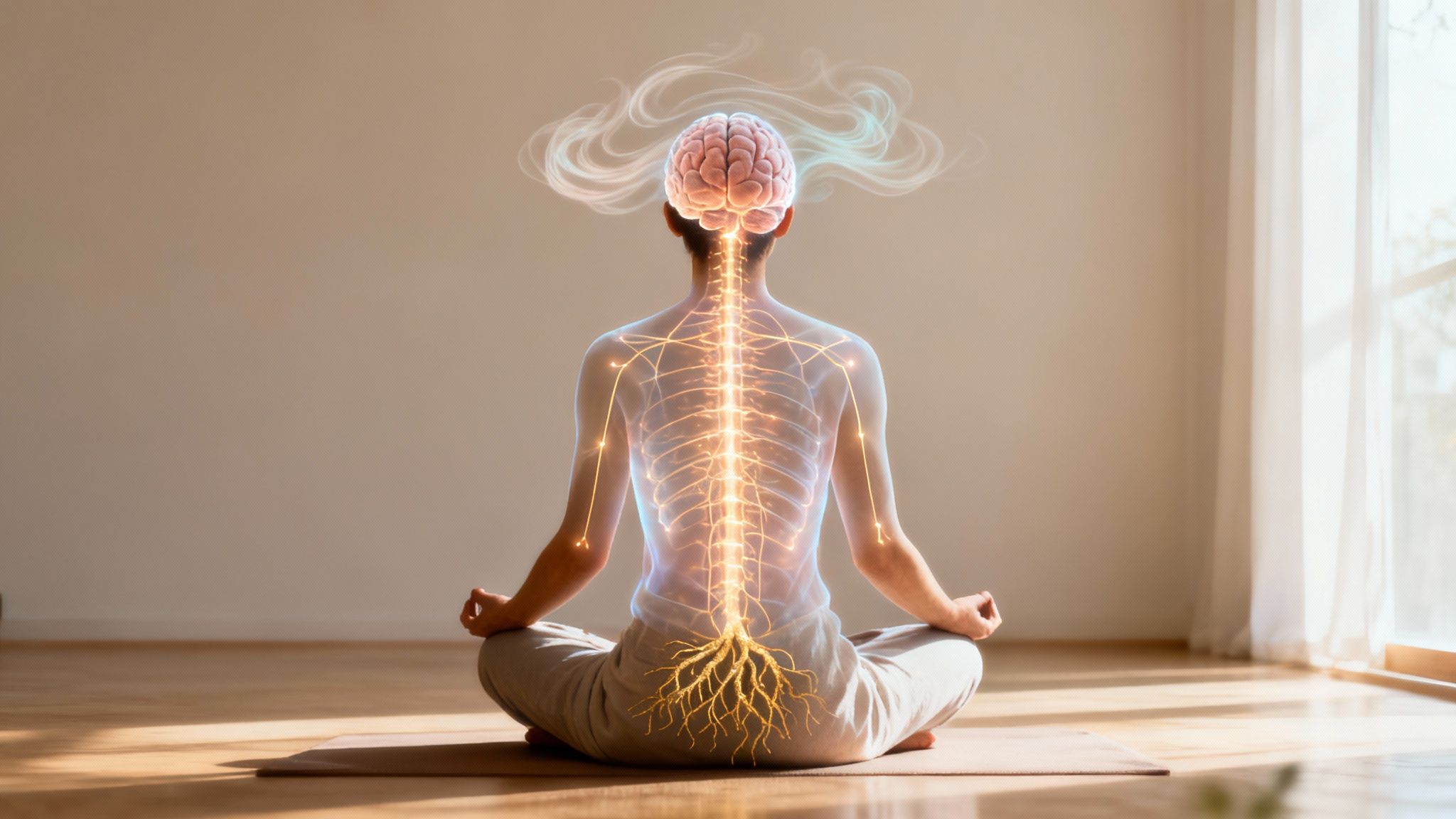
In Ayurveda, "nervous weakness" isn't a standalone diagnosis. It's a clear signal that your body's fundamental energies are out of sync. This ancient science points directly to an aggravated Vata dosha as the primary culprit—the energy that governs all movement in the body, from the blink of an eye to the firing of a nerve impulse.
Think of your nervous system like a beautifully intricate electrical grid. When Vata is balanced, this grid works flawlessly, sending strong, clear signals everywhere they need to go. But when things like chronic stress, poor diet, or an erratic lifestyle disturb Vata, it introduces its inherent qualities—cold, dry, and erratic—into your system.
The Impact of Vata Imbalance
Suddenly, that smooth-running electrical grid starts to flicker and short-circuit. The calm flow of energy turns turbulent and unpredictable, leading to the exact symptoms we recognise as nervous weakness:
Feelings of anxiety and constant restlessness
Involuntary tremors or muscle twitching
Deep, chronic fatigue that sleep doesn't fix
Insomnia or waking up frequently through the night
A persistent sense of being ungrounded, scattered, or frazzled
This holistic viewpoint is quite different from a conventional approach, which often focuses on managing individual symptoms. Instead of just turning down the volume on alarm bells like anxiety or pain, Ayurveda wants to find the faulty wiring and repair it at the source. A crucial part of this is nourishing the Majja Dhatu (the nervous tissue), which becomes directly depleted when Vata is high.
Ayurveda teaches that true healing comes not from suppressing symptoms, but from restoring the natural intelligence and harmony of the body. By pacifying the disruptive force of Vata, we allow the nervous system to repair, rejuvenate, and find its equilibrium.
Grasping this core principle is the first real step toward rebuilding your vitality for the long term. While our focus here is on Ayurvedic wisdom, it's also helpful to understand the broader context of severe nervous system distress; this a practical guide to recovering from a nervous breakdown offers some valuable perspectives.
Since stress is one of the biggest triggers for Vata imbalance, learning how to manage it is key. You can find more on this in our https://www.jjherbals.com/post/a-practical-guide-to-stress-treatment-in-ayurveda. From here, we'll build on this foundation, diving into the specific herbs, therapies, and lifestyle shifts designed to soothe Vata and rebuild your inner strength from the ground up.
How Vata Dosha Governs Your Nervous System Health
In Ayurveda, your body is seen as a beautiful, intricate orchestra where every part has a role. The conductor of this whole symphony? That's Vata dosha. Made up of air and ether (space), Vata is the fundamental principle of movement and communication. It's behind everything from the rhythm of your heart to the blink of an eye and the very spark of a nerve impulse.
When Vata is in its happy, balanced place, it flows with a gentle, predictable rhythm. Your mind feels clear, your body is light and energetic, and your nerves communicate without a hitch. Picture a calm, steadily flowing river—that’s what a healthy nervous system feels like when Vata is in check.
But Vata, by its very nature, is light, dry, mobile, and cool. These qualities make it the easiest of the three doshas to knock off balance. Think of it like the wind: one moment it's a soft, gentle breeze, and the next it can whip up into a chaotic storm. It’s this shift from a gentle breeze to a turbulent gale that lies at the heart of nervous weakness.
When Vata Gets Out of Balance
Our modern lives are practically designed to aggravate Vata. Chronic stress, unpredictable routines, skipping meals, not getting enough sleep, and eating too many cold, dry, or processed foods—all these things push Vata out of its natural state. When that happens, its erratic, drying, and cooling qualities start to take over the nervous system.
The once calm river of nerve signals turns into a choppy, turbulent current. This directly affects what Ayurveda calls the Majja Dhatu—your nerve tissue and bone marrow. An agitated Vata essentially dries out this delicate tissue, stripping it of its nourishment and making it fragile.
This is the single most important concept in any nervous weakness treatment in ayurveda: you have to calm the chaotic wind of Vata before you can rebuild the strength of the nervous system. Soothing Vata isn't just a helpful tip; it's the primary goal of the entire treatment.
This ancient wisdom is being backed by modern observations. A huge analysis of over 35,000 patients in India found that for chronic nervous system issues, Ayurvedic treatments that focused on root causes like dosha imbalance brought complete or partial relief to over 76% of patients. You can dig deeper into these findings and see how Ayurveda's efficacy is being recognised today.
The Tell-Tale Signs of High Vata
When Vata's turbulence takes hold, it shows up in very specific ways. The symptoms are a direct reflection of its mobile, dry, and cold qualities:
Anxiety and Fear: A mind that won't stop racing and feels ungrounded is a classic sign of excess Vata.
Tremors and Twitching: The erratic nature of Vata can cause involuntary muscle spasms and shakes.
Insomnia: A restless mind and an agitated body make it nearly impossible to drift into deep, healing sleep.
Dryness: This can manifest as dry skin, constipation, or just a general feeling of internal dryness and stiffness in the joints.
Sensitivity to Cold: You might find yourself feeling chilly more often than others.
Scattered Thoughts: Feeling "spaced out" or having difficulty concentrating is a common complaint.
Recognising this connection is the first step toward healing. Every Ayurvedic recommendation that follows, from favouring warm, oily foods to using grounding herbs and calming therapies, is specifically chosen to counteract these qualities. By bringing in warmth, moisture, and stability, we can pacify the aggravated Vata, allowing the nervous system to finally find its peace and begin the deep work of rejuvenation. The aim is to turn that chaotic storm back into a gentle, life-giving breeze.
Powerful Ayurvedic Herbs to Rebuild Nerve Strength
When your nervous system feels completely frayed, Ayurveda offers a special category of herbs called Medhya Rasayanas. These aren't just quick fixes for symptoms; they are profound rejuvenators for the mind and nerves. Think of them as deep nourishment for your neural pathways, working from the inside out to rebuild strength, bring back clarity, and restore a genuine sense of calm.
These incredible botanicals work with your body's own intelligence. They gently pacify the erratic, flighty energy of an aggravated Vata dosha and help replenish the Majja Dhatu, which is the Ayurvedic term for the nervous tissue itself.
Let's explore some of the most celebrated herbs that form the backbone of nervous weakness treatment in Ayurveda.
Ashwagandha: The Stress Shield
Ashwagandha (Withania somnifera) is, without a doubt, the king of Ayurvedic adaptogens. Its name literally translates to "smell of a horse," which hints at its legendary ability to give you the strength and stamina of a stallion. It doesn't just pump you with artificial energy; instead, it intelligently helps your body adapt to stress, building your natural resilience over time.
For a mind and body rattled by high Vata, Ashwagandha acts as a powerful grounding force. It soothes the racing thoughts and physical restlessness that so often come with nervous weakness, paving the way for deeper, more restorative sleep. In fact, studies have shown it can reduce cortisol, the body's main stress hormone, by as much as 30% in people dealing with chronic stress.
How it helps: Calms anxiety, dramatically improves sleep quality, and builds overall physical and mental stamina.
Common forms: Traditionally taken as a churna (powder) mixed into warm milk with a little ghee, or in tablet form. Medicated ghee (ghrita) is also a popular method.
This diagram shows just how much Vata dosha influences your nervous system, contrasting the harmony of a balanced state with the distress of an imbalanced one.
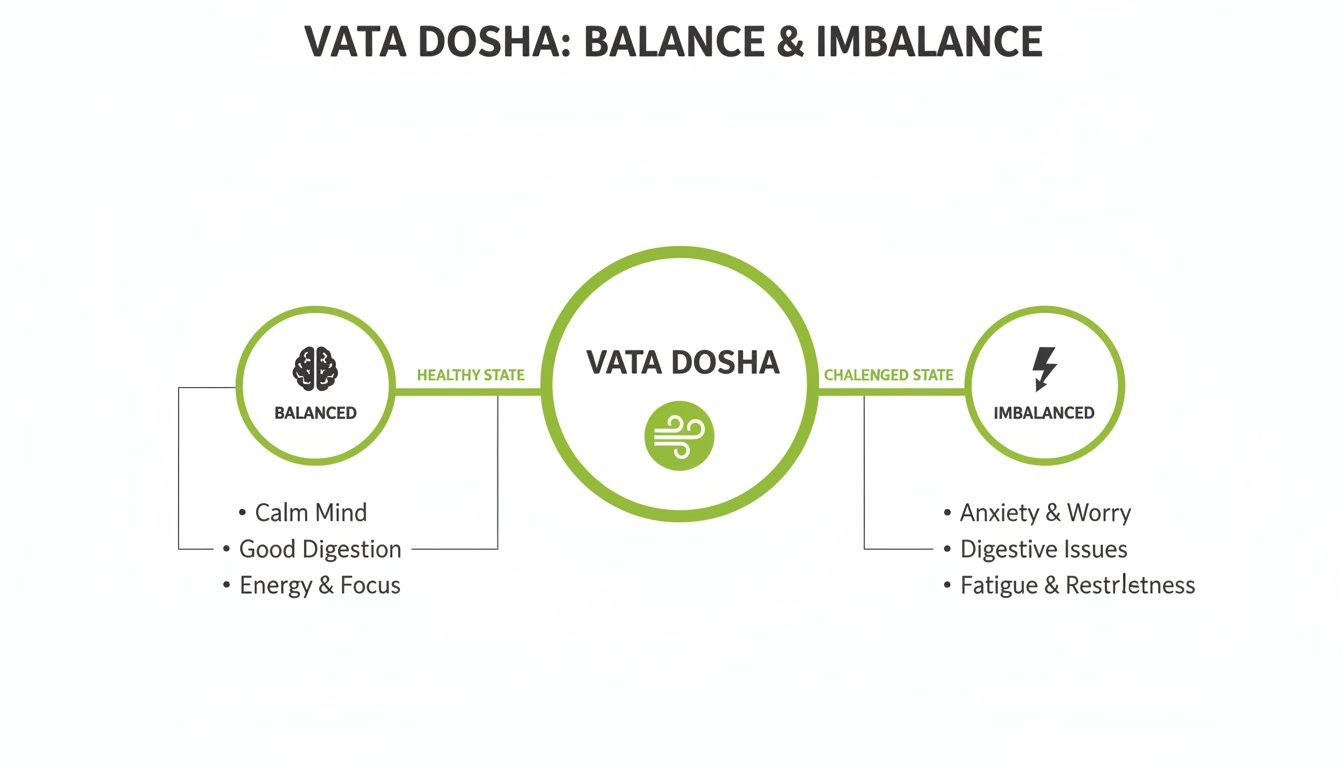
As you can see, when Vata is in balance, the nervous system functions beautifully. When it's out of balance, the classic symptoms of nervous weakness begin to appear.
Brahmi: The Brain Nourisher
If Ashwagandha is for strength, then Brahmi (Bacopa monnieri) is for clarity. As one of Ayurveda's premier brain tonics, Brahmi directly nourishes the neurons and is famous for its ability to sharpen memory, improve focus, and support learning. It feels like a cool, soothing balm for a mind that's overheated and agitated.
Brahmi is especially useful for the mental fog and scattered thinking that often accompany high Vata. It works by enhancing the communication between brain cells, which in turn supports clearer cognitive function and better emotional stability. Its neuroprotective qualities also help shield the nervous system from the wear and tear of long-term stress.
Brahmi is considered a sattvic herb. In Ayurvedic terms, this means it promotes a state of calm, clear, and harmonious consciousness. It helps guide the mind toward peaceful awareness, making it invaluable for both managing anxiety and deepening meditation practices.
Jatamansi: The Natural Tranquiliser
Jatamansi (Nardostachys jatamansi), or Spikenard, is a profoundly grounding herb that grows high in the Himalayas. Picture it as an anchor for a mind caught in a storm of anxiety, worry, or insomnia. Its magic lies in its ability to calm the mind deeply without causing any grogginess or lethargy.
This herb is a true gift for anyone whose nervous weakness shows up as panic, extreme restlessness, or persistent sleep troubles. It helps to naturally regulate neurotransmitters like GABA, which is key for promoting relaxation and easing nerve-related tension.
To give you a clearer picture, let's summarise the core actions of these remarkable herbs.
Key Ayurvedic Herbs for Nervous System Support
Herb | Primary Action (Guna) | Key Benefits for Nervous System | Common Forms |
|---|---|---|---|
Ashwagandha | Grounding, Strengthening | Builds resilience to stress, calms anxiety, promotes deep sleep. | Powder (Churna), Tablets, Medicated Ghee (Ghrita) |
Brahmi | Cooling, Clarifying | Enhances memory and focus, soothes mental agitation, neuroprotective. | Powder, Tablets, Medicated Oil |
Jatamansi | Grounding, Calming | Eases panic and restlessness, acts as a natural sedative for sleep. | Powder, Oil, Tablets |
Guduchi | Rejuvenating, Detoxifying | Clears toxins (ama), supports immune function, protects nerves. | Powder, Tablets, Stem Decoction |
These herbs form the foundation of nervous system support in Ayurveda, each offering a unique pathway back to balance and strength.
Guduchi: The System Rejuvenator
Guduchi (Tinospora cordifolia) is known in Ayurveda as "Amrita," which means the nectar of immortality. While the other herbs focus more specifically on the nervous system, Guduchi works on a broader scale as a powerful immunomodulator and detoxifier. It essentially cleanses the body's channels, allowing nerve tissue to receive the nourishment it needs to heal.
By clearing out deep-seated toxins (ama) that can get in the way of proper nervous system function, Guduchi helps rejuvenate the entire body from the inside out. Its gentle yet potent energy builds resilience and protects the body from the damaging effects of chronic stress.
Other Powerful Nervine Tonics
Beyond these cornerstone herbs, Ayurveda's rich pharmacy offers many other allies for nerve health.
Shankhpushpi: Another celebrated brain tonic that sharpens memory and has a wonderful calming effect on an anxious mind.
Vacha: Known for improving speech and intelligence by clearing the channels of the mind.
Mucuna Pruriens: This herb is a natural source of L-DOPA, a precursor to the neurotransmitter dopamine. This makes it fantastic for supporting a positive mood and healthy motor control. To find out more, you can learn about unlocking the power of Mucuna Pruriens for enhanced reproductive health and vitality.
Using these herbs correctly is everything. It's always best to consult with a qualified Ayurvedic practitioner who can determine the right herbs and dosages for your unique constitution and situation. They can guide you on the best way to use them—whether as powders, decoctions, or medicated oils—for a safe and truly effective nervous weakness treatment in Ayurveda.
Calming the Nerves with Therapeutic Body Treatments

While herbs work their magic internally to rebuild the nervous system, Ayurveda also understands the immense power of therapeutic touch to calm an overstimulated mind and body from the outside in. These specialised body treatments use generous amounts of warm, medicated oil, which directly soothes the cold, dry, and erratic nature of Vata dosha.
Imagine an agitated nervous system as a taut, dry wire humming with excess electricity. These therapies act like a warm, insulating coating, allowing that chaotic energy to finally calm down and flow smoothly again. They offer deep nourishment, pacify frazzled nerve endings, and send a clear signal to the body that it's safe to relax.
Two cornerstone therapies are particularly powerful in any nervous weakness treatment in ayurveda: Abhyanga (warm oil massage) and Shirodhara (a continuous stream of warm oil on the forehead).
Abhyanga: The Daily Ritual of Self-Massage
Abhyanga is so much more than a luxurious massage. It's a vital daily practice, or Dinacharya, designed to pacify Vata. It's fascinating that the Sanskrit word for oil, sneha, also means love. So, when you perform Abhyanga, you're engaging in a profound act of self-love and care.
Applying warm, heavy oil directly counters Vata’s light and dry qualities. This simple act calms the countless nerve endings in the skin, lubricates the joints, boosts circulation, and helps move toxins out of the tissues. It's a grounding practice that brings a much-needed sense of stability to both body and mind.
For anyone dealing with nervous weakness, a simple self-massage routine can be incredibly healing. Here’s how you can do it at home:
Warm Your Oil: Gently warm about 1/4 cup of sesame or Mahanarayan oil. You can do this easily by placing the bottle in a mug of hot water until the oil is comfortably warm to the touch.
Start at the Head: Apply some oil to the crown of your head and massage it in using slow, circular motions.
Work Down the Body: Use long, gentle strokes on your limbs and switch to circular motions for your joints like shoulders, elbows, knees, and ankles.
Massage the Torso: Use large, clockwise circular motions over your abdomen and chest. This also helps support digestion, which often gets disturbed when Vata is high.
Finish with the Feet: Don’t forget your feet! Spend a few extra minutes massaging the soles, which are rich with important nerve endings.
Rest and Absorb: Now, just sit and relax for 5-15 minutes. Let the oil soak in before you take a warm bath or shower.
Abhyanga is not just a physical treatment; it's a meditation in motion. The rhythmic, loving touch helps dissolve accumulated stress and fatigue, creating a buffer between you and the demands of daily life. This is essential for healing the nervous system.
Shirodhara: Deep Cerebral Relaxation
Shirodhara is one of Ayurveda’s most potent and unique therapies for quieting a racing mind. It involves a continuous, gentle stream of warm medicated oil being poured over the forehead, specifically targeting the Ajna Chakra, or "third eye."
The rhythmic stimulation of the forehead induces a state of deep meditative calm that's hard to describe. It directly pacifies the central nervous system, silences mental chatter, and dissolves emotional and mental tension. It's particularly effective for anxiety, insomnia, chronic headaches, and sheer nervous exhaustion.
The benefits of these oil-based therapies aren't just ancient wisdom; modern research backs them up. A 2016 study in India found that treatments like Abhyanga significantly improved nerve conduction velocity in patients with neuropathy. For mental symptoms, trials showed Shirodhara could reduce the stress hormone cortisol by up to 25%, highlighting its incredible ability to ease the mental strain of nervous weakness.
Of course, beyond these specific therapies, simple foundational practices can make a huge difference. The Benefits of Deep Breathing Exercises You Should Know can be a powerful yet easy addition to your routine, perfectly complementing these hands-on treatments. By integrating a home practice like Abhyanga with professional treatments like Shirodhara when needed, you create a robust plan for soothing Vata and bringing your nervous system back into balance.
The Vata-Pacifying Diet to Nourish Your Nerves
When it comes to Ayurvedic treatment for nervous weakness, your kitchen is your first and most powerful pharmacy. The food you eat has a direct and profound impact on Vata dosha. The right diet can ground Vata's flighty, erratic energy, but the wrong foods will only fan the flames, making anxiety and that feeling of instability even worse.
The guiding principle is wonderfully simple: like increases like, and opposites bring balance. Since Vata is inherently cold, dry, light, and rough, we need to soothe it with foods that are warm, moist, heavy, and smooth. Picture it as lovingly wrapping your entire nervous system in a warm, nourishing blanket.
Embracing Warmth and Grounding Foods
Perhaps the most important change you can make is to always choose warm, cooked meals over anything cold or raw. A crisp salad or an iced smoothie might seem healthy, but to an agitated Vata, it's like adding a chilly gust of wind to a fire you're trying to calm. On the other hand, a warm bowl of kitchari or a hearty vegetable stew offers instant comfort and grounding.
Cooking food also makes it far easier to digest. This is key because a high Vata state often weakens the digestive fire, known as Agni. When your digestion is strong, your body can properly absorb the nutrients it needs to rebuild and nourish the nervous tissue, or Majja Dhatu.
Here are the cornerstones of a diet that calms Vata:
Cooked Root Vegetables: Think carrots, sweet potatoes, beets, and pumpkin. They are naturally sweet and have a grounding energy. Roasting or steaming them brings out their best, most nourishing qualities.
Hearty Grains: Basmati rice, quinoa, and oats are fantastic for providing sustained energy and a feeling of solid stability.
Healthy Fats: Ghee (clarified butter) is considered the absolute best oil for pacifying Vata. Good quality olive oil, sesame oil, and avocado are also excellent choices for lubricating your system from the inside out.
Foods to Reduce or Avoid
What you choose not to eat is just as important as what you add in. Certain foods have the very same qualities as Vata and will almost certainly make your symptoms worse.
Think of your dietary choices as a conversation with your body. Foods that are cold, dry, and stimulating shout at an already frayed nervous system. Foods that are warm, moist, and grounding speak to it in a calm, soothing whisper.
Try to cut back on these Vata-aggravating items:
Raw Vegetables: Especially the cruciferous family—broccoli, cabbage, and cauliflower—which can easily cause gas and bloating.
Dried Fruits: In very small amounts, soaked first, they might be alright. But their inherently dry nature can really increase Vata.
Caffeinated and Carbonated Drinks: These are incredibly stimulating and can easily disrupt a sensitive nervous system.
Processed and Leftover Foods: Ayurveda teaches that these foods lack Prana (life force) and are much harder for the body to process.
The Power of Routine and Dinacharya
Beyond the food on your plate, how and when you eat is just as critical for calming Vata. This dosha absolutely thrives on predictability and routine, a concept Ayurveda calls Dinacharya (daily routine). Simply eating your meals at roughly the same time every day sends a powerful signal of safety and stability to your nervous system.
This need for a stable routine goes beyond diet. Having a consistent sleep schedule, a gentle yoga practice, and calming breathing exercises like Nadi Shodhana (alternate nostril breathing) creates the perfect environment for your nerves to heal. This holistic approach, where diet, herbs, and therapies all work together, is remarkably effective.
In fact, one Indian clinical trial found that a complete Ayurveda protocol—including herbs, therapies like Shirodhara, and yoga—was more effective than a standard antidepressant for major depressive disorder, a condition Ayurveda often links to nervous system weakness. Participants saw huge improvements in anxiety levels and sleep quality, which really showcases the power of this integrated strategy. You can read the full research about these holistic findings. By creating a predictable and nourishing daily rhythm, you lay the essential groundwork for your nervous system to finally repair, rejuvenate, and thrive.
Your Questions on Ayurvedic Nerve Treatment Answered
Starting any new path to health always comes with a few questions. When it comes to something as important as your well-being, getting clear on the details of a nervous weakness treatment in ayurveda can give you the confidence you need to move forward. Let's walk through some of the most common questions we hear.
How Long Does It Take to See Results?
This is probably the most asked question, and the honest answer is: it depends. The timeline really hinges on how severe the Vata imbalance is and how consistently you can stick with the new routines.
That said, many people start to feel a shift pretty quickly. It's common to notice better sleep and a welcome drop in anxiety within the first 2 to 4 weeks of taking herbs and making those crucial lifestyle changes.
But remember, true healing goes deep. Rebuilding the nervous tissue, what Ayurveda calls Majja Dhatu, isn't a quick fix. Think of it as nurturing a delicate plant back to health—it takes time and consistent care, often several months. For those looking for a more intensive approach, a professionally guided Panchakarma programme can often bring about deeper, more noticeable results much faster.
Can I Safely Combine Ayurvedic Herbs with My Medications?
This is an incredibly important point, and the answer requires care. You absolutely must speak with both your regular doctor and a qualified Ayurvedic practitioner before mixing herbs with any prescription medications you're taking.
Why? Because some herbs are potent and can interact with pharmaceuticals, either making them less effective or causing side effects you don't want. Please, never try to figure this out on your own, especially if you have a chronic condition.
An experienced practitioner will know how to build a supportive plan that works alongside your current medical care, not against it. To get that kind of personalised guidance, an Ayurvedic doctors online consultation is a great way to make sure your approach is safe, sound, and effective for you.
The goal of Ayurveda is to work in harmony with your body. A skilled practitioner ensures that all elements of your care—both conventional and Ayurvedic—are integrated safely and thoughtfully for your highest well-being.
What Is the Most Important First Step?
If you're wondering where to begin, the single most powerful thing you can do is establish a consistent daily routine, known in Ayurveda as Dinacharya.
It sounds almost too simple, but its power to calm a restless Vata dosha is profound. Just by waking up, eating your meals, and going to bed around the same time every day, you create a rhythm that is deeply soothing to an overstimulated nervous system.
This simple practice creates a stable container for everything else—the herbs, the dietary changes, the therapies—to work their magic. It’s like sending a signal of safety and predictability to your entire being, and that is where the real healing begins.
At JJ Herbals, we are dedicated to providing authentic Ayurvedic solutions to support your vitality. Our natural, farm-to-bottle supplements are designed to help you regain balance and strength.
Comments