.png)
A Practical Guide to Stress Treatment in Ayurveda

When you're looking at stress treatment through an Ayurvedic lens, you're not just putting a plaster on the symptoms. The goal is to get to the very heart of the issue and restore the deep-seated balance of your core energies, or doshas. Ayurveda sees stress as a fundamental disruption, most often an excess of Vata dosha, which is the energy that governs our movement and nervous system. When it’s out of whack, you feel that all-too-familiar sense of anxiety, restlessness, and overwhelm.
How Ayurveda Understands and Treats Stress

Unlike a lot of modern medicine that tends to separate mental and physical health, Ayurveda has always known they are intrinsically linked. The constant pressure of modern life—those relentless deadlines, money worries, and the non-stop flow of information—directly throws Vata off balance.
Vata is made up of air and space, and its natural qualities are light, dry, mobile, and cold. When there’s too much of it, these qualities start to show up in both your mind and your body.
Think of Vata like the wind. A gentle breeze is lovely and vital, but a hurricane is just destructive. It’s the same in our bodies. Balanced Vata brings creativity and enthusiasm. But when it starts spiralling, it whips up a mental storm of anxiety, fear, and scattered thoughts.
This imbalance isn't just a vague feeling; it has real, tangible consequences. Excess Vata can dampen your digestive fire (agni), which is why you might experience bloating, gas, or constipation when you're stressed. It can also completely wreck your sleep, leading to insomnia or restless nights that just drain your energy and resilience even further.
The Dosha Connection to Your Stress
While Vata is usually the main player when it comes to stress and anxiety, the other two doshas, Pitta and Kapha, have their own roles to play. How you personally experience stress is often a clear reflection of your unique doshic makeup.
Vata-Dominant Stress: This is your classic anxiety. It shows up as worry, insomnia, and that feeling of being ungrounded or stuck in your head. Physically, you might notice dry skin, constipation, or even nervous tremors.
Pitta-Dominant Stress: Governed by fire and water, Pitta stress is all about heat. It manifests as irritability, anger, frustration, and a real tendency to burn out from working too hard. Acid reflux, inflammation, or skin rashes are common physical signs.
Kapha-Dominant Stress: Composed of earth and water, Kapha stress feels heavy. It can look like lethargy, a total lack of motivation, emotional eating, or a lingering sense of depression. You might just feel completely stuck and unable to get going.
Pinpointing which dosha is most out of balance is the crucial first step. It allows us to create a truly personalised plan that targets the root cause of your stress, rather than just chasing the surface-level symptoms.
Ayurveda teaches that the root of all suffering is forgetting our true nature. Stress is a signal that we have lost connection with our inner source of peace and have become entangled in the fluctuations of the mind.
A Real-World Scenario
Let me paint a picture for you. Imagine a project manager, let's call her Priya. She's naturally creative and full of energy, a classic Vata-Pitta type. A bit of pressure? She thrives on it. But then comes a long period of intense deadlines and punishingly long hours.
She starts skipping meals, just grabbing a quick, cold salad at her desk. Her sleep becomes broken, and she wakes up feeling even more exhausted. Mentally, she's constantly on edge, her thoughts racing from one task to the next. Before long, she’s snapping at her team (that’s the aggravated Pitta) and dealing with constant tension headaches and digestive problems (a clear sign of aggravated Vata).
From an Ayurvedic perspective, her lifestyle has sent her Vata dosha into overdrive. The erratic schedule, the cold food, and the mental overstimulation have fanned the flames of Vata's light and mobile qualities, completely disrupting her internal harmony. The solution isn't just a headache pill; it’s about pacifying Vata. We'd focus on warm, grounding foods, a consistent daily routine, calming herbs, and mindful practices to soothe her overactive nervous system. This is how you address the cause, not just the pain.
Pinpointing Your Personal Stress Signature
Your journey toward genuine stress relief in Ayurveda starts with a simple, yet powerful, moment of self-awareness. It's about realising that your stress isn't some generic affliction; it has a unique signature. This personal signature is shaped by your fundamental constitution, what we call Prakriti, and your current state of imbalance, or Vikriti.
Think of your Prakriti as your innate, balanced blueprint—the specific mix of Vata, Pitta, and Kapha you were born with. Vikriti, on the other hand, is your reality right now. Things like persistent stress, a poor diet, or a chaotic lifestyle can easily push one or more of these doshas out of balance, leading to the exact physical and mental symptoms you're feeling today.
The real key is to figure out which dosha is currently aggravated. Forget the generic online quizzes for a moment. Instead, start observing your own body and mind like a detective. How does stress actually feel and look for you?
Vata Stress: The Anxious Mind
When Vata dosha gets pushed out of balance, its inherent qualities of being light, airy, and mobile go into overdrive. This is the classic signature of anxiety.
A balanced Vata is like a creative, energetic breeze. But when it’s imbalanced, it becomes a whirlwind, scattering your thoughts and leaving you feeling completely ungrounded and insecure. The mental chatter becomes relentless, making it almost impossible to focus or just be still.
Physical signs nearly always follow this mental pattern. You might notice:
Dryness everywhere—in your skin, hair, or mouth.
Constipation, gas, and bloating as your digestive fire becomes irregular.
Trouble falling asleep or staying asleep, often waking between 2 a.m. and 6 a.m.
A persistent feeling of coldness, especially in your hands and feet.
This kind of stress signature desperately needs grounding and warmth to bring that chaotic Vata energy back down to earth.
Pitta Stress: The Fire of Burnout
Pitta dosha, governed by fire and water, expresses stress with a distinct intensity and heat. When a Pitta-dominant person is under pressure, they don't just feel stressed—they become irritable, overly critical, and short-tempered.
Their natural ambition can quickly morph into a relentless, exhausting pursuit of perfection, which is a fast track to burnout. They tend to overwork, push themselves (and others) too hard, and become deeply frustrated when things don't go exactly as planned. This is the fire element burning way too brightly.
Internally, this heat can bubble up to the surface as:
Acid reflux, heartburn, or even loose stools.
Skin problems like rashes, acne, or general inflammation.
Excessive sweating and feeling hot all the time.
Tension headaches, particularly centred in the temples.
For this fiery stress response, the main goals are cooling, calming, and learning to moderate that intense drive.
Kapha Stress: The Weight of Lethargy
Kapha dosha is made of earth and water, giving us stability and structure. But when stress aggravates Kapha, its heavy, slow, and dense qualities completely take over.
This isn't the frantic energy of Vata or the sharp intensity of Pitta. Kapha stress shows up as a deep sense of lethargy, withdrawal, and an emotional heaviness that's hard to shake. Motivation just plummets, and you might find yourself emotionally eating, oversleeping, or feeling completely stuck in a rut.
The Ayurvedic approach reminds us that stress is not a one-size-fits-all condition. By decoding the specific doshic imbalance behind your symptoms, you can move from generic coping mechanisms to a precise, effective plan for restoring balance.
Common physical signs of a Kapha imbalance include:
Weight gain and water retention.
Sluggish digestion and a constant feeling of fullness.
Congestion in the sinuses or chest.
A general feeling of being foggy, both physically and mentally.
To counteract this, the focus is on stimulation, lightness, and movement—anything to get that heavy, stagnant Kapha energy flowing again.
Decoding Your Stress Signs by Dosha
To help you start connecting the dots, this table breaks down the common signs linked to each doshic imbalance. Don't be surprised if you see symptoms from more than one column, but pay close attention to the one that feels most dominant for you right now.
Symptom Category | Vata Imbalance (Anxiety, Worry) | Pitta Imbalance (Irritability, Burnout) | Kapha Imbalance (Lethargy, Heaviness) |
|---|---|---|---|
Mental State | Racing thoughts, inability to focus, feeling scattered, worry, fear. | Impatience, criticism (of self and others), anger, frustration. | Lack of motivation, brain fog, feeling stuck, emotional attachment. |
Emotional Response | Nervousness, anxiety, panic, feeling insecure and ungrounded. | Irritability, judgment, resentment, easily angered or "hangry". | Sadness, emotional eating, possessiveness, withdrawal from others. |
Sleep Patterns | Difficulty falling asleep, restless sleep, waking up frequently. | Waking up in the middle of the night feeling hot or with intense thoughts. | Oversleeping, feeling groggy and heavy upon waking. |
Physical Symptoms | Constipation, gas, bloating, dry skin, cracking joints, tremors. | Acid reflux, heartburn, inflammation, skin rashes, excessive body heat. | Sluggish digestion, weight gain, congestion, water retention. |
Identifying your dominant pattern is the first real, actionable step in your Ayurvedic journey to managing stress. This isn't about labelling yourself. It’s about gaining clarity. Once you know whether you're dealing with an aggravated Vata, Pitta, or Kapha, you can finally begin applying specific, targeted remedies that get to the root cause and guide you back to a state of natural calm and vitality.
Herbal Remedies and Therapies That Restore Calm
Once you've figured out how stress shows up for you, it's time to bring in Ayurveda's time-tested tools to calm those overactive doshas. Think of this as your personal toolkit, filled with powerful herbs and profound therapies designed to soothe your entire nervous system and guide your mind back to a place of peace. This isn't just about slapping a plaster on the symptoms; it’s about restoring your body's deep, natural balance.
The plant world is really the heart of Ayurvedic healing. Within it, there's a special class of herbs called Rasayanas. These are amazing rejuvenating tonics that build your vitality and resilience. Many of them are also powerful adaptogens—a brilliant category of herbs that help your body adapt to and push back against physical, chemical, and biological stress.
Key Ayurvedic Herbs for Stress Relief
Bringing these herbs into your daily life can make a world of difference. That said, it’s always a good idea to chat with an Ayurvedic practitioner first. They can help pinpoint the exact herb and dosage that will work best for your unique dosha imbalance.
Ashwagandha (Withania somnifera): Often called the "king of Ayurvedic herbs," Ashwagandha is the ultimate adaptogen. I've found it to be incredibly effective for that wired-and-tired feeling of Vata-related anxiety and exhaustion. It strengthens the nervous system and encourages deep, restful sleep without making you feel drowsy the next day.
Brahmi (Bacopa monnieri): Known as a powerful brain tonic, Brahmi is a go-to for Pitta-dominant stress. It has a wonderful cooling effect on an overheated, agitated mind, helping to improve focus and dial down the irritability that so often comes with burnout.
Jatamansi (Nardostachys jatamansi): This grounding herb is a natural tranquiliser and a real gift for calming Vata. It's treasured for its ability to melt away tension, anxiety, and insomnia. It helps clear that mental fog and brings about a sense of profound calm.
This flowchart is a handy way to connect your main stress symptom—whether it's anxiety, irritability, or lethargy—to its likely doshic cause.
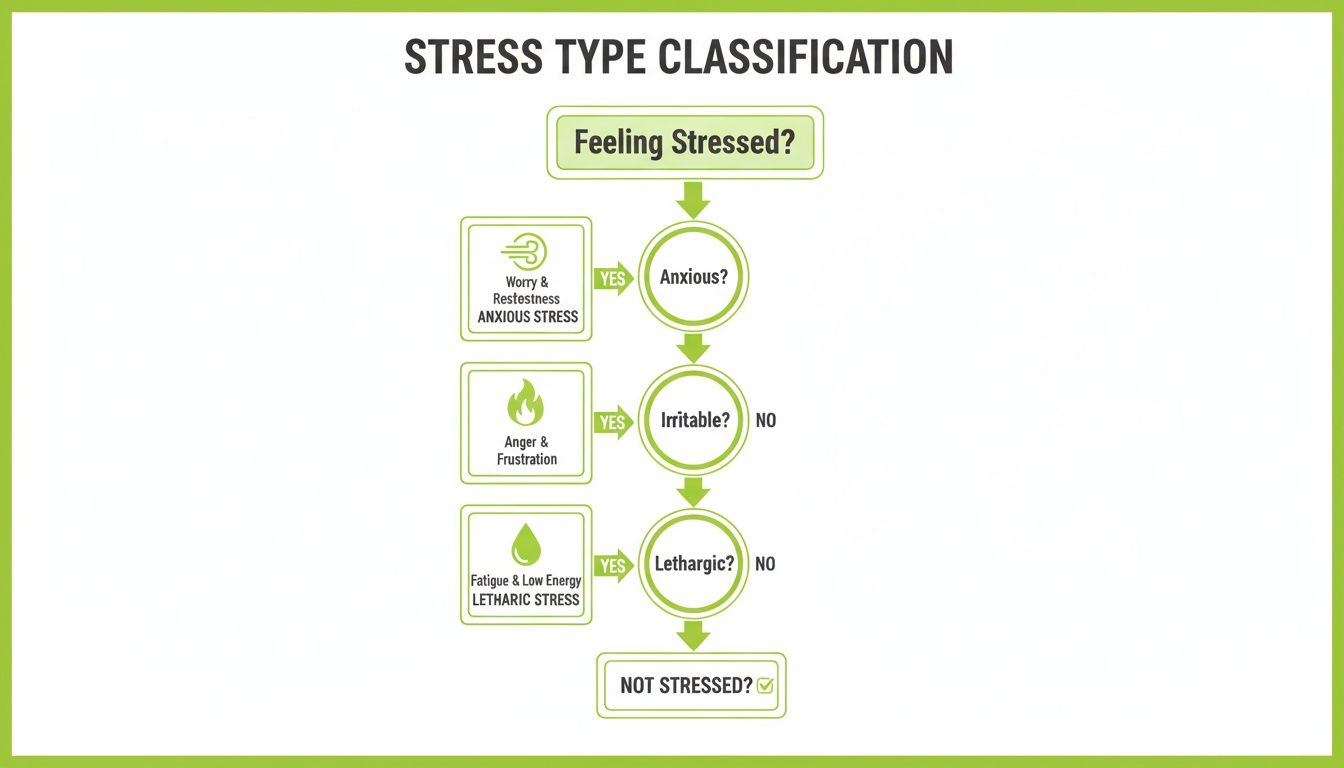
Seeing it visually like this really drives home why identifying your stress type is the first crucial step. It’s what points you toward the most effective Ayurvedic herbs and treatments for you.
The Power of Therapeutic Touch
Herbs are fantastic, but Ayurveda also uses the incredible power of touch and warm oils to directly comfort the nervous system. These treatments are so deeply calming and can offer an almost immediate sense of relief, making them a cornerstone of any Ayurvedic plan for stress.
The real aim of these therapies is to pacify the overactive Vata dosha, which is almost always the primary culprit in feelings of anxiety and stress. The warm oil and rhythmic touch provide the grounding, nourishing qualities that Vata desperately needs.
Two of the most effective therapies I recommend are Shirodhara and Abhyanga.
Shirodhara: This is a truly unique and potent therapy where a continuous, gentle stream of warm, medicated oil is poured over your forehead (right on the 'third eye' point). It has this incredible ability to calm the mind, synchronise brain waves, and lull you into a state of deep relaxation. It works wonders for anxiety, insomnia, and tension headaches.
Abhyanga: This is simply the practice of self-massage with warm oil. Making this a daily ritual, even for just 10-15 minutes before a morning shower, is so incredibly grounding. It calms the nervous system, nourishes the skin, gets the circulation going, and creates a kind of protective energetic shield against the day's stressors. For specific ideas on what to pair with your wellness routine, you might find our guide on https://www.jjherbals.com/post/a-guide-to-the-best-supplements-for-men-over-40 helpful.
Real-World Results of Ayurvedic Stress Treatment
This isn't just theory; the combination of herbs and therapies gets real results. A compelling case study in Himachal Pradesh looked at the impact of Ayurvedic treatments on 25 French tourists who were dealing with severe stress.
Before they started, their symptoms were intense: 93% reported a severe lack of concentration, 92% felt a crippling sense of loneliness, and 90% were struggling with insomnia. The transformation after their Ayurvedic protocol was remarkable. The doctor noted that 90% of the patients released long-held, pent-up emotions. In the end, 50% rated the results as excellent, while the other 50% found them highly satisfactory, reporting a huge drop in both psychological distress and physical symptoms.
Exploring other complementary practices can also be beneficial. For instance, learning how to relieve tension headaches naturally can be a great addition to your overall stress management strategy.
When you combine the internal support of herbs with the external soothing of therapies like Shirodhara and Abhyanga, you build a powerful, multi-layered defence against stress. This approach doesn't just put out the immediate fires of feeling overwhelmed; it builds a lasting foundation of resilience, helping you move through life's challenges with far more calm and stability.
Eating to Soothe Your Nerves and Mind
In Ayurveda, the food on your plate is seen as potent medicine for your mind. When stress has your thoughts racing and your body buzzing with nervous energy, the right foods can be a profoundly grounding, stabilising force. The principle is actually quite simple: to calm the light, mobile, and erratic nature of an aggravated Vata dosha—often the main energy behind anxiety—we need to bring in foods with the opposite qualities.
Think warm, nourishing, and substantial. These are the kinds of meals that comfort not just your stomach but your entire nervous system. Shifting your diet with Ayurveda in mind is one of the most direct and practical ways to manage stress. You're giving your body the deep nourishment it needs to feel secure and calm, which is a cornerstone of any effective stress treatment in ayurveda.
Grounding Your Diet to Calm Vata
When Vata is high, it's like an internal wind is blowing fiercely. This can show up as anxiety, scattered thoughts, and a persistent feeling of being ungrounded. To bring that wind back to a gentle breeze, your diet should lean heavily on foods that are warm, moist, heavy, and a little oily.
On the other hand, things like cold salads, dry crackers, and iced drinks will only add more "wind" to the system, fanning the flames of anxiety.
A simple swap can make a world of difference. For instance, instead of reaching for a raw kale salad at lunchtime, try a warm bowl of moong dal soup or some roasted sweet potatoes. This small change alone provides the warmth and substance your nervous system is craving, helping you feel more anchored and centred throughout your day.
The whole idea is to create a diet that feels like a warm, comforting hug from the inside out.
Embrace Warmth: Always choose cooked foods over raw ones when you're feeling stressed. Steamed vegetables, hearty soups, and warm grains are your best friends.
Include Healthy Fats: Good quality fats are absolutely essential for lubricating the body and calming a frayed nervous system. Don't be shy with ghee, olive oil, and avocado.
Sweet, Sour, and Salty Tastes: These three tastes are known to pacify Vata. Naturally sweet foods like root vegetables, basmati rice, and ripe fruits are beautifully grounding. A squeeze of lime or a pinch of good-quality mineral salt can also be incredibly balancing.
The Power of Mindful Eating
Here's something I always tell my clients: how you eat is just as important as what you eat. Rushing through meals while scrolling on your phone or working at your desk is a guaranteed recipe for Vata aggravation. This kind of distracted eating just sends more stress signals through your body and completely messes with your digestion.
It’s time to transform your mealtimes into a healing practice.
Ayurveda teaches us that the act of eating should be a meditation. When you eat with full awareness, you nourish not just the body but also the mind and spirit, creating a powerful antidote to the chaos of modern life.
Try to create a peaceful environment for your meals. Sit down properly, put your screens away, and take a few deep, conscious breaths before your first bite. Chew your food slowly, really savouring each flavour and texture. This simple act of mindfulness tells your nervous system that it's safe to relax, which dramatically improves your ability to digest and absorb nutrients. Suddenly, every meal becomes a new opportunity for deep nourishment and stress relief.
Ayurvedic Food Guide for Stress Relief
To put all this into practice, it’s useful to have a clear guide on what to eat and what to scale back on, especially when targeting the specific dosha that’s out of balance. While Vata is the usual suspect when it comes to stress, sometimes Pitta or Kapha aggravation can be the root cause. This table is a straightforward guide to help you choose meals that will bring your unique energy back into harmony.
Dosha Imbalance | Foods to Favour (Grounding & Nourishing) | Foods to Reduce or Avoid (Aggravating) |
|---|---|---|
Vata (Anxiety, Worry) | Cooked root vegetables (carrots, sweet potatoes), basmati rice, quinoa, oats, moong dal, ghee, avocado, almonds, warm milk with ginger and cinnamon. | Raw salads, cold smoothies, crackers, dried fruit, beans (like kidney or black beans), caffeine, carbonated drinks. |
Pitta (Irritability, Burnout) | Cooling foods like cucumber, leafy greens (kale, spinach), coconut, basmati rice, barley, chickpeas, sweet fruits (melons, grapes), mint tea. | Spicy foods, chillies, tomatoes, onions, garlic (in excess), sour fruits, coffee, alcohol, fried foods. |
Kapha (Lethargy, Heaviness) | Light and warming foods like leafy greens, broccoli, quinoa, millet, lentils, apples, pears, warming spices (ginger, black pepper, turmeric). | Heavy or oily foods, dairy products (cheese, yoghurt), wheat, sweet fruits (bananas, mangoes), cold drinks, processed sugars. |
By consciously choosing foods that pacify your aggravated dosha, you’re taking an active role in your own healing journey. This isn’t about strict rules or deprivation; it’s about making wise, nourishing choices that support a calm mind and a resilient body. It’s one of the most accessible and profound pillars of Ayurvedic stress management.
Creating a Daily Routine for Lasting Calm

While herbs and diet are fantastic allies against stress, one of the most powerful Ayurvedic practices for creating genuine stability is something we call Dinacharya. This is simply a consistent daily routine. It's not about creating a rigid, stressful schedule or cramming more into your day. Far from it. The goal is to establish a gentle, predictable rhythm that anchors your nervous system and tunes your body into the natural cycles of the sun.
Think about it: when your body knows what to expect, it can finally relax. Scattered mealtimes, chaotic sleep patterns, and an unpredictable schedule are like an open invitation for Vata dosha to get out of balance, leaving you feeling anxious and unsettled. A simple routine offers the complete opposite—it’s grounding, provides stability, and fosters a deep sense of security from within.
Building Your Morning Ritual
How you start your morning really does set the stage for the rest of your day. An Ayurvedic morning routine is intentionally gentle, cleansing, and centering. It's about preparing both your mind and body for whatever lies ahead. Even dedicating just 15 minutes can make a world of difference.
Rise with the Sun: Waking up around sunrise aligns your body with the light, clear energy of the morning. This is considered the Vata time of day, making it the natural moment to feel alert and awake.
Oil Pulling (Gandusha): Before you even reach for your toothbrush, try swishing a tablespoon of sesame or coconut oil in your mouth for 5-10 minutes. This ancient technique helps pull out toxins from the system, supports gum health, and is a great start to your daily cleansing.
Self-Massage (Abhyanga): The practice of Abhyanga, or self-massage with warm oil, is perhaps the most nurturing thing you can do for yourself. Gently massaging warm sesame oil all over your body before a warm shower is incredibly calming for the nervous system, nourishes your skin, and creates a sort of protective shield against daily stressors.
These small acts send a powerful message to your body: you are safe, you are cared for. It’s a profound way to start the day before the demands of the world kick in and is a cornerstone of any effective stress treatment in ayurveda.
Rhythm Through the Day and Night
That feeling of consistency doesn't have to end in the morning. By maintaining a gentle rhythm throughout the day, you reinforce that sense of stability. Try to have your meals, especially your main meal at midday, around the same time each day. This simple habit supports your digestive fire (agni) and helps prevent the erratic energy spikes and crashes that often feed our stress levels.
As evening draws near, your routine should gently shift towards winding down. This is absolutely crucial for promoting the kind of deep, restorative sleep that Ayurveda considers a pillar of good health.
"An evening routine is your transition from the world of doing to the world of being. It’s a conscious choice to release the day's stress and prepare your mind and body for true rest."
You can create your own calming evening ritual. It might include things like:
Switching off all screens at least an hour before you plan to sleep.
Sipping a warm cup of herbal tea, like chamomile or tulsi.
Doing a few gentle stretches or reading a physical book.
While rooted in Ayurvedic wisdom, we can also enhance our journey by exploring the real benefits of a digital detox for your mind and body. These small, consistent steps are what truly build resilience over time. To learn more about cultivating this kind of energy every day, you can restore vitality with simple daily habits.
Your Questions, Answered
Embarking on an Ayurvedic path to wellness often brings up a few questions. It's completely normal to want to understand the practical side of things—what to expect, how to find the right support, and how to safely use herbal remedies. Getting these answers can give you the confidence you need to start your journey toward real, lasting calm.
How Quickly Will I See Results?
This is probably the most common question I hear, and the answer is layered. While some therapies, like the beautiful and deeply relaxing Shirodhara treatment, can offer an almost instant sense of peace, creating sustainable change takes time. It’s a marathon, not a sprint.
You’ll likely notice tangible improvements—like better sleep and less of that constant, nagging anxiousness—within a few weeks of consistently sticking to your new diet and daily routine. For the more profound, stable results from your stress treatment in Ayurveda, give it one to three months. That’s the sweet spot where your body and mind truly begin to adapt and find a new, calmer baseline.
Are Ayurvedic Herbs Genuinely Safe to Use?
Herbs like Ashwagandha and Brahmi have been used for centuries and are generally considered very safe for most people when used correctly. But don't let their natural origins fool you—these are potent botanicals and should be treated with respect.
My best advice? Never self-prescribe. It is absolutely crucial to consult with a qualified Ayurvedic practitioner before adding any new herb to your regimen. They can assess your unique dosha, recommend the right herb and dosage, and most importantly, ensure it won’t interact with any medications you might already be taking.
How Do I Find a Good Ayurvedic Practitioner?
Finding the right guide is a game-changer. Your practitioner is your partner in this journey, so it's important to find someone you trust.
In India: Look for practitioners with a B.A.M.S. (Bachelor of Ayurvedic Medicine and Surgery) degree. This is the gold standard of Ayurvedic medical education.
In the U.S.: Seek out professionals with credentials from respected organisations like the National Ayurvedic Medical Association (NAMA).
Reading reviews from other patients is a great start, but I always recommend booking an initial consultation to see if their approach resonates with you. For many people, especially those with busy schedules, an ayurvedic doctors online consultation can be a fantastic and convenient way to connect with a trusted expert.
The growing trust in these ancient practices is undeniable. People are turning to Ayurveda not just for physical issues but increasingly for the mental and emotional burdens of modern life. A 2022 study in Karnataka, for instance, showed a major uptick in people visiting Ayurvedic centres for mental health support post-pandemic. You can learn more about these community health findings.
Can I Weave Ayurveda into My Existing Routine?
Absolutely! That’s one of the most beautiful things about Ayurveda—it isn't meant to replace everything you're already doing. It’s designed to work in harmony with other wellness practices.
Think of it as adding new, supportive layers. Your mindful eating habits, the practice of self-massage (Abhyanga), and a structured daily routine can beautifully complement things like modern therapy, your yoga practice, or meditation. They all work toward the same goal, creating a more holistic and powerful approach to managing stress and boosting your overall well-being.
At JJ Herbals, our mission is to help you rediscover your natural state of balance and vitality. We offer authentic Ayurvedic supplements and expert consultations to support your journey to a calmer, more resilient you. Discover our wellness solutions today.
Comments