.png)
Your Guide to Ayurvedic Treatment for Menopause
- DeVeNdRa NaTh
- Dec 21, 2025
- 17 min read

Ayurveda doesn’t see menopause as something to be "treated" but rather as a natural and powerful shift in a woman's life. The focus is on easing this transition by calming the Vata dosha—the energy of air and movement—which tends to become more prominent during this time. By using specific herbs like Shatavari and Ashwagandha, adopting a grounding diet, and embracing calming lifestyle practices, Ayurveda works to bring the body back into balance, addressing the root cause rather than just masking symptoms.
An Ayurvedic View of Menopause
In Ayurveda, this life stage is called 'Rajonivrutti', which simply means the end of menstruation. It isn't considered a disease or a disorder. Instead, it's a profound transition that marks a new phase of wisdom and introspection. The entire Ayurvedic system is built on the idea that our health depends on the delicate balance of three fundamental energies, or doshas, that govern everything our bodies do.
The real key to navigating menopause with grace, from an Ayurvedic perspective, is understanding the central role of the Vata dosha. Vata is made up of the air and ether elements, and it's the force behind every kind of movement in the body, from breathing to the flow of thoughts. As we age, Vata naturally increases, which can bring qualities like dryness, coldness, and unpredictability into our system.
The Wind That Stirs the Pot
Imagine Vata as the wind. A gentle breeze is lovely, but during menopause, that wind can pick up and become a bit chaotic, throwing the other two doshas off balance.
Pitta Dosha: This is the energy of fire and water, which governs our digestion, metabolism, and body temperature. When Vata’s wind "fans the flames" of Pitta, you might experience things like hot flushes, irritability, and skin rashes.
Kapha Dosha: Made of earth and water, Kapha provides stability, lubrication, and structure. When Vata’s erratic movement disrupts Kapha, it can lead to feelings of sluggishness, weight gain, and a sense of mental fog.
The Ayurvedic approach to menopause isn't about fighting the natural rise of Vata. It’s about gently grounding that 'wind,' cooling the 'fire' of Pitta, and stabilising the 'earth' of Kapha to restore a sense of inner harmony.
This way of thinking helps you see your symptoms not as isolated problems but as clear messages from your body, pointing to exactly which energy needs a little more support and care.
A Growing Shift Towards Natural Balance
More and more women are seeking out this kind of supportive, natural care. In fact, the India menopause market, which is significantly shaped by Ayurvedic dietary supplements, hit USD 1,026.3 million in revenue in 2024. It's expected to grow to USD 1,672.7 million by 2030.
This trend is driven by a rising awareness of holistic health and the reality that menopause often starts 4-5 years earlier for women in India compared to those in Western countries. You can discover more insights about the menopause market in India and see how traditional remedies are playing a major role.
When you start to understand these core principles, menopause stops feeling like an ending. It becomes a powerful journey—one you can navigate with vitality and grace by focusing on nourishing your whole self for the vibrant decades ahead.
How Your Dosha Imbalance Shapes Your Symptoms
Have you ever wondered why your experience of menopause is so different from your friend’s? Maybe you’re battling intense hot flushes and irritability, while she’s dealing with persistent anxiety and cracking joints. Ayurveda explains that these differences aren’t random at all. They’re a direct reflection of your unique mind-body constitution and which doshas are out of balance.
In Ayurveda, menopause is seen as a major life transition marking the shift into the Vata stage of life. Vata is the energy of movement, governed by the elements of air and space. Think of it as a cool, dry wind. As we age, this internal wind naturally picks up for everyone.
But Vata rarely acts alone. Its gusty, mobile nature tends to stir up the other two doshas—Pitta (fire and water) and Kapha (earth and water)—creating a unique pattern of symptoms for each woman.
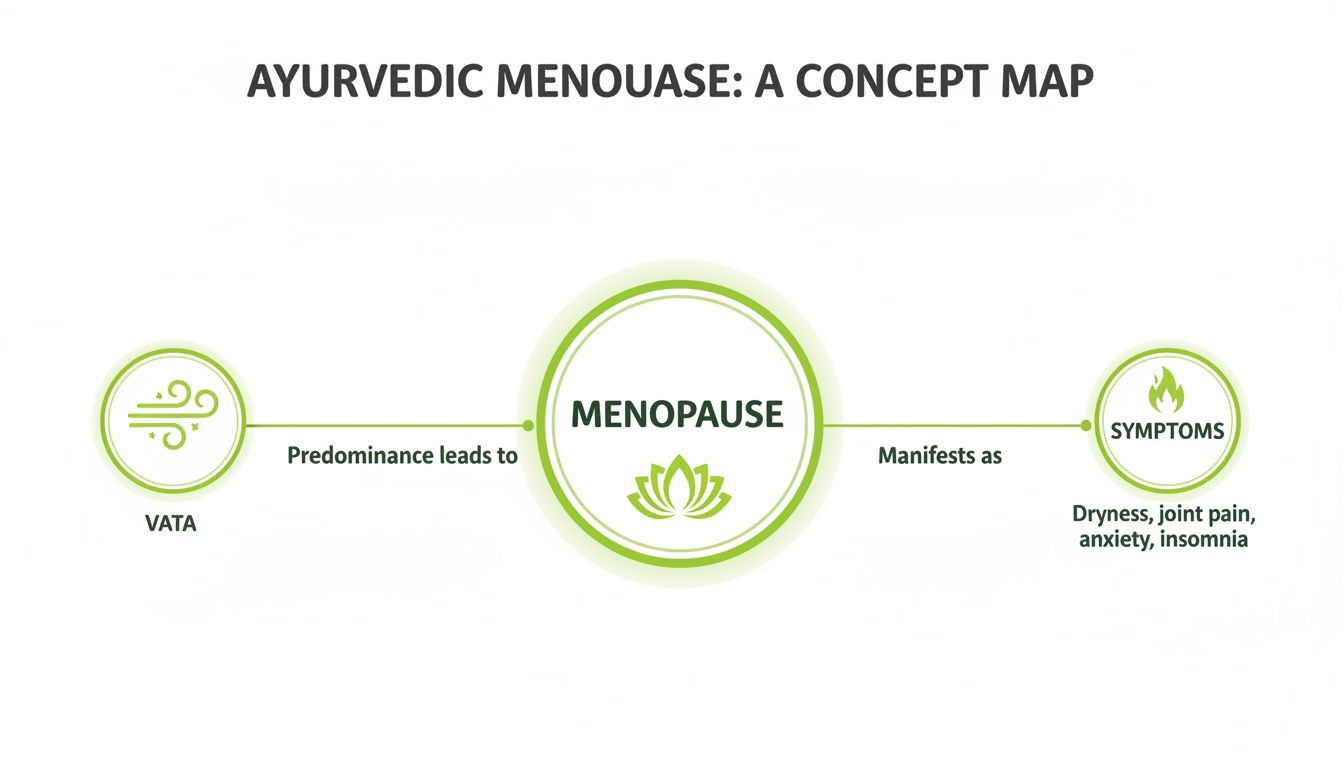
The real insight here is that while Vata is the primary mover behind the menopausal shift, the specific symptoms you experience depend entirely on which other dosha it aggravates the most. Pinpointing your personal pattern is the crucial first step toward finding relief.
To help you get a clearer picture, let's look at how these imbalances typically show up. The table below outlines common symptoms based on which dosha is most disturbed.
Identifying Your Menopausal Dosha Imbalance
Symptom Category | Vata Imbalance Manifestation | Pitta Imbalance Manifestation | Kapha Imbalance Manifestation |
|---|---|---|---|
Emotional State | Anxiety, nervousness, worry, racing thoughts | Irritability, anger, impatience, frustration | Lethargy, lack of motivation, sadness, brain fog |
Sleep Patterns | Insomnia, waking frequently, restless sleep | Night sweats, waking up feeling hot and bothered | Oversleeping, feeling groggy upon waking |
Physical Sensations | Dryness (skin, hair, vaginal), joint aches and pains, constipation | Hot flushes, skin rashes, acid reflux, heavy periods | Weight gain, water retention, sluggish digestion |
Energy Levels | Variable energy, feeling scattered, prone to crashes | Intense but can burn out quickly | Consistently low energy, feeling heavy and tired |
Seeing your symptoms laid out like this can be an "aha!" moment. It helps you move from feeling overwhelmed by a long list of problems to understanding the single root cause that connects them all. Now, let’s explore each of these patterns more deeply.
The Windy Disruption of Vata Predominance
When the Vata dosha itself is the main source of the imbalance, its qualities—dry, light, cold, and mobile—get amplified throughout your mind and body. The ‘wind’ isn’t just fanning another fire; it’s creating its own internal weather system of erratic change.
Symptoms of a Vata-predominant imbalance often include:
Dryness: This can show up everywhere, from dry, flaky skin and brittle hair to vaginal dryness and constipation.
Anxiety and Nervousness: Since Vata governs the nervous system, an excess can lead to racing thoughts, worry, and a constant feeling of being on edge.
Sleep Disturbances: Insomnia or waking up between 2 a.m. and 6 a.m. is a classic sign of high Vata.
Aches and Pains: You might notice more cracking joints, stiffness, or a general sense of bodily discomfort.
If this sounds like your experience, the goal is to bring in warmth, moisture, and stability to gently ground Vata's cold, dry, and erratic nature.
When Vata Fans the Flames of Pitta
Now, imagine that same Vata wind blowing on the hot embers of the Pitta dosha, the energy of fire and transformation. The result? An intense, flaring blaze. When Vata aggravates Pitta, you experience symptoms that feel fiery, sharp, and reactive. This combination is often behind the most well-known menopausal complaints.
A Pitta imbalance often manifests as heat rising in the body and mind. It’s the internal fire flaring up, leading to both physical and emotional intensity that can feel overwhelming.
Key signs of a Pitta-driven imbalance include:
Hot Flushes and Night Sweats: This is the most direct symptom of excess heat trying to escape the body.
Irritability and Anger: Pitta governs emotions like frustration and anger, so you might find yourself with a much shorter fuse.
Skin Issues: Inflammatory conditions like rashes, acne, or rosacea can suddenly flare up.
Acid Reflux or Heartburn: The digestive fire, or agni, can become too sharp, leading to burning discomfort.
To manage this fiery pattern, your focus needs to be on cooling, calming, and releasing excess heat. For a deeper look into this dosha, you can explore the common Pitta imbalance symptoms in our detailed guide.
The Chilling Effect on Stable Kapha
So what happens when the gusty Vata wind blows through the domain of Kapha, the energy of earth and water? It doesn’t create fire. Instead, it can lead to stagnation, coldness, and a feeling of heaviness. Kapha is what gives us stability and structure, but when disturbed by erratic Vata, it can become sluggish and stuck.
This imbalance often results in a feeling of being weighed down, both physically and mentally.
A Kapha-predominant imbalance typically presents as:
Weight Gain: A stubborn inability to lose weight, even without major dietary changes, is a hallmark sign.
Lethargy and Fatigue: This isn’t just being tired; it’s a deep sense of heaviness and a lack of motivation.
Mental Fog: You might struggle with concentration, memory, or a general feeling of mental dullness.
Water Retention: Swelling in the hands and feet or general bloating can occur as the body holds onto excess fluid.
If this pattern resonates with you, your approach will centre on bringing lightness, stimulation, and movement into your routine to counteract the heavy, stagnant qualities of Kapha. By identifying your unique doshic pattern, you can finally move beyond managing individual symptoms and start addressing the root cause of your discomfort.
Harnessing Ayurvedic Herbs for Hormonal Harmony
While a solid foundation of diet and lifestyle is crucial, some incredible Ayurvedic herbs can act as powerful allies on your menopause journey. In Ayurveda, these plant-based remedies are known as dravyaguna, and they work intelligently with your body to address specific symptoms and soothe the dosha imbalances causing your discomfort.
Think of these herbs not as a quick fix, but as wise guides. They help your body remember its natural state of harmony, providing targeted support right where you need it most—whether that’s calming an anxious mind, cooling fiery hot flushes, or rebuilding depleted energy.
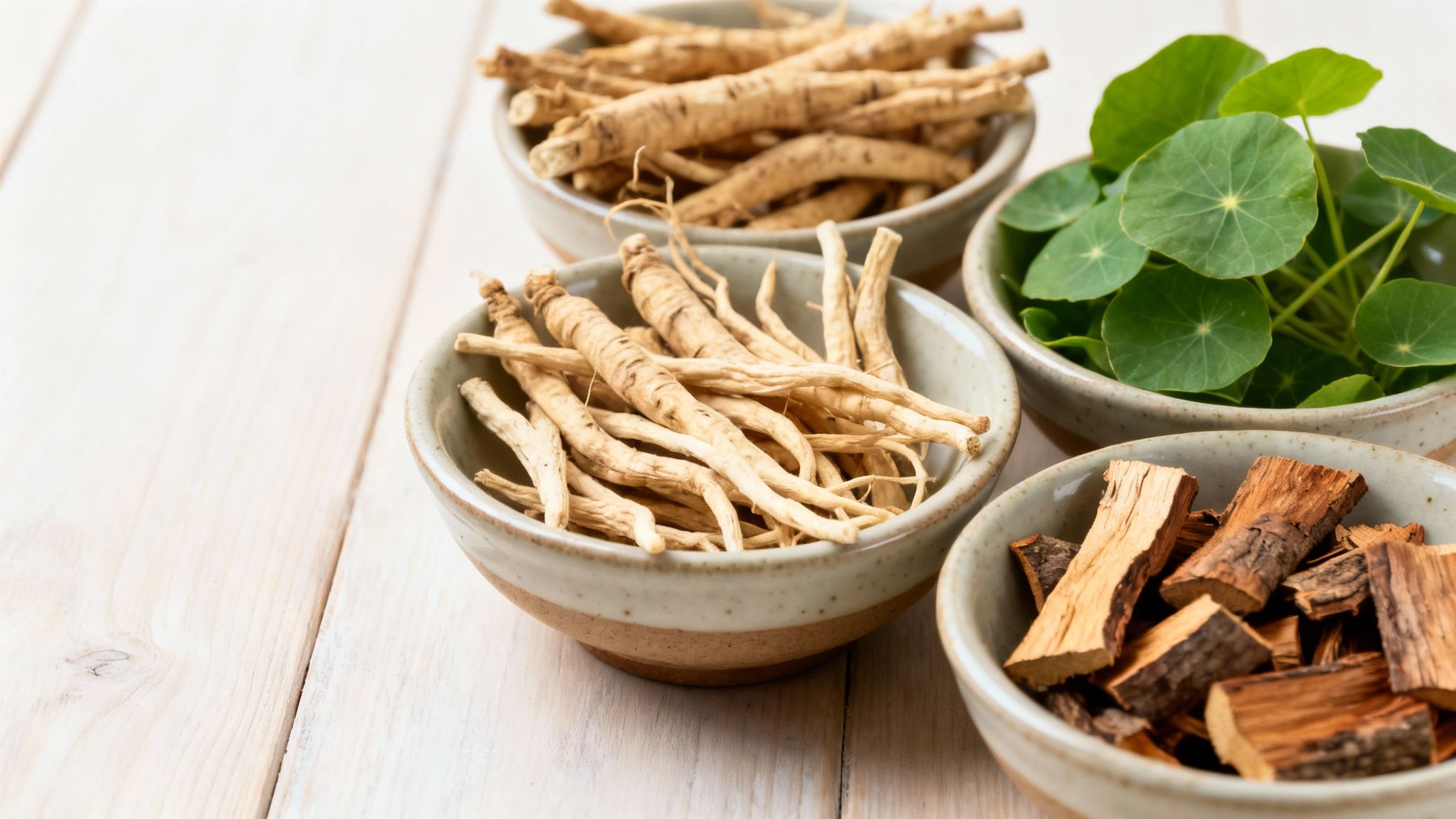
Let’s explore a few of the most revered herbs for menopause, looking at how they work and which symptoms they target best.
Shatavari: The Queen of Herbs for Women
When it comes to female health in Ayurveda, Shatavari (Asparagus racemosus) is in a class of its own. Its name translates to "she who possesses one hundred husbands," a poetic nod to its profound ability to rejuvenate and strengthen the female reproductive system. It’s particularly brilliant during menopause.
Shatavari is known for its cooling, moistening, and nourishing properties, making it the perfect antidote to the hot, dry qualities that come with aggravated Vata and Pitta.
For Hot Flushes & Night Sweats: Its cooling nature is a direct counterbalance to the excess Pitta that fuels these fiery moments.
For Vaginal Dryness: As a deeply hydrating herb, Shatavari helps to lubricate and soothe dry tissues throughout the body.
For Emotional Balance: It has a wonderful calming effect on the mind, gently easing the irritability and mood swings linked to Pitta imbalance.
It's a true multitasker, offering gentle yet powerful support for so many of the common challenges of this transition.
Ashwagandha: The Strength Giver
If Shatavari is the queen, then Ashwagandha (Withania somnifera) is the king of adaptogenic herbs. An adaptogen is simply a substance that helps your body adapt to and manage stress. Menopause itself can be a significant stressor on the nervous system and adrenals, and this is where Ashwagandha really shines.
It is especially helpful for managing Vata-dominant symptoms like anxiety, insomnia, and that feeling of being completely drained.
Ashwagandha works by nourishing and strengthening the nervous system. Instead of just putting a plaster on fatigue, it helps rebuild your core energy reserves from the ground up, promoting deep rest and resilience.
Consider reaching for Ashwagandha if you're experiencing:
Anxiety and Racing Thoughts: It helps calm the "windy," scattered nature of Vata in the mind.
Insomnia and Poor Sleep: It encourages deeper, more restorative sleep cycles.
Fatigue and Low Energy: By supporting adrenal health, it helps you recover from burnout.
Its grounding qualities make it a cornerstone for any Ayurvedic approach focused on calming Vata.
Brahmi: The Brain Tonic
Brain fog and memory lapses can be incredibly frustrating symptoms, often driven by high Vata. Brahmi (Bacopa monnieri) is a celebrated herb known for its ability to support cognitive function, enhance memory, and quiet the mind.
Brahmi works directly on the nervous system, helping to bring back clarity and focus. It settles that scattered, restless Vata energy, allowing for clearer thinking and a more peaceful emotional state. It's an excellent choice if your primary concerns are mental fatigue and difficulty concentrating.
Arjuna: The Heart Guardian
Cardiovascular health becomes increasingly important during and after menopause. Arjuna (Terminalia arjuna) is Ayurveda’s premier herb for supporting the heart, where it’s believed to strengthen the heart muscle and promote healthy circulation.
From an Ayurvedic perspective, the heart is also the seat of our emotions. Arjuna is said to have a strengthening effect on the emotional heart, too, helping to soothe feelings of sadness or vulnerability that can surface during this life transition. It provides a sense of emotional stability and courage when you need it most.
Modern research is beginning to back up what Ayurvedic practitioners have known for centuries. For instance, a clinical trial in India found that Ayurvedic formulas including Ashwagandha Churna brought significant relief. The results showed hot flushes were reduced by 44.88%, anxiety by 42.62%, and joint discomfort by 45.89%. You can read the full study on Ayurvedic menopause management to see the detailed findings for yourself.
Choosing and using these herbs—whether as powders (churnas), tablets, or in medicated oils—can provide profound support. However, it's always best to work with a qualified practitioner. They can recommend the right herbs and dosages for your unique doshic imbalance, ensuring a safe and effective path back to hormonal harmony.
Creating Your Ayurvedic Menopause Diet Plan
In Ayurveda, the food you eat—what we call Aahara—is seen as the very first line of medicine. It's incredibly powerful. What you put on your plate has a direct, immediate impact on your menopausal symptoms, either calming them down or stirring them up. By making a few conscious shifts, you can turn your kitchen into a personal pharmacy, soothing imbalances from the inside out.
The main goal of an Ayurvedic diet during menopause is to pacify the dominant Vata dosha. Since Vata is naturally cool, dry, and light, we want to bring in the opposite qualities with our food: things that are warm, moist, and grounding. A great way to think about it is like adding warm water to dry, hard clay—it softens, lubricates, and makes everything pliable again.

This means you'll want to start moving away from things like cold salads, dry crackers, and iced drinks. These kinds of foods tend to amplify Vata's qualities in your body, which can make symptoms like joint pain, anxiety, and constipation feel even worse. The focus, instead, should be on comforting, well-cooked meals that feel deeply nourishing.
Building Your Vata-Pacifying Plate
Putting together a diet that grounds Vata doesn't need to be complicated. It’s really about prioritising certain qualities in your food to create a feeling of stability and comfort. The golden rule is to stick with freshly prepared, warm meals that your body can digest easily.
Here are the key principles to build your meals around:
Warmth and Moisture: Always opt for cooked foods over raw ones. Think steamed vegetables instead of a raw salad, or a hearty stew instead of a cold sandwich. Soups, dals, and warm porridges are going to be your best friends.
Healthy Fats: Vata-induced dryness needs good lubrication from the inside. Bring in high-quality fats like ghee, coconut oil, olive oil, and sesame oil. Adding a spoonful of ghee to your meals is a classic Ayurvedic trick for combating internal dryness.
Grounding Foods: Reach for foods that grow underground. Root vegetables like sweet potatoes, carrots, beetroot, and pumpkin have a naturally grounding energy that helps anchor Vata's flighty nature.
Nourishing Grains: Choose well-cooked, wholesome grains like basmati rice, quinoa, and oats. They provide steady, sustained energy and a satisfying sense of fullness.
This approach gives your body the deep nourishment it’s craving during this time of transition. It helps settle the nervous system and replenish your energy reserves in a gentle, sustainable way.
Understanding the Six Tastes
Ayurveda classifies all food into six tastes, or rasas, and each one has a specific effect on the doshas. To pacify Vata, you'll want to bring more of three specific tastes into your diet while reducing the others.
A Vata-balancing diet is built on the foundation of sweet, sour, and salty tastes. These flavours ground energy, promote moisture, and support digestion, directly counteracting the dry, light nature of Vata.
Let's break down which tastes to focus on and which to enjoy in moderation.
Tastes to Favour:
Sweet: Now, this doesn't mean loading up on sugar! In Ayurveda, 'sweet' refers to naturally sweet foods like rice, milk, ghee, dates, and juicy fruits like mangoes and bananas. These foods are deeply nourishing and help build your body's tissues.
Sour: Tastes like a squeeze of lemon, a bit of yoghurt, or fermented foods (in moderation) are great for stimulating digestion and bringing moisture back into the system.
Salty: Natural salts like rock salt and sea salt help with hydration and mineral balance. They have a wonderful grounding quality that helps pull the body's energy downwards.
Tastes to Limit:
Pungent: Overly spicy foods like chillies can be too heating and drying for a system already high in Vata.
Bitter: Foods like kale and other dark, leafy greens are very light and airy, which can increase Vata. It's best to cook them well with plenty of oil.
Astringent: Think of that dry, puckering sensation you get from an unripe banana or a mouthful of beans. This quality directly aggravates Vata's inherent dryness.
By consciously building your meals around more sweet, sour, and salty foods, you can create a diet that provides an effective Ayurvedic treatment for menopause, helping your body find its natural state of balance and ease.
Daily Rituals and Therapies for Lasting Relief
In Ayurveda, the small habits you practice every day—what we call Dinacharya—are the real secret to lasting health. While herbs and diet are working their magic from the inside, your lifestyle practices, or Vihara, build a strong, stable container for your body to navigate menopause with grace. These rituals aren't just a bit of self-care; they are potent medicine for calming the nervous system and reining in that unsettled Vata dosha.
Think of it this way: when Vata is high, it can feel like you're a kite being thrashed around by the wind. A predictable daily routine acts like a steady hand on the kite string, keeping you grounded and preventing you from being carried away by anxiety or sudden energy crashes. It creates a rhythm your body can rely on.
This holistic approach is drawing more and more women towards traditional healing. In India alone, where an estimated 43 million women are in the menopausal transition, the industry for menopause treatments saw a compound annual growth rate of 5.8% between 2020 and 2025. This isn't just a number; it points to a significant shift towards wanting more natural, supportive options like Ayurveda. You can discover more insights about India's menopause treatment industry and its powerful growth trajectory.
The Grounding Power of Abhyanga Self-Massage
If you were to adopt just one practice, let it be Abhyanga, a daily self-massage with warm oil. This simple act is a direct antidote to the dryness, cold, and roughness of Vata. The warm oil sinks deep into your skin, nourishing tissues, soothing achy joints, and blanketing your entire nervous system in a sense of calm.
Giving yourself an Abhyanga is beautifully simple:
Warm Your Oil: Gently heat about a quarter cup of oil. Sesame oil is fantastic for Vata, but if you're dealing with hot flushes and other Pitta symptoms, cooling coconut oil is a better choice.
Apply Generously: Begin with your arms and legs, using long, flowing strokes. Switch to gentle circular motions over your joints, like the knees and elbows.
Massage Your Body: Work your way towards your core, massaging your belly and chest in wide, clockwise circles.
Rest and Absorb: Let the oil soak in for at least 10-15 minutes. This is a great time to relax before a warm bath or shower.
Abhyanga is so much more than a moisturiser. It’s an act of deep self-love. It sends a powerful message to your nervous system that you are safe, cared for, and grounded, which is absolutely vital for managing Vata-driven anxiety.
Calming Movement and Breath
During menopause, gentle, mindful movement will serve you far better than a punishing, high-intensity workout, which can easily stir up more Vata. This is where Yoga and specific breathing exercises, known as Pranayama, truly shine. They work wonders for balancing hormones and quieting a racing mind.
Restorative Yoga Poses:
Child's Pose (Balasana): Instantly calms the brain and melts away stress and fatigue.
Legs-Up-the-Wall (Viparita Karani): A heavenly pose for tired legs, it encourages deep relaxation and improves circulation.
Supported Bridge Pose (Setu Bandhasana): Gently opens the heart and chest, which can help ease feelings of mild anxiety.
Cooling Pranayama:
For those fiery Pitta symptoms like hot flushes and irritability, cooling breath techniques are a game-changer. Try Sheetali Pranayama (the cooling breath): curl your tongue into a tube, inhale slowly through it as if sipping through a straw, and then exhale gently through your nose. It's like having a personal air conditioner and can provide immediate relief when you feel a wave of heat building.
Specialised Ayurvedic Therapies for Deeper Relief
Sometimes, daily rituals aren't enough to correct a deeper imbalance. This is when a qualified Ayurvedic practitioner might suggest more specialised therapies designed to pacify the doshas at their very root.
One of the most revered treatments is Shirodhara. In this therapy, a continuous, gentle stream of warm, medicated oil is poured across the forehead. The experience is profoundly calming and is incredibly effective for anyone struggling with insomnia, chronic headaches, or deep-seated anxiety.
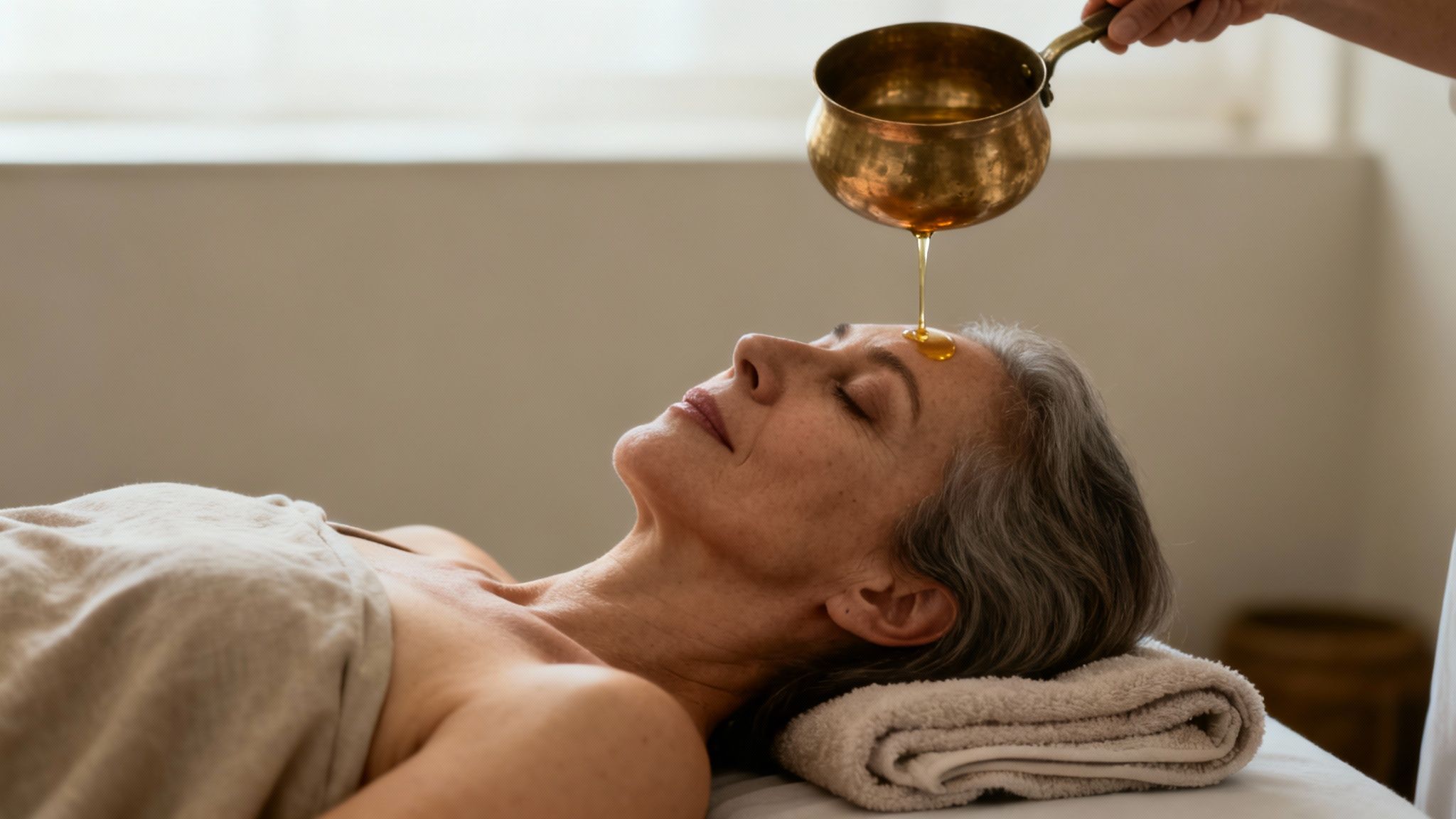
Often, treatments like Shirodhara are part of a more comprehensive detoxification and rejuvenation program called Panchakarma. This is a powerful, systematic process for cleansing accumulated toxins (ama) from the body and hitting the "reset" button on your doshic balance. You can get a better sense of this process in our guide that explains what Panchakarma is in Ayurveda and its five ancient therapies.
By weaving these daily and periodic therapies into your life, you create a robust support system that helps your body find not just relief, but a new sense of well-being.
Finding a Qualified Ayurvedic Practitioner
While this guide gives you a solid starting point, the real magic of Ayurveda for menopause happens when it becomes truly personal. General advice is a great first step, but working with a qualified Ayurvedic practitioner, or Vaidya, is what turns guesswork into genuine, targeted healing. They'll craft a plan that's made just for you.
This kind of personalised care is so important because a skilled practitioner looks far beyond your surface symptoms. They use ancient and incredibly sophisticated diagnostic tools to get to the very root of what’s causing the imbalance in your body.
What to Expect During a Consultation
An Ayurvedic consultation isn't just a quick chat; it's a deep dive into your entire state of being. Your Vaidya will likely use a few key methods to build a complete picture of your unique doshic constitution and current imbalances:
Pulse Diagnosis (Nadi Pariksha): This is a cornerstone of Ayurvedic diagnosis. By simply feeling the quality of your pulse at the wrist, an experienced practitioner can uncover subtle energetic shifts happening within your organs and tissues.
Tongue Analysis: Your tongue is like a roadmap to your internal health. Its shape, colour, and any coating can reveal a lot about your digestion and whether toxins (ama) have built up in your system.
A Detailed Conversation: Expect to talk about everything! They'll ask about what you eat, how you sleep, your emotional well-being, and of course, the specific menopausal symptoms you're experiencing.
This thorough examination is what allows them to create a precise, multi-layered plan just for you.
A Vaidya won’t just hand you a generic list of herbs. They will carefully select the exact combination, dosage, and therapies needed to soothe your specific Vata, Pitta, or Kapha aggravation. This ensures a much more effective—and safer—path to feeling better.
Finding the right expert is a huge step toward reclaiming your well-being. To get started on this path, you can explore options for a personalised Ayurvedic doctor consultation and receive expert guidance. When you connect with a practitioner, don't be shy about asking questions. Ask about their experience with menopause, their qualifications, and their overall approach. This helps you find a partner you can truly trust for this important journey.
Common Questions About Ayurvedic Menopause Treatment
It's completely natural to have questions when you're thinking about a new approach to your health. When it comes to using Ayurveda for menopause, you want to know what you're getting into. Let's walk through some of the most common queries to give you a clearer picture and help you feel confident in your choices.
We'll cover practical things like timing, safety, and what the overall process really looks like, so you know exactly what to expect on this healing journey.
How Long Until I See Results?
This is probably the first thing on everyone's mind, and rightly so. The honest answer is that the timeline is different for every woman. It really depends on your unique body constitution (Prakriti), how deep-rooted the doshic imbalance is, and, most importantly, how consistently you can stick to your plan.
Many women start to notice subtle shifts, like better sleep or a more stable mood, within a few weeks. For the more stubborn symptoms—think intense hot flushes or nagging joint pain—it might take a bit longer, usually between one to three months, to feel a significant change.
Ayurveda isn't about quick fixes; it's about getting to the root of the problem. Picture it as gently coaxing your body back to its natural, balanced state. It's a gradual, restorative process, and your patience and consistency are what will bring about real, lasting success.
Can I Combine Ayurveda with HRT?
Absolutely. An integrated approach, blending Ayurvedic wisdom with conventional treatments like Hormone Replacement Therapy (HRT), can be incredibly supportive. The key here is careful management and open communication.
It's crucial that you tell your medical doctor and your Ayurvedic practitioner about everything you are taking—every herb, supplement, and medication. Some powerful herbs can interact with prescription drugs, so a qualified Vaidya (Ayurvedic practitioner) will know how to create a safe plan that complements your medical treatment. Never, ever stop taking a prescribed medication without your doctor's direct advice. Your safety depends on everyone on your healthcare team being on the same page.
Do I Still Need to Change My Diet?
Yes, without a doubt. While amazing herbs like Ashwagandha and Shatavari provide powerful support, they work best as part of a bigger picture. In Ayurveda, your diet (Aahara) and lifestyle (Vihara) are the absolute bedrock of your health.
Taking herbs while still eating foods that are throwing your doshas out of whack is a bit like trying to put out a fire while someone else is adding kindling. For the deepest, most sustainable results, herbal support must go hand-in-hand with the right diet and lifestyle. That synergy is what truly creates lasting balance in your body and mind.
At JJ Herbals, we believe in nature's incredible power to restore vitality. Our 100% natural, farm-to-bottle supplements are crafted to support your body's own innate wisdom. Discover our Ayurvedic solutions and begin your journey back to balance today.
Comments