.png)
Shatavari for Women A Guide to Hormonal Balance and Vitality
- DeVeNdRa NaTh
- Dec 30, 2025
- 16 min read

For centuries, Ayurvedic practitioners have turned to one herb, in particular, to support women through every chapter of their lives: Shatavari. It's often called the "Queen of Herbs," and for good reason. At its heart, Shatavari is an adaptogen, which means it helps your body adapt to and manage stress, promoting a natural sense of equilibrium. This makes it a foundational herb for women looking for holistic wellness solutions.
What Is Shatavari, the "Queen of Herbs"?
Think of your body's complex internal systems—especially your hormones—as a finely tuned orchestra. When stress, environmental factors, or life's natural cycles throw things off, some instruments can start playing out of sync, creating disharmony. Shatavari doesn't just silence one noisy instrument; it acts more like a skilled conductor, gently coaxing the entire orchestra back into a beautiful, harmonious rhythm. That’s where its real power lies.
Botanically known as Asparagus racemosus, this humble climbing plant is a member of the lily family and has been a cornerstone of Ayurvedic medicine for millennia. Its Sanskrit name beautifully translates to "she who possesses a hundred husbands," a poetic nod to its long-held reputation for enhancing vitality and deeply nourishing the female reproductive system.
A Gentle Regulator, Not a Quick Fix
Shatavari belongs to a unique class of herbs known as adaptogens. These aren't forceful substances that override your body's natural processes. Instead, they work with you, enhancing your innate ability to cope with physical, chemical, and biological stressors. It’s this gentle, balancing act that makes it so treasured for long-term health and wellness.
The part of the plant we use is the root. It’s typically dried and ground into a fine powder, which contains the active compounds—primarily a group of steroidal saponins called shatavarins—thought to be responsible for its wide-ranging benefits.
In Ayurveda, Shatavari is considered a rasayana, or a rejuvenating tonic. This means it goes beyond just addressing symptoms; it works to deeply nourish and restore the entire body, promoting longevity and vibrant health from the inside out.
Shatavari's Key Supportive Roles
This herb's versatility makes it an invaluable ally for women at all stages of life. Its main areas of support include:
Hormonal Balance: Helps to regulate menstrual cycles and soothe symptoms tied to hormonal shifts, from PMS to the transition into menopause.
Reproductive Health: Traditionally used to tone and strengthen the uterus, support healthy ovulation, and prepare the body for conception.
Postnatal Support: Famously known as a galactagogue, it helps support healthy lactation and aids new mothers in regaining their strength after childbirth.
Stress Resilience: As a powerful adaptogen, it bolsters the body's response to daily stress—a common root cause of hormonal imbalance.
To give you a clearer picture, here’s a quick overview of how Shatavari supports women through different life stages and concerns.
Shatavari At-a-Glance: Key Benefits for Women
Life Stage or Concern | How Shatavari Helps | Primary Mechanism |
|---|---|---|
Menstrual Health | Regulates cycles, eases cramps and PMS symptoms like mood swings and bloating. | Adaptogenic and anti-inflammatory properties help balance hormonal fluctuations. |
Fertility & Conception | Nourishes the uterus, supports cervical mucus production, and promotes ovulation. | Phytoestrogenic action supports a healthy reproductive environment. |
Pregnancy & Postpartum | Traditionally used to prevent miscarriage and famously supports breast milk production (as a galactagogue). | Prolactin-enhancing properties and overall nourishing effect. |
Menopause | Reduces hot flushes, night sweats, vaginal dryness, and mood swings. | Phytoestrogens help buffer the decline in the body's natural oestrogen levels. |
Stress & Energy | Calms the nervous system, reduces cortisol levels, and combats fatigue. | As an adaptogen, it modulates the body's stress response system. |
Digestive Health | Soothes inflammation in the digestive tract and can help with issues like heartburn and ulcers. | Its demulcent (moistening) and anti-inflammatory properties soothe mucous membranes. |
This table highlights Shatavari's role as a true full-life-cycle tonic, offering targeted support exactly when and where it's needed most.
The Power of Phytoestrogens
So, how does it work its magic? One of Shatavari's key secrets lies in its rich content of phytoestrogens. These are plant-based compounds that have a structure similar to the oestrogen our bodies produce.
Imagine your body's oestrogen receptors are like keyholes. When your natural oestrogen levels are low (like during menopause), Shatavari's phytoestrogens can gently fit into these keyholes, providing a mild, balancing effect. On the other hand, if your oestrogen levels are too high, these plant compounds can occupy the receptors, blocking your body's stronger oestrogen from binding. This clever, dual-action mechanism is what makes shatavari for women such a uniquely intelligent and supportive herb.
How Shatavari Supports Hormonal and Menstrual Health
Shatavari isn't about forcing your body into a new rhythm; think of it more as a wise, natural conductor for your endocrine system. It works gently to harmonise and bring balance from within, supporting your body's own regulatory processes. For women who deal with the all-too-common ups and downs of hormonal fluctuations, this herb can be a true game-changer in achieving smoother, more comfortable cycles.
The magic really lies in its phytoestrogens. Imagine your body's oestrogen receptors are like tiny, specific locks, and your natural oestrogen is the key that fits perfectly. Phytoestrogens from Shatavari act like a clever master key—not a perfect copy, but close enough to work when needed.
When your own oestrogen levels dip too low, these plant-based compounds can gently occupy the receptors, providing a mild, balancing effect. On the flip side, when your oestrogen levels are running high, they can fill those same spots, blocking your body's more potent oestrogen from overstimulating the system. It's this intelligent, two-way action that helps stabilise your hormonal landscape.
A Natural Shock Absorber for Stress
We all know stress can wreak havoc on our hormones. When you're constantly under pressure, your body pumps out cortisol, the primary stress hormone, which can directly interfere with the production and regulation of your reproductive hormones. This is where Shatavari's power as an adaptogen truly shines.
Picture an adaptogen as a high-quality suspension system for your body's stress response. Instead of feeling every single bump and jolt from daily life, Shatavari helps your body absorb the impact. This allows your endocrine system to keep functioning smoothly and predictably, which is vital for maintaining a regular menstrual cycle in our often-chaotic modern lives.
By helping to buffer the body’s reaction to stress, Shatavari gets to one of the root causes of hormonal imbalance. It helps prevent that disruptive hormonal cascade that can trigger irregular periods, severe PMS, and other menstrual troubles.
This stabilising quality makes Shatavari an incredible ally for a whole spectrum of menstrual health issues, offering a gentle yet profound path back to equilibrium. Of course, it's always wise to understand the full range of options out there. To get a better sense of the bigger picture, it can be helpful to explore a practical guide on hormone balance supplements specifically for women and see how different herbs and nutrients stack up.
Soothing Inflammation and Nourishing Tissues
Beyond its hormonal and stress-busting roles, Shatavari is also packed with potent anti-inflammatory and antioxidant compounds. These are crucial for protecting the delicate tissues of the reproductive system from oxidative stress and chronic inflammation—two culprits that can easily disrupt menstrual health.
Active compounds like shatavarins work to foster a healthy, well-nourished internal environment. This directly translates to tangible benefits:
Reduced Menstrual Cramps: By calming inflammation, Shatavari can help ease the painful cramping that often comes with menstruation.
Improved Uterine Health: Its nourishing properties are traditionally believed to help strengthen and tone the uterus, creating a healthier foundation for the entire cycle.
Support for Vaginal Health: The herb also has demulcent (moistening) properties that help maintain healthy vaginal lubrication and pH, which can be beneficial for related issues like abnormal discharge.
This nourishing action is a cornerstone of its use in Ayurveda for many aspects of female wellness. For example, those exploring Ayurvedic solutions for specific concerns may find it useful to learn about effective leucorrhea treatment in Ayurveda, which draws on similar principles of tissue nourishment and systemic balance.
By weaving together phytoestrogenic balance, adaptogenic stress relief, and direct tissue nourishment, Shatavari offers a truly holistic approach. It’s not about putting a temporary patch on symptoms; it works on a much deeper level to build a resilient foundation for long-term menstrual and hormonal wellbeing.
Navigating Perimenopause and Menopause with Shatavari
The journey into perimenopause and menopause is a major life transition, marked by a huge hormonal shift that can bring a whole range of unwelcome symptoms. As oestrogen levels decline, it can feel like you're on a rollercoaster—dealing with everything from sudden, intense hot flushes to sleepless nights and unpredictable moods. Shatavari offers a gentle, natural way to support your body through this change, acting as a balancing friend rather than a forceful fix.
Think of your hormones during this time like a faulty thermostat, causing wild temperature swings without warning. Shatavari, packed with phytoestrogens, doesn't try to take over the control panel. Instead, these plant-based compounds gently interact with your body’s oestrogen receptors, helping to buffer the sharp hormonal drops. This creates a much smoother, more stable transition.
Alleviating Hot Flushes and Night Sweats
For so many women, the most frustrating symptoms are the hot flushes and night sweats. These sudden waves of heat can be deeply uncomfortable, socially awkward, and can completely wreck a good night's sleep. In Ayurveda, these are classic signs of excess Pitta, or heat, building up in the body.
Shatavari is traditionally known as a cooling herb. Its inherent properties help to calm this internal fire, offering natural relief. By promoting hormonal stability from the inside, it gets to one of the root causes of these vasomotor symptoms, which can help reduce how often they happen and how intense they feel.
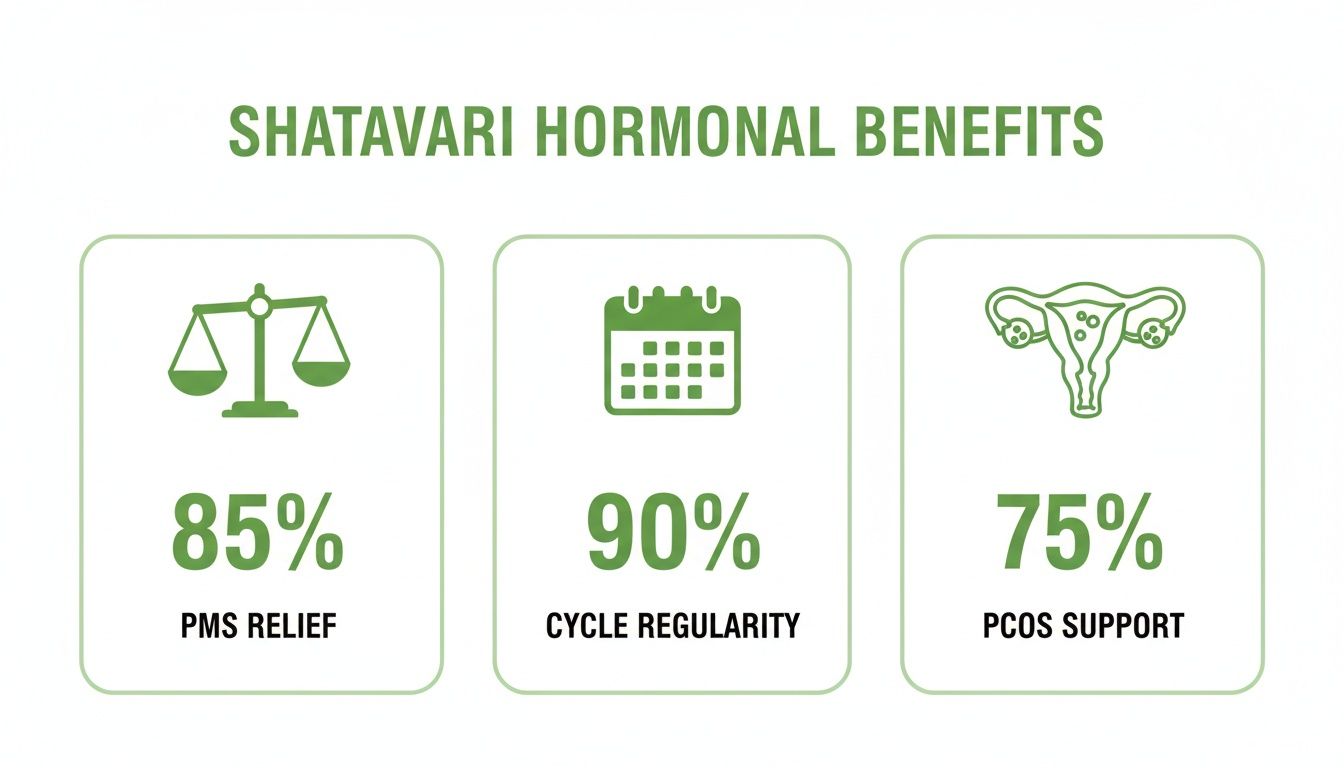
This image really highlights how the herb’s power to support cycle regularity and ease PMS translates into a more balanced state for navigating the menopausal years.
Supporting Emotional Wellbeing and Mental Clarity
Menopause isn’t just a physical experience; it’s an emotional one, too. The hormonal chaos can trigger anxiety, irritability, and mood swings, while that frustrating "brain fog" can make it tough to focus. As a powerful adaptogen, shatavari for women helps the body build resilience to both physical and emotional stress.
It works by supporting your adrenal glands and helping to regulate cortisol (the stress hormone). The end result? A calmer nervous system and a more even-keeled mood, making it that much easier to handle the emotional turbulence that often comes with this life stage.
Modern science is catching up to these ancient uses. A recent 120-day clinical trial on perimenopausal women showed some incredible results. The group taking a high dose of shatavari saw a 77.3% improvement in physical symptoms like hot flushes and fatigue. Even more, psychological symptoms like mood swings and anxiety improved by 74.5%. Their overall scores on the Menopause Rating Scale dropped by a remarkable 72.9%.
Maintaining Vaginal Health and Libido
Another very real concern during menopause is vaginal dryness. As oestrogen declines, it affects the mucosal tissues, which can lead to discomfort, itching, and even pain during intimacy, impacting both physical comfort and libido.
Shatavari is treasured for its demulcent (moistening) and rejuvenating qualities. It works from the inside out to lubricate and nourish the body's tissues, including the delicate vaginal lining. By supporting natural moisture and tissue integrity, it can help restore comfort and support a healthy libido.
Shatavari acts as a complete support system during menopause. It doesn't just target one symptom but works across physical and emotional planes to restore comfort, vitality, and a sense of wellbeing.
This holistic approach is central to Ayurveda. By addressing the root hormonal imbalances while providing deep nourishment, shatavari helps women navigate this transition with far more ease and confidence. If you're interested in learning more about traditional approaches, our guide to Ayurvedic treatment for menopause is a great next step.
Enhancing Fertility and Supporting Postnatal Recovery
For centuries, women have turned to shatavari as a trusted ally on the journey to motherhood and beyond. In Ayurveda, it's revered for everything from preparing the body for conception to providing deep nourishment after childbirth. The beautiful thing about this herb is that it doesn’t force a result; instead, it works gently to create a fertile, healthy, and resilient internal environment where life can flourish.
Think of it like tending a garden. Before you plant a seed, you have to make sure the soil is rich, well-aerated, and full of life. Shatavari acts like a master gardener for the female reproductive system. As a powerful uterine tonic, it strengthens the uterine muscles and helps nourish the endometrial lining, creating a welcoming and stable home for a potential pregnancy.
This nourishing action is vital. By improving blood flow to the reproductive organs and delivering key nutrients, shatavari helps ensure the entire system is robust and ready.
Preparing the Body for Conception
One of the most practical aspects of conception is the quality and quantity of cervical mucus. Healthy, fertile mucus is essential for sperm to survive and make its way to the egg. Shatavari is traditionally celebrated for its ability to support the production of this vital fluid.
Its natural moistening properties (what herbalists call a demulcent) help to ensure the reproductive tract is well-hydrated. This creates an optimal environment that not only aids conception but also supports overall vaginal health. For women looking into natural ways to boost their fertility, exploring holistic infertility treatment with Ayurveda can offer a much bigger picture of how herbs like shatavari fit into a complete wellness plan.
Ayurveda sees shatavari as a sattvic herb, meaning it promotes harmony, love, and positive energy. This goes beyond the physical, supporting the emotional and spiritual readiness that motherhood asks of us.
A Celebrated Ally for New Mothers
Shatavari’s support for women truly shines in the postnatal period. After the immense physical work of childbirth, the body is depleted and needs deep replenishment to get its strength back. This is where shatavari’s role as a rasayana, or rejuvenating tonic, is most cherished.
It’s perhaps most famous as a galactagogue—an herb that naturally encourages and enhances breast milk production. It’s thought to work by helping to increase levels of prolactin, the key hormone responsible for lactation. For new mothers, this can offer invaluable support and peace of mind during those crucial early months of breastfeeding.
But it doesn't stop there. Its adaptogenic qualities are a godsend for helping new mums cope with the physical exhaustion and emotional stress of caring for a newborn.
Restores Vitality: It helps to rebuild energy reserves, fighting off the profound fatigue that often comes with the postpartum phase.
Balances Postnatal Hormones: It provides gentle support as your hormones find their new normal after delivery.
Calms the Nerves: Its grounding nature can help soothe the "baby blues" and bring a much-needed sense of calm.
Modern research is starting to catch up with these traditional uses. A study in Uttar Pradesh on perimenopausal women shed light on shatavari's profound impact on the endocrine system. It showed how its active compounds, known as shatavarins, can significantly influence hormones like FSH, LH, and oestradiol. While the study focused on menopause, its findings highlight the herb’s powerful ability to modulate female hormones—a mechanism that’s central to its benefits for both fertility and postnatal recovery. You can read more about these findings and how shatavari supports reproductive health.
How to Choose and Use Shatavari Effectively
Walking into the world of herbal supplements can feel a bit like navigating a maze. But when it comes to shatavari, it doesn't have to be complicated. Once you know what to look for—the different forms, quality markers, and right amounts for your goals—you can easily and confidently make this incredible herb a part of your daily routine. Let's break it down so you can find the perfect fit.
The first thing to figure out is which form of shatavari suits you best. Each one offers its own advantages, and your choice will likely come down to what fits your lifestyle and personal taste.
Finding Your Preferred Form
Shatavari usually comes in three main forms: a traditional powder, convenient capsules, or a fast-acting tincture.
Powder (Churna): This is the classic way to take shatavari. The finely ground powder lets you easily adjust your dose and is perfect for mixing into warm milk (a traditional Ayurvedic method), morning smoothies, or herbal teas. Many feel this is the most authentic way to connect with the herb.
Capsules: If you're always on the move or simply not a fan of the powder's earthy taste, capsules are a fantastic choice. They give you a pre-measured, no-fuss dose every time.
Tinctures: These are potent liquid extracts that your body can absorb very quickly. You just add a few drops to a glass of water or place them directly under your tongue for a fast-acting effect.
A little thought about your daily habits goes a long way. The best form, after all, is the one you’ll actually remember and enjoy taking.
To help you decide, here’s a quick comparison of the most common forms of Shatavari.
Choosing Your Shatavari Form
A comparison of the common forms of Shatavari to help you choose the best option for your lifestyle and needs.
Form | Best For | Pros | Cons |
|---|---|---|---|
Powder (Churna) | Traditional use, flexible dosing, mixing into drinks and food. | Most traditional form, cost-effective, versatile. | Can have a strong, earthy taste; requires measuring. |
Capsules | Convenience, travel, and those who dislike the taste of the powder. | Tasteless, precise dosage, easy to take on the go. | Less flexible dosing, can be more expensive. |
Tincture | Quick absorption and fast-acting support. | Absorbed rapidly, easy to add to liquids. | Alcohol-based (for some), can be pricey. |
Ultimately, choosing between powder, capsules, or a tincture is a personal decision. Think about what will seamlessly integrate into your life, because consistency is what truly brings results.
What to Look For in a Quality Product
Here’s a crucial point: not all shatavari products are created equal. To make sure you’re getting a safe, pure, and effective supplement, you need to become a bit of a label detective. This is especially important when using shatavari for women, as you want pure nourishment.
Here are the key things to look for on the label or the brand's website:
Organic Sourcing: Always look for a certified organic product. This is your assurance that the shatavari was grown without nasty synthetic pesticides or fertilisers, giving you a much cleaner final product.
Standardised Extracts: You might see this mentioned on capsule bottles. A "standardised extract" means the supplement is guaranteed to have a specific concentration of shatavarins (the herb’s active compounds). This ensures you get consistent potency in every single dose.
Third-Party Testing: Reputable brands will send their products to independent labs to check for purity and safety. Look for any mention of third-party testing for things like heavy metals or microbial contaminants. This is a huge marker of a trustworthy company.
Brand Transparency: How open is the company about where they get their herbs and how they make their products? Brands that are clear about their sourcing and quality control are the ones you want to support.
Remember, the goal here is to deeply nourish your body. Taking a few extra minutes to choose a high-quality product means you get all the incredible benefits of shatavari without any unwanted extras.
Dosage Guidelines for Common Goals
The right dose of shatavari really depends on the form you're taking, your unique body constitution (known as your dosha in Ayurveda), and what you’re hoping to achieve. The best approach is always to consult a qualified Ayurvedic practitioner or a healthcare professional for advice tailored specifically to you.
That said, here are some general guidelines to get you started:
For General Hormonal Balance: A great starting point is 500 mg to 1,000 mg, taken once or twice a day. This usually works out to about half a teaspoon of powder or one to two capsules.
For Lactation Support: Practitioners often suggest a slightly higher amount for nursing mothers, typically around 1,000 mg to 2,000 mg per day, split into two doses. It's a wonderful postnatal ally, supporting milk supply while helping new mums recover, and a helpful herb to consider among various feeding choices and breastfeeding options.
For Perimenopause Support: An 8-week study on women navigating this transition found a daily dose of 300 mg of shatavari root extract to be highly effective. The results were impressive, showing positive changes in serum estradiol and T3 levels, which points to its powerful ability to modulate hormones during this time.
The golden rule is to start low and go slow. Begin with a smaller dose and see how your body feels, gradually increasing it if needed. Remember, consistency over a high dose is what will bring the most profound and lasting benefits.
Is Shatavari Safe? A Look at Side Effects and Precautions
Shatavari has a reputation for being a gentle, nourishing herb, and for good reason. For the most part, it’s considered very safe, even for long-term use. But your wellbeing is paramount, and it’s smart to know that, like any supplement, it isn't the right fit for absolutely everyone.
Let’s talk about what to look out for. The most common hiccup people report is a bit of digestive upset—maybe some mild bloating or a change in toilet habits when they first start. This usually settles down as your body gets used to it and is a great reminder of why starting with a small dose and building up slowly is always a good idea.
Who Should Be Cautious with Shatavari?
While shatavari is a fantastic ally for many women, a few groups should definitely pause and have a chat with a healthcare professional before jumping in. This is all about making sure the herb works with your unique body, not against it.
Here’s who should exercise a bit more caution:
If You Have an Asparagus Allergy: Shatavari is part of the asparagus family. If you know you're allergic to asparagus, it's best to steer clear to avoid a potential reaction.
If You Have Oestrogen-Sensitive Conditions: The herb contains phytoestrogens, which can mimic oestrogen in the body. If you're dealing with conditions like endometriosis, uterine fibroids, or certain hormone-sensitive cancers, it is absolutely crucial to speak with your doctor first.
If You're on Certain Medications: Shatavari might have a mild effect on blood sugar and blood pressure. So, if you're taking medication for diabetes or high blood pressure, looping in your clinician is a must to ensure there are no unwanted interactions.
A Quick Word on Pregnancy and Breastfeeding: While shatavari for women is often recommended after birth to help with milk supply, it's vital to only use it under the guidance of a qualified practitioner during pregnancy and while you're breastfeeding.
This isn't meant to scare you off, but to help you approach herbal wellness safely and responsibly. The golden rules are to listen to your body and seek expert advice when you need it. An Ayurvedic doctor or your GP can give you personalised advice that fits your health history, so you can feel completely confident as you explore the benefits of shatavari.
Got Questions About Shatavari? Let's Talk.
Even when you’ve done your homework on a new herb, a few practical questions always pop up. It’s completely normal! Here are some straightforward answers to the things women most often ask about shatavari, helping you get started with confidence.
How Long Does It Take to Notice a Difference?
This is probably the most common question, and the honest answer is: it depends. Ayurveda reminds us that herbs work with your body's own rhythm to gently restore balance, so patience really is a virtue here.
For ongoing issues like taming hormonal ups and downs or getting your cycle back on track, you'll likely need to take it consistently for at least 4-6 weeks before you feel a real shift. On the other hand, new mothers looking for lactation support sometimes see an increase in milk supply in just a week. The secret is consistent daily use, not just taking a large dose now and then.
Is It Okay to Take Shatavari During My Period?
Yes, absolutely. In fact, taking shatavari during your period is often a great idea. Its natural anti-inflammatory qualities can be wonderfully soothing for menstrual cramps and that general feeling of discomfort.
For the best results with cycle regulation and PMS, it’s much more effective to take it daily throughout the entire month, rather than just on the days you feel unwell. Of course, if you ever notice an unusually heavy flow, it’s always best to check in with a qualified Ayurvedic practitioner for advice tailored to you.
Can Shatavari Help with PCOS?
Shatavari is one of the go-to supportive herbs in Ayurveda for women dealing with Polycystic Ovary Syndrome (PCOS). Its real strength lies in its ability to help balance hormones, which can encourage the menstrual regularity that is so often a challenge with PCOS.
Beyond that, its antioxidant and anti-inflammatory effects can also help address some of the underlying metabolic issues that come with the condition.
Think of shatavari as a key player on your wellness team, not the whole team itself. For PCOS, it works best alongside a supportive diet, lifestyle changes, and guidance from a healthcare professional who understands your complete picture.
What’s the Best Time of Day to Take It?
Honestly, consistency beats timing every single time. The "best" time to take shatavari is whatever time you'll actually remember to take it each day. A lot of people find splitting the dose works well—once in the morning and again in the evening.
A traditional Ayurvedic approach is to stir shatavari powder into a mug of warm milk before bed, which has the added bonus of promoting a restful night’s sleep. If you’re taking capsules, having them with your meals can help with absorption and is gentler on the stomach. Just find a rhythm that slots easily into your day.
At JJ Herbals, we believe in nature's incredible power to restore balance and vitality. Our authentic Ayurvedic formulations are crafted to support your wellness journey from the inside out. Discover our commitment to pure, natural health solutions.
Comments