.png)
Holistic Infertility Treatment Ayurveda for Natural Conception
- DeVeNdRa NaTh
- Dec 29, 2025
- 15 min read

Starting the journey to parenthood can feel like a huge mountain to climb, but the infertility treatment Ayurveda offers is a time-tested path that has guided countless couples. This ancient system looks far beyond just the symptoms, focusing instead on restoring your body's innate balance to create the perfect internal environment for conception.
Your Ayurvedic Path to Parenthood
When you start looking into fertility solutions, it's natural to compare the wisdom of ancient traditions with the advancements of modern science. Ayurveda sees infertility not as a standalone problem, but as a sign of a deeper imbalance within your whole system. It's a different lens than conventional treatments, which often zero in on specific hormones or organs. Ayurveda's goal is to nourish you from the ground up.
Think of it like preparing soil before planting a seed. The approach works on creating a truly fertile foundation for a new life to take root and flourish. It gets to the very core of what might be getting in the way—whether it's stress, sluggish digestion, or a build-up of toxins. By harmonising your body's energies, strengthening reproductive tissues, and bringing calm to your mind, Ayurveda helps you take an active, powerful role in your own reproductive health.
Ayurveda vs Modern Medicine A Comparative Look at Infertility Treatment
To really grasp this unique perspective, it helps to see how it stands apart from the more familiar modern medical route. Both paths have their own strengths, of course, but their fundamental philosophies are quite different.
Here’s a simple breakdown to see how these two approaches compare.
Aspect | Ayurvedic Approach | Modern Conventional Approach |
|---|---|---|
Core Philosophy | Focuses on restoring the body's innate balance and treating the root cause of infertility. | Targets specific physiological issues like hormonal imbalances or structural blockages. |
Treatment Method | Uses natural herbs, detoxification (Panchakarma), diet, and lifestyle changes. | Relies on hormonal medications, surgical procedures, and Assisted Reproductive Technologies (ART) like IVF. |
Focus | Aims to improve overall health to enhance natural conception. | Concentrates on achieving pregnancy, often through technological intervention. |
Mind-Body Connection | Considers mental and emotional well-being as integral to fertility and overall health. | Primarily addresses the physical aspects of reproduction, though stress is acknowledged. |
This comparison really shines a light on Ayurveda's deeply personal and foundational strategy.
In India, where infertility affects roughly 8-10% of couples, this holistic approach has seen incredible results. While modern treatments like IVF often have success rates of 20-30% per cycle, specialised Ayurvedic clinics have reported success rates hitting over 90%. They achieve this by using therapies like shodhana (detoxification) and shamana chikitsa (balancing therapies) to help couples conceive naturally.
As you start your Ayurvedic journey to parenthood, remember that true healing involves more than just physical treatments. It’s about your mental and emotional wellness, too. Integrating practical mind-body connection exercises can be a powerful support system on your fertility path. By nurturing your entire being, you're not just treating a condition; you're creating a welcoming space for new life.
Understanding Fertility Through Doshas and Ojas
To really get to the heart of how Ayurveda approaches infertility, we first need to talk about its core idea: balance. Picture your body as a garden. For a seed to sprout and flourish, the soil needs to be perfect—not too dry, not too acidic, and definitely not waterlogged. In Ayurveda, this delicate internal balance is managed by the three doshas and the vital life force known as Ojas.
The doshas—Vata, Pitta, and Kapha—are the unique blends of the five elements (space, air, fire, water, earth) that make up your personal constitution. These are the fundamental energies that run everything in your body. When they're in sync, you thrive. But when they get out of whack, problems like infertility can surface.
This infographic captures how Ayurveda’s key principles—the mind-body connection, getting to the root of the problem, and restoring balance—come together to support fertility.It shows beautifully that Ayurveda doesn't see fertility as a standalone issue, but as a reflection of your body's overall harmony.
The Role of the Three Doshas in Fertility
When a dosha gets aggravated, it can throw up specific roadblocks to conception, affecting both men and women. Figuring out these patterns is the first step in an Ayurvedic diagnosis.
Vata Dosha (Air and Space): Driven by movement and dryness, an imbalanced Vata can cause erratic menstrual cycles, heightened anxiety, and dryness in the reproductive tissues. In men, it can show up as problems with sperm motility.
Pitta Dosha (Fire and Water): This dosha governs your metabolism and hormones. Too much Pitta can heat things up, leading to inflammation, hormonal chaos, and conditions like ovarian cysts or infections that get in the way of fertility.
Kapha Dosha (Earth and Water): Linked to structure and lubrication, excess Kapha can create a sense of heaviness, weight gain, and physical blockages, like obstructed fallopian tubes or PCOS.
By pinpointing which dosha is out of step, an Ayurvedic practitioner can create a plan to bring you back into equilibrium. It's all about preparing the soil for conception.
Ojas: The Essence of Vitality and Reproduction
Beyond the doshas, Ayurveda puts a huge emphasis on Ojas. Think of Ojas as the purest, most refined product of your digestion and the very essence of all your body tissues. It’s the subtle energy that powers your immunity, strength, and overall vitality. Most importantly, Ojas is directly tied to the health of your reproductive system.
In Ayurvedic thinking, strong Ojas is non-negotiable for a healthy conception. It’s the superfine biological substance that gives a fertilised egg the nourishment and stability it needs to implant and grow into a healthy embryo.
When your digestive fire (Agni) is weak, or if you're run down by stress and a poor diet, your Ojas levels take a hit. This depletion directly impacts the reproductive tissues—known as Shukra Dhatu in men (sperm) and Artava Dhatu in women (the ovum). So, a core goal of any Ayurvedic fertility plan is to rebuild Ojas.
This deep focus on internal health can bring about incredible results, even in tricky situations. A fascinating report documented the case of a 36-year-old woman with blocked fallopian tubes. After five years of trying modern treatments without success, she achieved a natural pregnancy through Ayurvedic care. The treatment centred on correcting uterine dryness, a classic Vata imbalance, to create a welcoming environment for conception. You can read the full details of this successful Ayurvedic approach to see how it worked.
How Panchakarma Prepares the Body for Conception
Think of it this way: before a gardener plants a precious seed, they don't just throw it onto hard, weedy ground. First, they prepare the soil—clearing weeds, tilling the earth, and enriching it with nutrients. In Ayurveda, Panchakarma is this essential preparation for the body. It's so much more than a simple detox; it's a profound purification process designed to create the ideal internal environment for conception.
Panchakarma works by systematically dislodging and eliminating deep-seated toxins, what we call ama, from the body. These toxins can block vital channels, throw hormones out of balance, and create an unwelcoming environment for new life to take hold. By clearing out this ama, Panchakarma essentially restores the body's innate intelligence and readies the reproductive tissues to function at their absolute best.

This medically supervised process ensures both partners are in peak health before even trying to conceive. This simple step can dramatically improve the chances of a healthy pregnancy and, ultimately, a healthy child.
Key Panchakarma Therapies for Fertility
While Panchakarma is a whole sequence of therapies, a few procedures are particularly powerful for boosting reproductive health. These aren't one-off treatments but part of a carefully designed plan created by a qualified Ayurvedic practitioner. You can learn more about the five ancient therapies of Panchakarma in our detailed guide.
Here are a couple of the most important therapies for fertility:
Basti (Medicated Enema): This is considered the number one therapy for balancing Vata dosha—the energy governing all movement in the body, including the downward flow needed for menstruation and childbirth. Basti nourishes the colon, which is directly connected to the health of the reproductive organs. This helps regulate cycles and creates a stable, healthy uterine environment.
Virechana (Medicated Purgation): This therapy is brilliant for pacifying excess Pitta dosha. It cleanses the liver and gallbladder, which are crucial for hormone metabolism. By getting rid of heat and inflammation-causing toxins, Virechana can help resolve issues like hormonal imbalances and inflammatory conditions in the reproductive system.
Panchakarma isn't just about cleansing; it's about resetting the body’s entire system. It prepares the 'soil' of the body to be receptive, nourished, and fundamentally ready to support new life from the very moment of conception.
This foundational work is what really sets the Ayurvedic approach apart. We’re getting to the root causes of infertility, not just managing symptoms.
Targeted Nourishment with Uttara Basti
One of the most specialised and potent Panchakarma procedures for infertility is Uttara Basti. This therapy involves the gentle administration of medicated oils or herbal decoctions directly into the uterine cavity for women or the urethra for men.
Unlike treatments that work systemically, Uttara Basti delivers its healing and nourishing properties exactly where they're needed most. For women, it can help clear blockages in the fallopian tubes, strengthen the uterine lining, and improve overall uterine health. For men, it helps cleanse the urinary and reproductive tracts and can improve sperm quality. This direct application makes it an incredibly effective tool in the Ayurvedic fertility toolkit.
In my experience, for female infertility, therapies like Basti and Uttara Basti are proven to help regularise periods, balance hormones, and encourage ovulation, often leading to natural conceptions. At the same time, for male partners, these purification therapies (shodhana chikitsa) significantly enhance sperm count and motility, offering a powerful path forward.
By undergoing this comprehensive purification, the body is not only cleansed of physical and energetic blockages but is also deeply rejuvenated, paving the way for a successful and healthy pregnancy.
Nourishing Fertility with an Ayurvedic Diet and Lifestyle
While powerful therapies like Panchakarma set the stage for conception, it’s your daily choices—what you eat and how you live—that truly sustain fertility. Ayurveda sees Ahara (diet) and Vihara (lifestyle) as the absolute bedrock of health. These gentle, consistent practices create a nurturing internal environment, making your body a welcoming place for new life.
Think of it like tending a garden. A nourishing diet is the rich soil, providing all the essential nutrients. A balanced lifestyle ensures the garden gets just the right amount of sunlight and rest. This holistic view is central to how Ayurveda approaches infertility, empowering you to become an active participant on your path to parenthood.
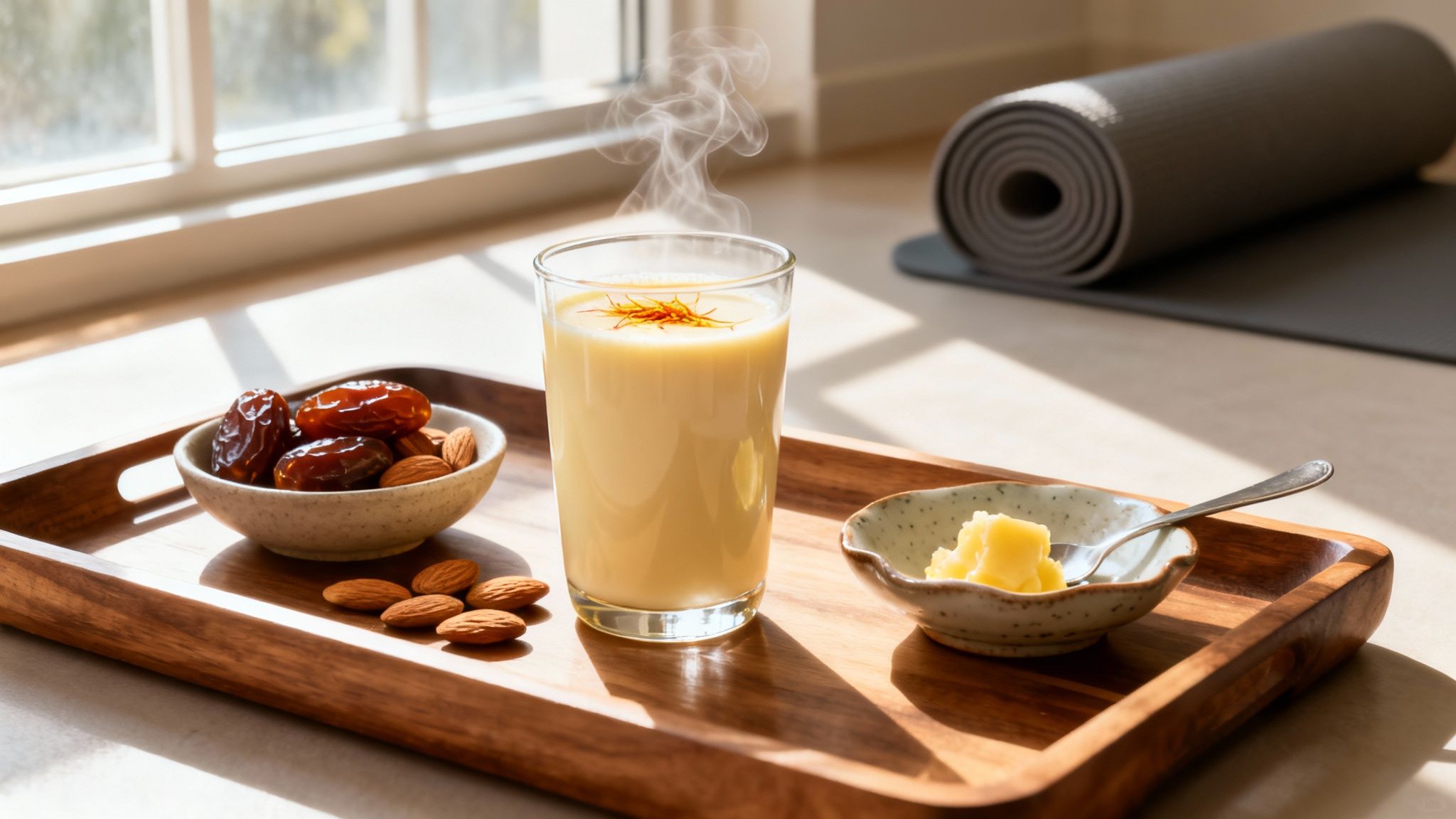
Cultivating Vitality Through Your Diet
In Ayurveda, food is medicine. For fertility, the goal is to build Ojas—the subtle essence of vitality and immunity that is absolutely crucial for healthy reproductive tissues. Eating the right foods helps calm any aggravated doshas and strengthens your digestive fire (Agni). A strong Agni ensures nutrients are properly absorbed and transformed into high-quality tissues, including healthy sperm and eggs.
On the flip side, certain foods can disrupt this delicate balance. Highly processed, cold, or stale foods can create toxins (ama), which clog the body's channels and get in the way of reproductive function.
A fertility-promoting diet isn’t about strict restriction; it’s about conscious nourishment. The focus is on choosing fresh, whole foods that are easy to digest and deeply satisfying, helping to build the body’s core strength and readiness for conception.
Making simple, mindful swaps in your daily meals can have a profound impact over time.
Ayurvedic Food Guide for Enhancing Fertility
This table is a quick reference guide to foods that build reproductive health (Ojas) and those that might hinder it, based on core Ayurvedic principles.
Food Category | Nourishing Foods (Include) | Aggravating Foods (Limit or Avoid) |
|---|---|---|
Grains | Whole grains like basmati rice, quinoa, and oats that are easy to digest. | Refined flour products, heavy breads, and dry crackers. |
Fruits | Sweet, juicy fruits like dates, figs, mangoes, and soaked raisins. | Overly sour or unripe fruits that can increase Pitta. |
Vegetables | Sweet and grounding vegetables like sweet potatoes, carrots, and leafy greens. | Nightshades (tomatoes, bell peppers) and raw salads in excess. |
Dairy | Warm, organic milk, ghee (clarified butter), and fresh paneer. | Aged cheeses, yogurt (especially at night), and ice cream. |
Nuts & Seeds | Soaked almonds, walnuts, and pumpkin seeds for healthy fats. | Roasted, salted nuts that can be heating and hard to digest. |
Spices | Warming spices like ginger, cinnamon, saffron, and cumin. | Extremely hot spices like cayenne pepper and excessive chilli. |
Remember, this is a general guide. An Ayurvedic practitioner can offer personalised advice based on your unique dosha constitution.
Harmonising Your Life with Supportive Routines
Beyond what you eat, how you live is just as important. Vihara, or lifestyle, is all about creating rhythm and stability to calm the nervous system and balance your hormones. One of the most powerful tools for this is a predictable daily routine, known as Dinacharya, which helps reduce stress and supports the body’s natural cycles.
This doesn't have to be complicated. It includes simple yet powerful practices:
Waking and Sleeping with the Sun: Aligning your sleep cycle with natural light is key for regulating your circadian rhythm and hormone production.
Mindful Movement: Gentle yoga, or Asana, improves circulation to the pelvic region and beautifully calms the mind. It's best to avoid overly strenuous exercise, which can deplete Ojas.
Stress Management: Chronic stress is a huge barrier to fertility. Practices like meditation and deep breathing are fantastic for soothing the Vata dosha, which governs the nervous system.
In addition to these daily habits, incorporating practices like Pranayama can significantly enhance your body's readiness for conception. These specific breathing techniques directly influence your physiological state, reducing stress hormones and creating a profound sense of inner peace.
When you combine these diet and lifestyle adjustments, the effect is powerful. By embracing the principles of Ahara and Vihara, you aren't just treating a condition; you are creating a life of balance and wellness that naturally invites new life to begin.
Powerful Ayurvedic Herbs for Male and Female Fertility
Once your body has been cleansed and your lifestyle starts to find its natural rhythm, Ayurveda brings in its most powerful allies: its herbs. These aren't just supplements you pick up off a shelf; in Ayurveda, they are known as dravyaguna—intelligent botanicals that work with your body to get things back on track and build true vitality. Think of them as nature’s helping hand, guiding you on your path to parenthood.
For centuries, Ayurvedic practitioners have used specific herbs to nourish reproductive tissues, gently balance hormones, and improve the quality of both Shukra Dhatu (sperm) and Artava Dhatu (ovum). Each herb has its own unique personality and a specific job to do in preparing your body for conception.
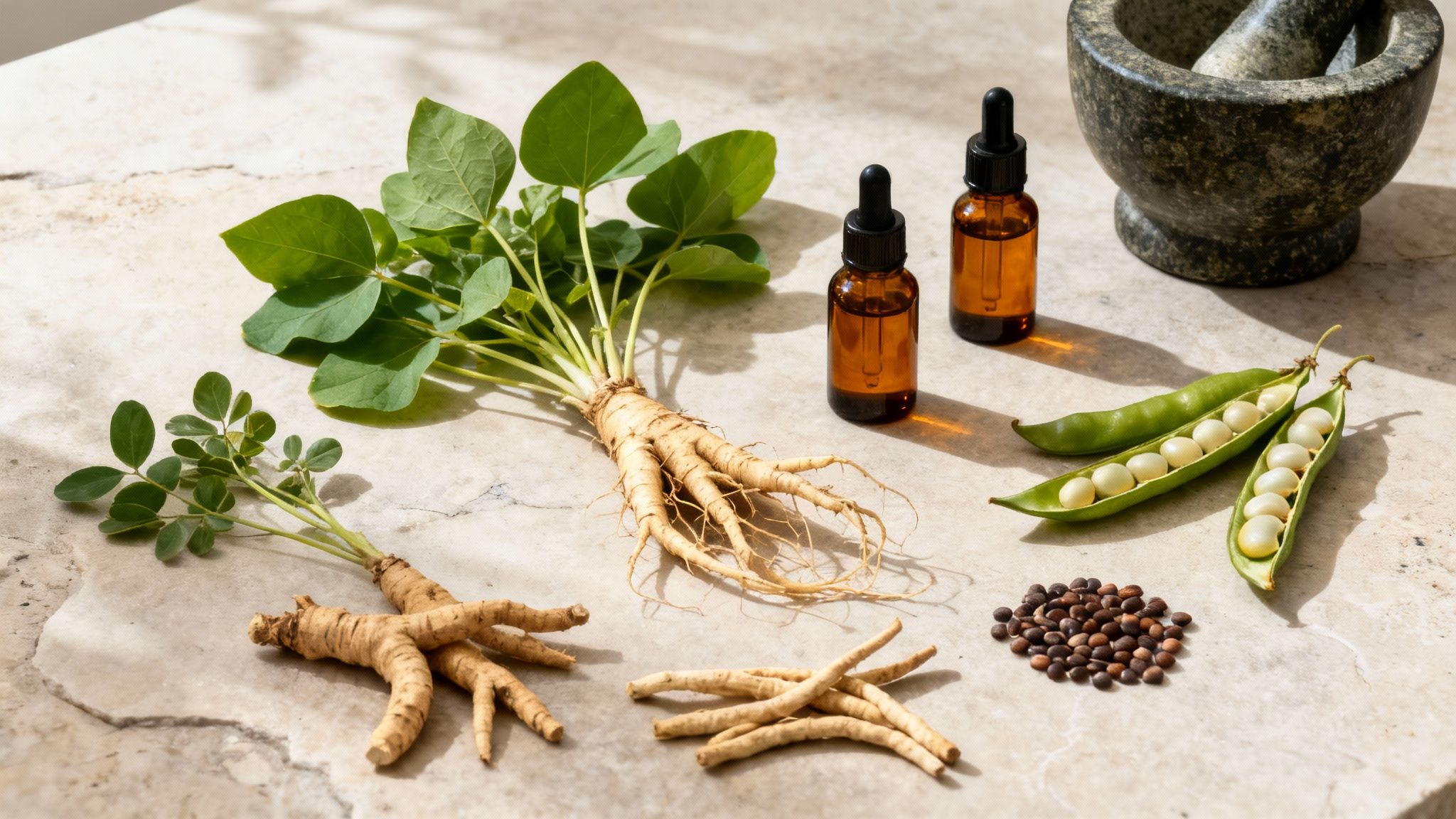
Shatavari: The Queen of Female Reproductive Tonics
If there's one herb that stands out for female fertility, it's Shatavari (Asparagus racemosus). It’s often called the "queen of herbs" for women, and for good reason. Its name even translates to "she who possesses a hundred husbands," which hints at its incredible power to support and rejuvenate the female reproductive system.
So, how does it actually work?
Hormonal Balance: As an adaptogen, Shatavari helps your body adapt to stress and regulate hormonal cycles. This can make ovulation more regular and menstrual cycles much healthier.
Uterine Nourishment: The herb strengthens the uterine muscles and helps build a rich, healthy endometrial lining. This creates a welcoming and stable home for implantation.
Cervical Mucus Production: It also supports the production of healthy cervical mucus, which is crucial for helping sperm make their journey to the egg.
By calming dryness (a Vata imbalance) and cooling excess heat (a Pitta imbalance), Shatavari helps create the ideal conditions for conception and a healthy pregnancy.
Ashwagandha and Mucuna Pruriens for Male Vitality
Of course, fertility is a team effort. Ayurveda has some incredibly effective herbs for boosting male reproductive health, with Ashwagandha and Mucuna pruriens leading the charge.
Ashwagandha (Withania somnifera), sometimes called "Indian ginseng," is a master adaptogen. It helps the body fight back against stress, which we now know is a major roadblock to male fertility. It’s well-known for boosting testosterone, improving sperm count, and giving motility a much-needed lift. If you're curious, you can learn more in our guide on the top Ayurvedic herbs for male fertility.
Mucuna pruriens, or Kapikachhu, is another powerhouse. It's one of nature's best sources of L-DOPA, which the body uses to make dopamine—a key player in sexual function and mood. Traditionally, it’s the go-to herb for increasing libido and improving sperm concentration.
When you combine herbs like Ashwagandha and Mucuna pruriens, you get a powerful one-two punch. One works on reducing the damage from stress, while the other directly nourishes and strengthens the reproductive tissues, improving both the number and the quality of sperm.
The Synergistic Power of Herbal Formulations
While these herbs are fantastic on their own, Ayurvedic wisdom often shines brightest when they are combined. Formulations are created to produce a synergistic effect, where the herbs work together to become more powerful than any single one could be alone.
This is where expertly crafted supplements come in. A great example is JJ Herbals' Success Plus, a 100% natural supplement made from organically grown Mucuna Pruriens. It takes a complete approach to fertility for both partners. With a reported 68% success rate among over 1,700 customers and backed by 20 years of trust, it’s designed to naturally boost testosterone, enhance hormonal balance, and improve vitality, proving just how effective these ancient herbs can be. You can even explore the research behind these remarkable results to see the science for yourself.
Integrating Ayurvedic and Modern Fertility Care
The journey to starting a family is incredibly personal, and figuring out the right approach to fertility doesn't have to be a rigid, "either/or" decision. In my experience, many couples find their best path forward by blending the time-tested wisdom of Ayurveda with the precision of modern medicine. It's about creating a holistic strategy that uses the unique strengths of both systems.
Think of it like building a specialist team for your body. Your medical doctor offers invaluable diagnostics and powerful treatments like IUI or IVF. At the same time, an Ayurvedic practitioner works on strengthening your body from the ground up, boosting your overall resilience and creating the most welcoming internal environment for a pregnancy to begin and thrive.
Creating a Collaborative Care Team
For this partnership to truly work, open and honest communication is everything. You must be completely transparent with both your medical doctor and your Ayurvedic vaidya about every treatment, herb, and supplement you're taking. This is crucial for ensuring their advice works together safely and effectively, without any risk of clashing.
When everyone is on the same page, the synergy can be remarkable. Ayurvedic therapies, for example, can be a wonderful way to prepare your body for an IVF cycle, helping to improve uterine receptivity and manage the immense stress that often comes with the process. You can also gain deeper insights by looking at medical tests through an Ayurvedic lens. For instance, you can learn more about decoding your normal follicular study report to see how both perspectives can enrich your understanding of what's happening.
The goal isn’t to pit one system against the other. It’s to create a cohesive plan where ancient wisdom prepares the ‘soil’ and modern science helps plant the ‘seed’. This collaborative model gives you a truly comprehensive and well-rounded approach to your fertility journey.
Ultimately, the most important thing you can do is seek professional, personalised guidance. Trying to navigate fertility challenges on your own can feel completely overwhelming. A qualified Ayurvedic practitioner can design a plan that is truly yours, tailored to your unique constitution and health goals. This kind of expert support—perhaps complemented by our own consultative guidance and holistic formulations like Success Plus—ensures you are on a path designed specifically for you, not just following generic advice.
By embracing an integrated strategy, you honour your body’s needs from every angle. You build a deep foundation of health and resilience that can beautifully support your dream of becoming a parent.
Your Questions About Ayurvedic Fertility Treatment, Answered
It's completely normal to have questions when you're exploring fertility treatments. Deciding to embrace an Ayurvedic path is a big step, and you deserve clear, honest answers. Let's walk through some of the most common queries we hear from people just like you.
How Long Does Ayurvedic Treatment for Infertility Take?
This is probably the most common question, and the honest answer is: it truly depends on you. Ayurveda isn't about a quick fix; it's about getting to the very root of the issue. The timeline hinges on the underlying cause of your fertility challenges, your unique dosha constitution, and your current state of health.
As a general guideline, we usually recommend committing to a plan for at least three to six months. This gives your body the time it needs to properly detoxify, rebuild healthy tissues (dhatus), and find its natural hormonal balance again. Your practitioner will give you a more personalised timeline after a detailed consultation, but consistency is the real key to success.
Can Ayurveda Be Safely Combined with Modern Fertility Treatments?
Yes, it absolutely can. Many people find that Ayurveda works beautifully alongside modern treatments like IUI or IVF. The key is to do it thoughtfully and with complete transparency between your healthcare providers. It’s vital that your medical doctor and your Ayurvedic practitioner are both in the loop to create a safe, coordinated plan.
Think of Ayurveda as preparing the soil before planting a seed. It can help by:
Improving the health and receptivity of your uterine lining.
Easing the immense stress—both physical and emotional—that often comes with treatment cycles.
Gently balancing hormones, which can potentially make medical interventions more effective.
The most important thing here is open communication. When everyone on your care team is working together, you get the best of both worlds, creating a supportive strategy that maximises your chances of success without any risk to your well-being.
Are There Specific Ayurvedic Treatments for Men?
Definitely. Male infertility is given just as much focus in Ayurveda as female infertility. The entire approach is geared towards nourishing and strengthening Shukra Dhatu, the reproductive tissue responsible for healthy sperm. The goal is to improve not just sperm count but also motility and morphology.
This usually involves a combination of powerful herbs like Ashwagandha, Kapikachhu (Mucuna pruriens), and Gokshura, which are well-known for boosting vitality and sperm production. We also often use purification therapies like Basti (a medicated enema) to clear out toxins that might be hindering reproductive function. Of course, a diet and lifestyle plan designed specifically for you is a cornerstone of restoring male fertility.
Can I Follow an Ayurvedic Plan Without a Practitioner?
While adopting a healthier diet and lifestyle is always a great idea, when it comes to treating a complex issue like infertility, you really need an expert in your corner. The causes can be deep-seated and require a very precise diagnosis that goes far beyond a general wellness plan.
A trained practitioner has the skill to accurately pinpoint your specific dosha imbalance and the health of your various body tissues. This detailed assessment is what allows them to prescribe the right combination of herbs, therapies, and dietary changes for you. Trying to self-diagnose and self-prescribe can be ineffective at best and could even set you back. Professional guidance is essential for a safe and successful journey.
Ready to see how authentic Ayurvedic support can make a difference on your fertility journey? At JJ Herbals, we connect you with experienced doctors for personalised consultations. Let us show you how our holistic approach and natural formulations like Success Plus can help you realise your dream of parenthood.
Comments