.png)
How to Improve Egg Quality Naturally for Better Fertility

When we talk about improving egg quality, we're really talking about a focused, three-month commitment to shifting your diet, lifestyle, and supplement routine. The good news is that you have more influence than you might think.
What 'Egg Quality' Actually Means for Your Fertility
It’s a common point of confusion, but when fertility specialists discuss egg quality, they aren’t talking about the number of eggs you have left (your ovarian reserve). They're looking at the genetic health and potential of each individual egg, also known as an oocyte.
Simply put, good egg quality means an egg is chromosomally normal. It has the correct 23 chromosomes required to combine with sperm and create a healthy embryo.
An egg with the right genetic blueprint is called "euploid." If it has too many or too few chromosomes, it's called "aneuploid," which is one of the main reasons behind failed IVF cycles, early miscarriages, and certain genetic conditions. But it's not just about genetics; quality also comes down to whether the egg has enough energy to do the monumental work of dividing and growing after it's fertilised.
Your 90-Day Window of Opportunity
Here’s one of the most powerful things to understand about your fertility: it takes about 90 days for an egg to mature from a dormant follicle into a state where it’s ready for ovulation. This three-month period is a critical developmental window.
During these 90 days, that developing egg is incredibly responsive to its environment. This means the food you eat, your stress levels, your sleep habits, and your exposure to environmental toxins are all directly shaping the health of the eggs that will be ovulating three months from now. It’s not an overnight fix, but a marathon of small, consistent choices.
This 90-day cycle is your golden window. The choices you make today are laying the foundation for the eggs you’ll release in the coming months, putting a surprising amount of control right back in your hands.
Why Cellular Energy Is Everything
Imagine a mature egg is a tiny, fully-charged battery. It needs a massive amount of cellular energy to kickstart the process of cell division and growth immediately after fertilisation. This energy comes from the mitochondria—the little powerhouses inside every cell.
As we age, or due to other factors, mitochondrial function can decline, leaving the egg without enough fuel for its journey.
Several key factors can interfere with this vital energy production and harm egg quality:
Oxidative Stress: This happens when there's an imbalance between damaging free radicals and protective antioxidants in your body, which can cause real damage to an egg's DNA.
Poor Blood Flow: If circulation to the ovaries is sluggish, developing eggs are starved of the oxygen and nutrients they desperately need.
Chronic Inflammation: A state of constant, low-grade inflammation creates a stressful and hostile environment for all reproductive processes.
Getting a handle on these concepts is the first step. By focusing on how to improve egg quality naturally, you can begin to foster a healthier internal environment that powers up your mitochondria, fights cellular damage, and ultimately gives your eggs the best possible chance to thrive. This guide will show you exactly how.
Building Your Fertility Plate with Nutrient-Dense Foods
What you eat every day is probably the most direct and powerful tool you have for improving the quality of your eggs. I'm not talking about a strict, joyless diet. Far from it. This is about consciously building your meals with the specific nutrients your developing eggs need to truly thrive.
Think of your plate as the foundation for creating the ideal internal environment for your eggs to mature healthily.
A massive part of this is tackling something called oxidative stress. This happens when your body has too many unstable molecules (free radicals) and not enough antioxidants to neutralise them. This imbalance can damage all sorts of cells, and your eggs are particularly vulnerable. The right foods, however, can arm your body with the antioxidants it needs to protect them.
Powering Your Plate with Antioxidants
Loading up on antioxidant-rich foods is your first line of defence. These powerful compounds are like tiny bodyguards for your eggs, protecting their delicate DNA and the little energy factories inside them called mitochondria. The great news is that so many Indian staples are naturally bursting with these nutrients.
Eat the Rainbow: Seriously, make your plate as colourful as possible. Brightly hued vegetables like palak (spinach), beetroot, and carrots are absolutely loaded with essential vitamins and antioxidants.
Embrace Vibrant Fruits: Fruits like pomegranate and berries are well-known antioxidant powerhouses. But don't forget amla (Indian gooseberry)—it's exceptionally potent and a fantastic, easy addition to your routine.
Lean on Spices and Herbs: Turmeric is a star here. Its active compound, curcumin, is a celebrated anti-inflammatory and antioxidant. Just adding a pinch to your curries, dal, or even a glass of warm milk is a simple way to reap its incredible benefits.
This chart really drives home the antioxidant capacity of some of these key fertility-boosting foods.
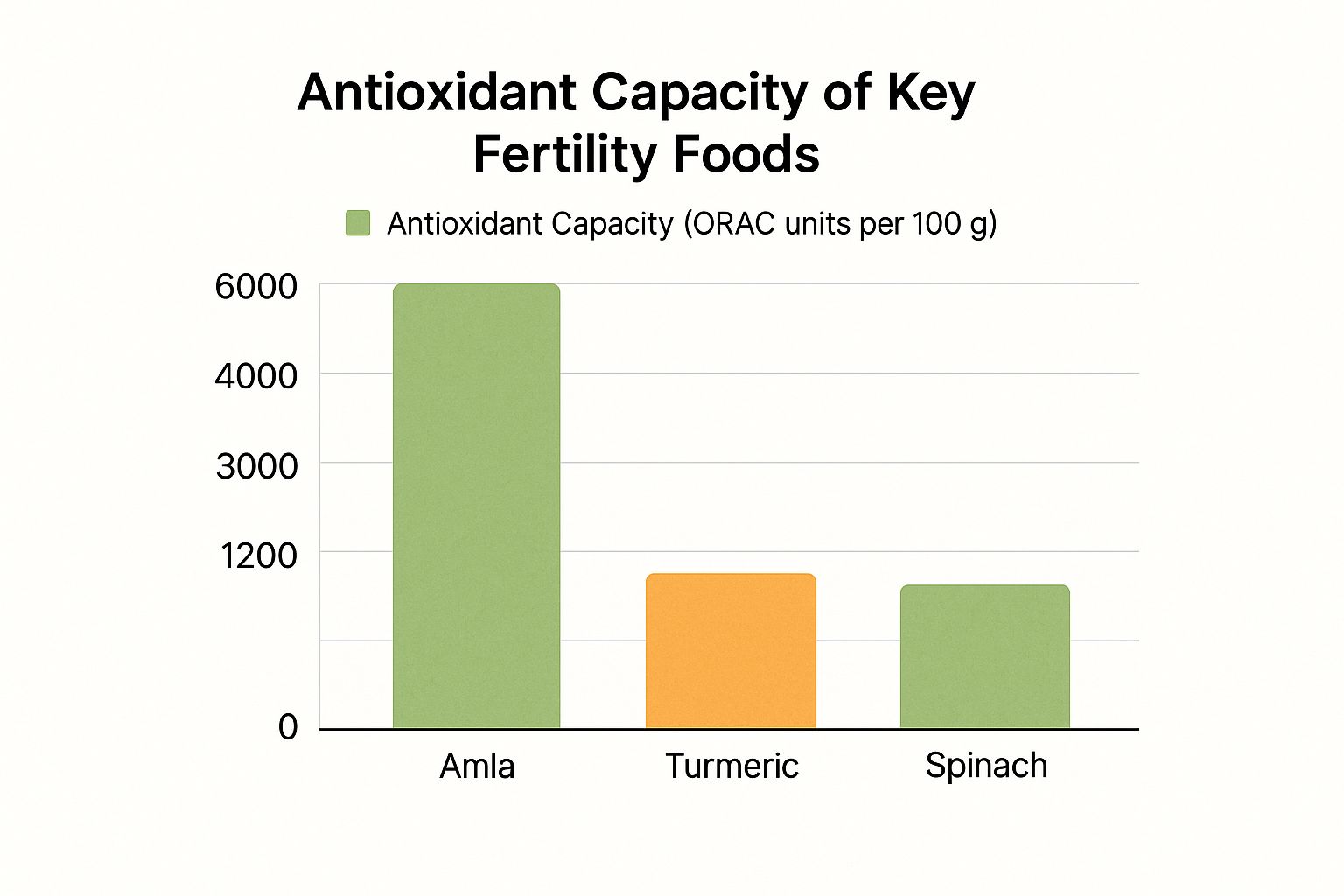
As you can see, amla stands out with a remarkably high antioxidant value, making it a truly exceptional choice for anyone focused on supporting their egg health.
The Role of Healthy Fats and Stable Blood Sugar
Beyond just antioxidants, getting the right kinds of fats and keeping your blood sugar steady are fundamental for hormonal health and, by extension, egg development. Your body literally needs fat to produce the hormones that orchestrate your entire reproductive cycle.
Try to consciously include more unsaturated fats from sources like:
Avocados
Nuts (walnuts and almonds are fantastic)
Seeds (flax and chia seeds are brilliant)
Ghee (in moderation, of course)
At the same time, managing your blood sugar is critical. Big spikes and sudden crashes in insulin can throw your hormones out of whack and create inflammation—exactly what you don't want when trying to conceive. The simplest way to keep things stable is to pair your carbohydrates with protein and healthy fats, and to choose complex carbs like whole grains and lentils over refined white flour and sugar.
To make this even more practical, I've put together a quick-reference table connecting vital fertility nutrients with easy-to-find Indian foods. It’s designed to help you seamlessly add them to the meals you already enjoy.
Essential Nutrients and Indian Foods for Egg Health
Nutrient | Its Role in Egg Quality | Common Indian Food Sources |
|---|---|---|
Coenzyme Q10 (CoQ10) | Powers the mitochondria (energy centres) within eggs, crucial for cell division. | Spinach (palak), lentils (dal), peanuts, sesame seeds, pistachios. |
Folate (Vitamin B9) | Essential for preventing birth defects and supports DNA synthesis in eggs. | Lentils, chickpeas (chana), spinach, okra (bhindi), beetroot. |
Vitamin D | Helps regulate hormones and supports overall ovarian function. | Egg yolks, mushrooms, fortified dairy/milk, fatty fish (if consumed). |
Omega-3 Fatty Acids | Reduces inflammation, improves blood flow to the ovaries, and supports hormone production. | Walnuts (akhrot), flaxseeds (alsi), chia seeds, mustard oil. |
Zinc | Vital for egg maturation, fertilisation, and the development of the oocyte. | Pumpkin seeds, chickpeas, lentils, cashews, paneer. |
Selenium | A powerful antioxidant that protects eggs from free radical damage. | Brazil nuts (just 1-2 a day), eggs, paneer, brown rice, sunflower seeds. |
Using this table as a guide can take the guesswork out of building a fertility-friendly plate. It’s all about making small, consistent choices that add up over time.
Think of your diet as a continuous signal you're sending to your body. Every single meal is a chance to send a message of nourishment and balance, directly influencing the very environment where your eggs are maturing.
This isn't just theory; research focused on Indian reproductive health confirms this powerful link. Studies show that lifestyle factors, especially what we eat, significantly impact egg quality among Indian women. Women whose diets are rich in antioxidants from staples like turmeric, leafy greens, and nuts consistently show reduced oxidative stress on their oocytes. In fact, when a high-antioxidant diet is combined with moderate exercise, women often show 15-25% better markers of egg quality, including improved mitochondrial function.
Using Supplements and Herbs to Support Your Eggs
While a nutrient-rich diet is the foundation for healthy eggs, sometimes your body needs a more targeted boost. This is where certain supplements and traditional herbs can really shine. Think of them as specialised support players, each with a unique job in protecting your developing oocytes and creating an optimal fertile environment.
Ayurveda, in particular, offers a treasure trove of botanicals that have supported women’s reproductive health for centuries. These aren't quick fixes; they're gentle allies that work in harmony with your body’s natural rhythms to help restore balance. By combining this ancient wisdom with modern science, you can build a powerful, holistic toolkit for improving egg quality.
Ancient Wisdom from Ayurveda
Many Ayurvedic herbs are classified as adaptogens, which is just a way of saying they help your body become more resilient to stress. Since chronic stress and high cortisol can wreak havoc on reproductive hormones, getting a handle on it is a crucial piece of the fertility puzzle. Two herbs stand out as particularly beneficial.
Ashwagandha: Often considered a premier rejuvenating herb, Ashwagandha is celebrated for its remarkable ability to calm the nervous system and lower cortisol. A calmer internal state translates directly into a more hospitable environment for your eggs to thrive.
Shatavari: Known as the "queen of herbs" for female reproductive health, Shatavari is a classic tonic. It’s traditionally used to support hormonal balance and provide deep nourishment to the entire reproductive system.
Another powerful herb gaining recognition is Mucuna Pruriens. Its unique properties have long been valued in traditional practices for enhancing vitality. To learn more, you can explore our detailed guide on the benefits of Mucuna Pruriens for reproductive wellness.
Modern Science and Key Supplements
Working alongside these traditional herbs, several evidence-backed supplements are frequently recommended by fertility experts. These compounds get to work at a cellular level, providing the specific building blocks your eggs need to mature properly.
One of the most important is Coenzyme Q10 (CoQ10). It’s a vitamin-like substance that functions as a potent antioxidant and is absolutely vital for energy production inside your cells' mitochondria. Think of it as the spark plug for your eggs' tiny powerhouses. Research suggests it helps fuel the massive amount of energy an egg needs to develop properly and divide successfully after fertilisation.
Another key player is Myo-Inositol, a type of B-vitamin that plays a crucial role in cellular signalling. It has been shown to support ovarian function and improve egg quality, especially for women navigating conditions like PCOS.
Golden Rule of Supplementation: Your body is unique. Before adding any new herb or supplement to your routine, it is absolutely essential to speak with your doctor or a fertility specialist. They can help you figure out the right choices and dosages for your specific situation, ensuring everything works together safely and effectively.
Ultimately, the goal is a synergistic approach—letting ancient wisdom and modern science work in tandem to give your eggs the best possible support during their critical 90-day maturation window.
Making Lifestyle Changes That Truly Matter

Your daily routines send constant signals to your body, creating the very environment where your eggs mature. Thinking about lifestyle adjustments isn’t about piling on more stress; it’s about mindfully clearing away the obstacles that get in the way of your best reproductive health.
These aren't just about what you eat. We’re talking about how you handle stress, the quality of your sleep, and even the everyday products you use. Every small, positive change contributes to a bigger picture of hormonal balance and healthy cells.
Mastering Stress for Hormonal Harmony
Let’s be clear: chronic stress isn't just a feeling. It's a physical state that can throw your reproductive hormones completely out of sync. When you're always on edge, your body produces excess cortisol, a hormone that can interfere with ovulation and disrupt the delicate hormonal dance needed for healthy egg development.
The trick is to find stress-management techniques that you can actually stick with. You don’t need to completely overhaul your life.
Mindful Movement: Think gentle yoga or even a brisk 15-minute walk each day. These activities don't just clear your head; they boost blood flow to your reproductive organs and help bring down those cortisol levels.
Simple Breathing Exercises: Have you tried "box breathing"? It’s simple: inhale for four counts, hold for four, exhale for four, and hold again for four. Doing this for just a minute or two can instantly calm your nervous system.
Journaling: Taking a few minutes before bed to jot down your thoughts is a surprisingly powerful way to process worries so they don't keep you up at night.
The Critical Role of Restful Sleep
Sleep is your body's prime time for repair and regulation. This is when it balances key hormones like melatonin and serotonin, which have a direct influence on egg quality. Skimping on sleep, on the other hand, can lead to chronic inflammation and hormonal chaos, undermining all your other efforts.
Aiming for 7-9 hours of quality, uninterrupted sleep per night is one of the most powerful things you can do for your fertility. During these hours, your body is hard at work regulating the very hormones that govern your entire reproductive cycle.
To get better sleep, try building a relaxing bedtime routine. This could mean dimming the lights an hour before bed, putting your phone away, and maybe sipping on a calming chamomile tea.
Minimising Your Exposure to Endocrine Disruptors
We're constantly exposed to environmental toxins, and many of them are known as endocrine-disrupting chemicals (EDCs). These sneaky substances can mimic or block your body's natural hormones, creating serious confusion within your reproductive system. While you can't eliminate them completely, you can make a huge difference with a few simple swaps.
Practical Tips to Reduce Toxin Exposure:
Switch to Glass or Stainless Steel: Never microwave food in plastic containers. Heat can cause chemicals like BPA to leach right into your meal. Use glass or stainless steel for storing and reheating food instead.
Filter Your Drinking Water: A good quality water filter is a great investment. It can remove common contaminants and EDCs from your tap water.
Choose Cleaner Products: Start reading the labels on your personal care products and household cleaners. Look for brands that are free from parabens, phthalates, and harsh artificial fragrances.
Making these changes helps create a safer, more supportive internal environment for your developing eggs to thrive. If you're looking for a more structured approach to fertility wellness, a guided programme can be a game-changer. You can learn more about creating a holistic fertility plan in our Success Plus course, which is designed to support you on your journey.
Why Your Gut Health Is Key to Your Fertility
It might not be the first thing that comes to mind when you think about fertility, but the health of your digestive system is profoundly linked to the health of your ovaries. Your gut isn't just a simple tube for digestion; it's the very core of how your body absorbs nutrients, manages inflammation, and even regulates hormones. All of these are absolutely critical for improving egg quality.
When your gut microbiome is thriving and balanced, your body can effectively absorb the vitamins and minerals your eggs need to mature properly. But when it's out of whack, it can set off a chain reaction of inflammation, creating a stressful internal environment that's far from ideal for your delicate, developing oocytes.
The Gut-Ovary Connection
It helps to think of your gut as a gatekeeper. If the lining of your gut becomes compromised—a condition sometimes referred to as "leaky gut"—inflammatory particles can escape into your bloodstream. This kicks off a system-wide immune response that can absolutely reach your reproductive organs, disrupting the precise and gentle environment needed for healthy eggs.
There's a hormonal piece to this puzzle, too. Your gut is home to a specific group of bacteria known as the estrobolome, which has the very important job of metabolising oestrogen. If this microbial community isn't balanced, you can end up with either too much or too little oestrogen, throwing your entire hormonal symphony out of tune.
A happy gut doesn't just mean comfortable digestion. It means you're creating a calm, nutrient-rich, and hormonally balanced environment—the perfect setting for your eggs to mature to their full potential.
Practical Steps to Support Your Gut
The good news is that bringing your gut back into balance doesn't require drastic measures. In fact, many staples of a traditional Indian diet are perfectly designed to do just that. The whole idea is to feed and nurture the good bacteria you already have.
Here are a few simple ways you can start today:
Introduce Probiotics: These are the beneficial bacteria that keep your gut in check. Homemade dahi (yogurt) is a wonderful, easily available source. Just a small bowl each day can help replenish your gut microbiome.
Feed Your Microbes with Prebiotics: Prebiotics are essentially food for your good bacteria. Upping your intake of lentils (dal), chickpeas, onions, and garlic gives your microbiome the fuel it needs to thrive.
Increase Your Fibre Intake: Soluble fibre is brilliant for regulating digestion and supporting a healthy gut lining. You can find it in oats, sabja (basil seeds), and isabgol (psyllium husk). Simply adding these to your breakfast or a daily glass of water can make a huge difference.
By weaving these simple dietary habits into your routine, you're directly supporting your body's ability to absorb nutrients, lower inflammation, and balance hormones. It's a foundational step on the journey to better egg quality, creating a healthier you from the inside out.
Answering Your Questions About Naturally Improving Egg Quality
When you start making changes to improve your egg quality, a lot of questions pop up. It's completely normal to wonder if you're on the right track or how long it will all take. Let's walk through some of the most common questions I hear, so you can feel confident and clear about the path ahead.
Think of this as a quick chat to reinforce everything we've talked about. We'll cover realistic timelines, what to expect if you're over 35, and how all these natural strategies fit in with conventional fertility treatments.
How Long Does It Realistically Take to See Improvements?
This is probably the number one question, and for good reason! The key thing to remember is the 90-day cycle of an egg. It takes about three months for an egg to fully mature and get ready for ovulation.
This 90-day window is your golden opportunity. It’s during this time that the developing egg is most influenced by its surroundings—for better or worse. That’s why you need to give it at least three to four months of consistent effort with your diet, supplements, and lifestyle changes to really see a difference. Consistency during this period is what truly nurtures that egg to its full potential.
Can I Really Improve Egg Quality If I Am Over 35?
Yes, absolutely. While we can’t turn back the clock on our chronological age, you have a huge amount of influence over the health of the eggs you have right now. The natural strategies we’ve covered are all about two things:
Protecting Your Cells: Loading up on antioxidants and cutting down on toxins helps shield the precious DNA inside your eggs from damage. It’s like creating a protective bubble around them.
Fuelling Their Energy: A nutrient-rich diet and supplements like CoQ10 are fantastic for powering up the egg's mitochondria—the tiny energy factories that are crucial for successful fertilisation and cell division.
No matter your age, taking these steps helps you make the very most of your ovarian reserve.
Are These Methods Safe to Use with Fertility Treatments like IVF?
Generally, yes. Most of these adjustments, especially around diet and stress management, are things fertility specialists actively encourage. Creating a healthier internal environment can genuinely improve IVF success rates.
That said, it is absolutely crucial that you keep an open line of communication with your medical team. You must talk to your doctor about any herbs or supplements you’re considering, just to be certain they won't interfere with your specific treatment protocol.
A plan that’s tailored just for you is always the best approach. If you’d like personalised guidance, you might consider getting an expert opinion. You can find more information about a professional Ayurvedic doctor consultation to ensure every part of your plan works together seamlessly and safely.
Ready to take the next step in your wellness journey? JJ Herbals offers natural, Ayurvedic support to help you achieve your health goals. Explore our 100% natural supplements and start your path to enhanced vitality today.
Article created using [Outrank](https://outrank.so)
Comments