.png)
ayurvedic medicine for energy: Restore Vitality with Simple Daily Habits

Ayurveda offers a much more sustainable way to boost your energy.If you're tired of the endless cycle of coffee and sugar highs followed by crushing lows, Ayurveda offers a much more sustainable path to feeling truly energised. Instead of just patching over the symptoms, it gets to the very root of fatigue by balancing your body’s unique constitution (Dosha), stoking your digestive fire (Agni), and nourishing your vital essence (Ojas). Potent herbs like Ashwagandha and Brahmi are used not as quick fixes, but as deep restoratives that build your resilience from the inside out.
Unlocking Your Natural Energy with Ayurveda

That feeling of being constantly drained isn’t just about needing more sleep. It’s a clear signal from your body that something is out of whack. Modern life often conditions us to reach for a quick jolt of caffeine or a sugary snack, but these are just temporary loans of energy—and the repayment always comes with a crash.
Ayurveda, the ancient Indian science of life, sees things very differently.
Rather than just masking fatigue, Ayurveda dives deep to find and fix the underlying imbalance. It teaches that true, lasting energy isn’t a resource you simply use up. It's the natural state you experience when your mind, body, and spirit are working together in harmony. This simple but profound shift in perspective is the key to finding an ayurvedic medicine for energy that genuinely works for you.
Moving Beyond Temporary Boosts
The Ayurvedic road to vitality is built on three core pillars that regulate your body's internal power grid. Grasping these concepts is the first step to reclaiming your natural stamina and strength.
Balancing Your Dosha: According to Ayurveda, each of us has a unique mind-body blueprint, our Prakriti, which is a blend of three fundamental energies or Doshas: Vata, Pitta, and Kapha. Fatigue almost always stems from one of these Doshas being thrown out of balance, causing distinct types of exhaustion.
Strengthening Agni (Digestive Fire): Imagine your digestive system as a furnace. When your Agni is burning brightly, it efficiently turns the food you eat into pure energy. But if that fire is weak, it creates sticky toxins (Ama) that clog up your system, leading to that all-too-familiar feeling of sluggishness.
Nurturing Ojas (Vital Essence): Think of Ojas as your deepest well of vitality—the very essence of your immunity and strength. Chronic stress, a poor diet, and just plain overdoing it can drain this precious reserve, leaving you feeling profoundly tired and exposed.
Ayurveda’s goal is not to artificially stimulate the body, but to remove the obstacles preventing it from producing its own vibrant, sustainable energy. It’s about restoration, not just stimulation.
By focusing on these foundational pillars of health, you can finally break free from the cycle of burnout. In this guide, we'll explore exactly how specific herbs, simple dietary changes, and daily routines work in concert to rebuild your energy reserves from the ground up. You’ll learn how to partner with your body's own innate intelligence, using time-tested practices to cultivate a life filled with resilient, vibrant energy. This isn't about a quick fix; it's about a deep, lasting transformation.
Understanding Ayurveda’s Three Pillars of Vitality
When you feel drained, Ayurveda encourages us to look deeper than just a poor night's sleep. From an Ayurvedic perspective, true, sustainable energy isn’t a single thing. Instead, it’s a beautiful, dynamic dance between three essential forces. These are often called the three pillars of vitality, and getting to know them can help you figure out the real reason you feel so tired.
Think of your body's energy system like a city's power grid. To keep the lights on everywhere, you need a main power source, transformers to make that power usable, and a reliable backup system for emergencies. In Ayurveda, these are Prana, Tejas, and Ojas. When they're all working in harmony, you feel vibrant and fully alive.
Prana: The Vital Life Force
The first and most immediate pillar is Prana, which translates simply to "vital life force." This is the fundamental energy that animates everything. While we get some Prana from the food we eat and the water we drink, its main source is the very air we breathe.
You can think of Prana as the raw electricity flowing into your home. It’s the spark that powers every biological function, from your heartbeat to the signals in your brain. When your Prana is abundant and circulating freely, you feel alert, inspired, and ready to take on the day. Things like shallow breathing, chronic stress, or even a polluted environment can weaken this vital current, leaving you feeling depleted and disconnected.
Tejas: The Inner Radiance
Next up is Tejas, which represents your inner fire or metabolic radiance. If Prana is the raw electricity, Tejas is the transformer that converts it into a form your body's cells can actually use. It’s the subtle essence of a strong digestive fire, known as Agni.
Tejas is what governs your intelligence, how you perceive the world, and all processes of transformation. When your Tejas is burning brightly, you digest not just food but also life experiences with ease. Your mind feels sharp, and you have that natural, healthy glow. A weak Tejas, often caused by a poor diet or emotional upset, means you can't properly convert Prana into cellular energy. This leads to a build-up of metabolic gunk (Ama) and that all-too-familiar feeling of dullness or brain fog.
In essence, you can have all the Prana in the world, but without strong Tejas, you cannot effectively use it. It's like having a full power line leading to a house with faulty wiring—the potential is there, but the lights won't turn on.
Ojas: The Deepest Vitality Reserve
Finally, we arrive at Ojas, the third and most profound pillar. Ojas is the ultimate, most refined product of healthy digestion and a balanced life. It’s your deepest reservoir of vitality, immunity, and contentment. Think of it as the power grid's backup generator—your core strength that gets you through tough times, stress, and illness.
Ojas is a subtle, nourishing substance that protects every single cell in your body. When your Ojas is strong, you feel grounded, resilient, and possess a quiet inner strength that doesn't waver. The primary culprits that drain this precious reserve are chronic stress, pushing yourself too hard for too long, and emotional trauma. This is what leads to that deep-seated exhaustion and burnout.
How Dosha Imbalances Drain Your Energy
Your unique mind-body constitution, or Dosha (Vata, Pitta, Kapha), plays a big role in how you're most likely to lose energy. Each type of Dosha imbalance impacts these three pillars in its own distinct way.
Vata Imbalance: Dominated by air and space, excess Vata burns through Ojas with erratic activity and overstimulation. This leads to an anxious, scattered kind of fatigue.
Pitta Imbalance: Fuelled by fire, excess Pitta depletes Ojas with its intense ambition and perfectionism. This results in classic burnout, often with irritability.
Kapha Imbalance: Composed of earth and water, excess Kapha dampens Tejas. This creates a build-up of toxins, causing a heavy, sluggish, and stagnant fatigue.
This growing appreciation for natural wellness is clear in the market trends. India's Ayurveda product market is projected to reach an incredible ₹1.2 trillion (around $16.27 billion) by FY2028. This boom is driven by a rising demand for remedies that boost energy and vitality, showing a global shift towards plant-based health.
For a comforting daily ritual, you might explore the many Chai Tea Health Benefits, as its blend of medicinal spices can support digestion and immunity. By understanding whether your fatigue stems from a lack of Prana, weak Tejas, or depleted Ojas, you can choose the right ayurvedic medicine for energy to bring your specific imbalance back into harmony.
The Best Ayurvedic Herbs for Sustainable Energy
Finding the right ayurvedic medicine for energy isn’t about just picking a popular herb off the shelf. Real, lasting vitality comes from understanding the root cause of your fatigue. Are you feeling wired and tired from stress? Or is it a deep, bone-weary exhaustion? Perhaps it’s more of a mental fog that just won’t lift.
By understanding how different botanicals work, you can choose a natural ally that truly gets to the heart of the matter. This creates a much more personalised and effective path back to feeling like yourself again.
This flowchart can help you start to pinpoint what kind of fatigue you're dealing with, pointing you toward the herbs best suited to help.
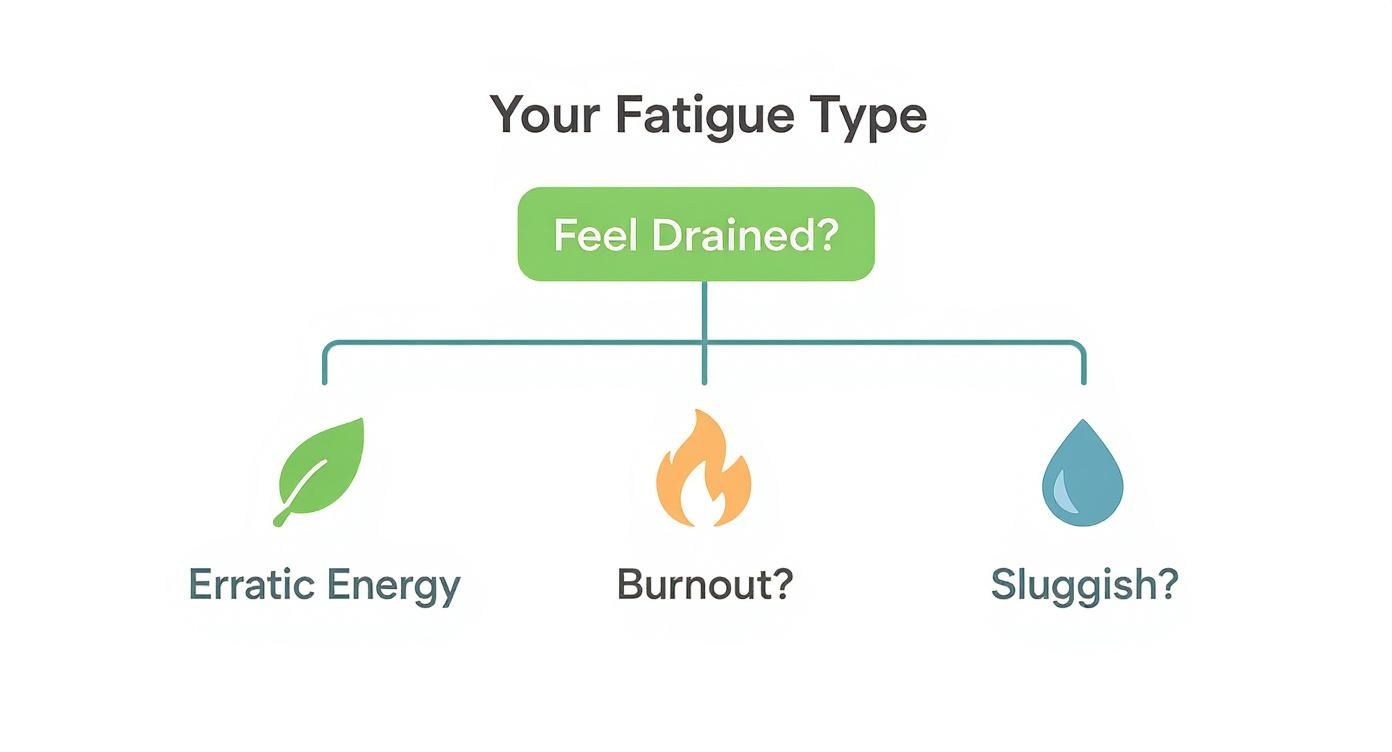
As you can see, feeling drained isn't a one-size-fits-all problem. It often falls into one of three patterns—Erratic Energy, Burnout, or Sluggishness—and each one points to a different energetic imbalance that needs a specific kind of support.
Adaptogens for Stress-Induced Exhaustion
Adaptogens are an incredible class of herbs that help your body become more resilient to stress—whether it's physical, chemical, or biological. Think of them as a smart thermostat for your internal stress response. They don't just artificially pump you up; they help regulate your energy, preventing those frantic highs and crushing lows that lead straight to burnout.
Ashwagandha (Withania somnifera) is easily the most well-known adaptogen, often called "Indian Ginseng." It’s famous for its unique ability to calm an overactive nervous system while simultaneously building deep, lasting stamina.
How It Works: Its magic lies in its ability to regulate cortisol, the body's primary stress hormone. Chronically high cortisol is what gives you that "wired but tired" feeling. Ashwagandha gently nudges those levels back into a healthy range.
Best For: It's a lifesaver for Vata-dominant people who feel anxious, scattered, and drained by constant worry. It’s also fantastic for Pitta types who are burning the candle at both ends and heading for a crash.
Practical Use: A traditional way to take it is as a powder mixed into warm milk with a little honey before bed. This helps promote deep, restorative sleep and rebuilds your core vitality, or Ojas. For convenience, capsules with 300-600 mg of root extract daily are also very effective.
Ashwagandha isn't going to hit you like a shot of espresso. It works quietly and deeply over time to restore your body’s own resilience, so you can handle what life throws at you without feeling drained.
Rejuvenators for Deep Cellular Renewal
When you feel profoundly depleted—like your well of energy has completely run dry—you need more than just a pick-me-up. This is where rejuvenating herbs, known as Rasayanas in Ayurveda, come in. Their focus is on deep nourishment and rebuilding your system from the ground up.
Shilajit is a powerful, mineral-dense resin that seeps from rocks in the Himalayas. It’s a true powerhouse, packed with fulvic acid and over 84 essential minerals that act like a supercharger for your cells.
How It Works: Shilajit gets right to the source by enhancing mitochondrial function—the tiny energy factories inside every one of your cells. This improves energy production at the most fundamental level, which is exactly what’s needed to combat that deep, lingering fatigue.
Best For: It's excellent for all doshas but is particularly good at shaking off Kapha sluggishness and restoring Vata depletion. Its potent nature also makes it a well-regarded tonic for male vitality. You can learn more about this connection in our guide on the best Ayurvedic testosterone booster.
Shatavari (Asparagus racemosus) is a cooling, nourishing rejuvenator often called the "queen of herbs." While it's particularly celebrated for supporting female vitality, it offers a grounding, restorative energy that can benefit everyone.
How It Works: It works by calming excess heat (Pitta) in the body and building Ojas, your deepest reserve of vitality. This is key for counteracting burnout and restoring a sense of juicy, grounded strength.
Best For: It’s a go-to for Pitta dosha, as it cools that fiery intensity and soothes irritability. It's also wonderful for Vata types, as it provides much-needed moisture and nourishment to a system that feels dry and depleted.
Comparing Key Ayurvedic Herbs for Energy
To help you see the differences at a glance, this table breaks down the primary actions and benefits of these powerful herbs.
Herb Name | Primary Action | Key Energy Benefit | Best For Dosha |
|---|---|---|---|
Ashwagandha | Adaptogenic | Builds resilience to stress, calms the mind | Vata, Pitta |
Shilajit | Rejuvenating | Boosts mitochondrial function, rebuilds Ojas | All Doshas (esp. Vata, Kapha) |
Shatavari | Rejuvenating/Cooling | Soothes burnout, restores vitality | Pitta, Vata |
Brahmi | Nootropic | Enhances mental clarity, reduces brain fog | Vata, Pitta, Kapha |
Each herb offers a unique pathway to restored energy, making it crucial to choose the one that aligns with your body's specific needs.
Nootropics for Mental Clarity and Brain Fog
Sometimes, fatigue isn't in your body but in your head. When you're struggling with brain fog, poor concentration, and mental exhaustion, Ayurvedic nootropics can help clear the cobwebs and get you thinking clearly again.
Brahmi (Bacopa monnieri) is a legendary herb for the mind. It has a long history of use for supporting memory, learning, and concentration, all while bringing a sense of calm to the nervous system.
How It Works: Brahmi improves the communication between your brain cells and helps protect the brain from oxidative stress. This two-pronged approach enhances mental sharpness and reduces the cognitive strain that makes you feel so tired.
Best For: It’s wonderfully versatile and great for all three Doshas. It helps calm Vata's scattered thoughts, cool Pitta's mental intensity, and cut through Kapha's dullness. Many Ayurvedic herbs are known for their cognitive benefits; you can explore a broader range of supplements for brain health, including Ayurvedic herbs like Bacopa Monnieri, for a well-rounded approach.
This growing appreciation for natural wellness solutions is clear from the market's trajectory. In India, the ayurvedic medicine market is experiencing a massive surge. It’s expected to be valued at around ₹1.9 lakh crore (about $22 billion) by 2025, with an annual growth rate of nearly 15%. This boom is fuelled by a strong consumer desire for herbal remedies that not only boost energy but also enhance immunity, signalling a major return to traditional, time-tested wisdom for modern health.
Getting the Most Out of Your Ayurvedic Remedies
Picking the right Ayurvedic medicine for energy is a great start, but how you take it is where the real magic happens. Ayurveda is a science of subtlety, where the small details can amplify an herb’s healing power. If you’re just swallowing a capsule, you might be missing a chance to tap into these time-tested principles for maximum benefit.
To truly integrate an herb's energy into your system, we need to think about its form, when to take it, and a fascinating concept called Anupana.
The Power of Anupana: The Carrier Matters
In Ayurveda, an Anupana is a “vehicle” or carrier substance you take with an herb. Its job is to enhance the herb's action and help guide it deeper into the body's tissues.
Think of it this way: the herb is a traveller on a mission, and the Anupana is its expert local guide. It knows the terrain of your body and ensures the traveller reaches its exact destination efficiently and safely.
But an Anupana is more than just a delivery service; it adds its own therapeutic qualities to the mix. Some of the most common ones include:
Warm Water: A simple, universal carrier that helps with general absorption. It’s a great default for almost any herb.
Honey: With its natural scraping and cleansing qualities, honey is often paired with herbs meant to clear congestion and reduce excess Kapha dosha.
Ghee (Clarified Butter): Deeply nourishing and cooling, ghee is the perfect partner for herbs that soothe inflammation and rebuild tissues. It's especially good for calming Vata and Pitta imbalances.
Warm Milk: Known for its heavy, nutritive properties, warm milk is fantastic for building Ojas (our core vitality) and is often used with rejuvenating herbs like Ashwagandha.
Taking your herbs with an Anupana transforms a simple act into a mindful ritual. Stirring Ashwagandha powder into warm milk before bed isn't just about consumption; it’s a grounding practice that tells your body it's time to rest, repair, and rebuild.
To Powder or To Capsule? Choosing Your Form
When you’re looking for an Ayurvedic medicine for energy, you’ll usually find it in two forms: the traditional powder (churna) or a modern capsule. Neither one is better than the other, but they offer very different experiences.
Powders: In Ayurveda, digestion begins with taste. When you take an herb as a powder, your tongue immediately registers its flavour—bitter, pungent, sweet, or astringent. This sends crucial signals to your brain and gut, preparing your body to receive and process the herb's unique benefits. It's a much more engaged, full-body experience.
Capsules: Let's be honest, capsules are incredibly convenient. They are flavourless, easy to swallow, and perfect for a busy lifestyle. They are a brilliant option if you really can’t stand a particular herb's taste.
If you’re new to Ayurveda, I’d suggest trying a powder first to build that sensory connection. But if convenience is what will keep you consistent, capsules are a perfectly effective way to go.
Sourcing Quality Herbs and Seeking Professional Guidance
This is non-negotiable: the quality and purity of your herbs are the single most important factor for both safety and effectiveness. The market is flooded with products, and not all are created equal. Poorly sourced herbs might not work, or worse, could be contaminated with heavy metals and other pollutants.
Always buy your supplements from reputable brands. Look for companies that provide third-party testing for purity and are transparent about where their herbs come from. Your health is worth the investment.
Finally, while this guide gives you a solid foundation, remember that Ayurveda is a deeply personalised system of medicine. The best way to get results is to consult a qualified Ayurvedic practitioner. They can create a plan tailored to your unique constitution (Prakriti) and your current state of imbalance (Vikriti).
This is especially critical if you:
Have any pre-existing health conditions.
Are pregnant or breastfeeding.
Are taking other medications.
A practitioner can help you navigate any potential herb-drug interactions and choose the precise herbs, like Mucuna Pruriens, and dosages that will bring your body back into balance. For anyone interested in learning more about this particular herb, you can read our deep dive on unlocking the power of Mucuna Pruriens for enhanced reproductive health and vitality. With professional oversight, your journey towards renewed energy will be both safe and successful.
Daily Routines That Fuel Your Inner Fire

While potent herbs are incredible allies, they can only do so much on their own. They need a stable, nurturing environment to work their magic. Ayurveda teaches that true, sustainable energy isn’t found in a bottle but is built brick by brick through simple, consistent daily rituals.
This foundational practice is called Dinacharya, and it’s one of the most effective forms of ayurvedic medicine for energy. Think of it as creating a strong container for your vitality. By aligning your body’s internal clocks with the natural rhythms of the day, you create a predictable flow that conserves and builds your energy stores.
These rituals aren't complicated chores. They're intentional acts of self-care that ground your energy and set your body up to thrive.
Morning Rituals to Awaken Your Vitality
How you start your day really does set the tone for the hours ahead. Ayurveda suggests beginning with grounding practices that gently awaken the body and clear out the toxins that have built up while you slept.
Rise with the Sun: Waking early, ideally just before sunrise, syncs you with the vibrant, creative energy of the morning. This simple act helps regulate your sleep-wake cycle, which is absolutely fundamental for steady energy.
Tongue Scraping (Jihwa Prakshalana): Before you drink anything, take a moment to gently scrape your tongue from back to front 7-10 times. This removes the coating of Ama (toxins), which not only improves your taste and oral hygiene but also supports your digestive fire.
Self-Massage (Abhyanga): This is the beautiful practice of applying warm, dosha-specific oil to your entire body. Abhyanga is deeply nourishing—it calms the nervous system, lubricates the joints, and gets your circulation going, leaving you feeling grounded and centred.
These practices have a profound knock-on effect, creating a foundation of stability from which your energy can naturally bubble up.
Ayurveda’s daily routines are a conversation with your body. They are moments of conscious care that signal safety and stability, allowing your nervous system to relax and your energy to flourish.
Igniting Your Inner Fire Through Breath and Movement
Once your body is cleansed and grounded, you can begin to actively cultivate your life force, or Prana. This is best done through gentle movement and specific breathing exercises that directly influence your energetic state.
Gentle yoga, especially sequences like Sun Salutations (Surya Namaskar), is perfect for moving stagnant energy and improving circulation. The focus isn't on an intense workout but on mindful movement that awakens every part of your being.
Afterward, Pranayama (breathing exercises) can dramatically shift your energy. A simple practice like Nadi Shodhana (Alternate Nostril Breathing) works to balance the left and right hemispheres of the brain, creating a state of calm alertness. It’s a direct way to increase Prana, making you feel revitalised without reaching for any external stimulants.
This focus on lifestyle is central to why Ayurveda is so effective. In India, where Ayurveda holds a commanding 71.55% share of the alternative medicine market, these practices are woven into the fabric of daily life. This tradition is supported by over 500,000 registered practitioners who almost always prescribe lifestyle adjustments alongside herbal remedies to boost vitality, as detailed by Mordor Intelligence.
Finally, mindful eating is key to strengthening your digestive fire, or Agni. Eating in a calm environment and truly savouring your food ensures you extract the maximum energy from your meals. Many of these principles of vitality also extend to other areas of well-being, a connection we explore in our guide to Ayurvedic medicine for sexual stamina. These daily choices are the quiet workhorses that build true, lasting energy.
Your Path to Lasting Ayurvedic Vitality
This journey isn’t just about fighting off tiredness; it’s about reclaiming the vibrant energy that is naturally yours. We've walked through how balancing your Doshas, tending to your digestive fire (Agni), and selecting the right ayurvedic medicine for energy can build a powerful foundation for a life full of vitality.
The most important thing to remember is that Ayurveda offers a personal roadmap, not a one-size-fits-all pill. Your unique constitution and the root cause of your fatigue—whether it’s the wired-and-tired feeling of a Vata imbalance, the burnout of excess Pitta, or the heavy sluggishness of Kapha—should always guide your choices.
The secret to success with Ayurveda isn’t found in grand, sweeping changes. It’s built through small, consistent acts of self-care. The daily rituals and mindful choices are what create deep, resilient energy over time.
Don't feel like you have to tackle everything at once. The path to real vitality begins with a single, manageable step.
Your First Step Forward
Start small and be kind to yourself. A gentle approach is the best way to weave these new habits into your life without feeling overwhelmed. Think about trying one of these simple starting points:
Pick one herb that really speaks to your current needs. Maybe it's the calming strength of Ashwagandha or the mental sharpness from Brahmi.
Adopt a single daily ritual. This could be something as simple as tongue scraping when you wake up or sipping warm ginger tea before you eat.
By taking that first step, you’re opening up a conversation with your body. Listen to how it responds, make small adjustments, and trust the process. These consistent, mindful choices are the real key to unlocking profound and lasting energy.
Frequently Asked Questions
It's natural to have questions when you're exploring a new path to wellness. To help you feel more confident as you begin with Ayurveda, we've put together straightforward answers to some of the things people ask us most often about boosting energy.
How Long Does Ayurvedic Medicine Take to Work?
Think of it this way: Ayurvedic herbs aren't like a shot of espresso that gives you a quick, temporary jolt. Instead, they work quietly in the background to rebuild your body's energy-producing systems from the ground up. This means you’re fixing the root cause of your fatigue, not just masking it.
You might notice small, positive changes—like better sleep or a calmer mood—within the first week or two. But for that deep, lasting energy to really take hold, you'll want to give it some time. Most people find that one to three months of consistent use, paired with healthy lifestyle choices, is when the real magic happens. The whole point is to create sustainable energy, so a little patience goes a long way.
Can I Combine Different Ayurvedic Herbs?
Absolutely. In fact, combining herbs is a cornerstone of Ayurvedic practice, but there’s a real art and science to it. The goal is to create a blend where the herbs work together, enhancing each other's effects—what we call synergy. A classic example is mixing a calming adaptogen like Ashwagandha with a brain-focused herb like Brahmi to tackle both stress and mental fatigue at once.
That said, if you're just starting out, it's a good idea to introduce one herb at a time. This helps you understand how your own body responds to each one. For a blend that’s truly designed for your unique constitution (your Dosha) and specific needs, nothing beats the advice of a qualified Ayurvedic practitioner.
Ayurveda is all about personalisation. An herb that brings one person incredible vitality might not be the best choice for another. An expert can help you decode your body’s needs and find the remedies that will truly bring you into balance.
Are There Any Side Effects to Be Aware Of?
When chosen correctly for your body type and used as directed, Ayurvedic herbs are incredibly safe. Most of what people call "side effects" are really just a mismatch. For example, a warming herb like Shilajit might be a bit too much for someone who already has a fiery Pitta constitution, potentially causing some mild aggravation.
The most significant risk actually comes from low-quality products. Some supplements can be tainted with contaminants like heavy metals, which is why sourcing is so important.
Here’s how to stay safe and get the best results:
Source Carefully: Always, always buy your herbs from reputable suppliers who can prove they do third-party testing for purity and safety.
Consult a Professional: This is non-negotiable if you have any pre-existing health conditions, are pregnant or breastfeeding, or take other medications. A practitioner can spot any potential interactions and guide you safely.
By keeping these simple principles in mind, you can confidently tap into the power of Ayurvedic herbs and find your way back to a life full of natural energy.
Ready to reclaim your vitality with a trusted, farm-to-bottle solution? JJ Herbals offers 100% natural, bio-organic supplements formulated with the wisdom of Ayurveda to support your energy, stamina, and overall well-being. Discover our holistic approach and start your journey with a free doctor consultation. Learn more at https://www.jjherbals.com.
Tôi phát hiện Sc88 David chơi ko đẹp qua một bài viết giới thiệu các website giải trí trên mạng. Mong muốn nắm bắt xem cộng đồng đang nói gì về nó, tôi quyết định truy cập ngay. Sau khi xem lướt các mục chính và tìm hiểu sơ về dịch vụ, tôi cảm nhận nền tảng được trình bày khá rõ ràng, trực quan và thuận tiện cho người dùng mới.
There aren't many browser games that keep me coming back, but https://thedriftboss.com/ definitely does. I like how every successful drift depends entirely on timing and concentration rather than luck. Unlocking different cars gives you another reason to keep improving your skills and collecting coins.
xosoplus.mobi dạo này thấy mọi người nói hoài nên mình cũng ghé thử cho biết, kiểu vào xem giao diện họ trình bày ra sao thôi. Vừa mở lên là thấy breadcrumb chuyên mục XSMB theo ngày nhìn khá rõ, có dòng kiểu “XSMB ngày 19 07 2026” rồi nhảy qua phần dự đoán cho 20 7 2026 nên khỏi phải đoán đang xem kỳ nào. Mình cũng để ý họ gom dữ liệu thành từng khối riêng, đặc biệt cái bảng “Đầu lô tô Đuôi lô tô” nhìn gọn và dễ lướt, không bị chữ số dồn thành một mớ. Cuộn xuống chút là gặp mấy thống kê theo cụm nên mắt đỡ mỏi. Nói chung bố cục trang…
https://gg88.llc/ hôm bữa mình thấy ai đó nhắc nên tò mò bấm vào xem thử, kiểu vào cho biết thôi. Vừa mở lên là thấy giao diện khá thoáng, tối giản nhưng vẫn nhìn hiện đại, không bị rối mắt hay nhồi quá nhiều thứ một lúc. Mình chỉ lướt nhanh chứ không đọc kỹ, nhưng cách họ chia nhóm nội dung nhìn khá “có trật tự”, nên người mới như mình cũng dễ định hướng. Kéo xuống thấy mượt, chuyển qua lại giữa mấy phần không bị giật hay loạn bố cục. Nói chung cảm giác họ ưu tiên trải nghiệm thao tác nhanh, đỡ phải mất thời gian tìm chỗ cần xem. Ấn tượng nhất vẫn là các…
tải sunwin mình thấy bạn bè nhắc hoài nên cũng ghé thử cho biết, kiểu tò mò xem trang trông ra sao thôi chứ không đào sâu gì. Vào cái là thấy giao diện khá sáng sủa, khoảng trống vừa đủ nên nhìn không bị bí. Mình thích nhất là cách họ chia khối nội dung theo từng cụm, lướt xuống vẫn dễ định vị chỗ đang xem, không bị rối. Mấy phần hiển thị dạng bảng cột nhìn gọn gàng nữa, chữ số canh thẳng hàng nên liếc qua cũng hiểu nhanh. Menu đặt ngay chỗ dễ thấy, bấm qua lại giữa các mục cũng ổn, không phải mò lâu. Nói chung cảm giác “dễ dùng” vì các khung…