.png)
A Guide to Hypothyroidism Ayurvedic Treatment
- DeVeNdRa NaTh
- Dec 22, 2025
- 13 min read

In Ayurveda, we don't just chase symptoms. When it comes to hypothyroidism, our goal is to get to the very root of the problem by rebalancing the body's fundamental energies, the doshas, and rekindling your metabolic fire, known as Agni. It’s an approach that looks past symptom management and uses time-tested herbs, specific dietary changes, and gentle detoxification to bring the thyroid back to its natural, healthy function.
An Ayurvedic View of Hypothyroidism
While modern medicine identifies hypothyroidism as a simple hormone shortage, Ayurveda offers a far more holistic and nuanced view. It sees the condition as a deep-seated systemic imbalance that begins long before your blood test ever flags a problem. This is a particularly pressing issue in India, where thyroid disorders affect an estimated 11% of the population—a statistic noticeably higher than in many Western nations. You can read more about the prevalence of these conditions in this comprehensive study.
Imagine your body’s metabolism is a steady, gentle flame. This is your Agni. It’s the fire that fuels digestion, creates energy, and keeps your body warm. When this flame dwindles and becomes weak—a state we call mandagni—the entire system slows to a crawl.
The Dance of Doshas and Agni
Ayurveda pinpoints this metabolic slowdown to an imbalance in two key energies, or doshas:
Kapha Dosha: Made up of earth and water elements, Kapha provides stability and structure. But when it's out of balance, it brings qualities of heaviness, coldness, and sluggishness—sound familiar? These directly mirror the classic hypothyroid symptoms like unexplained weight gain and persistent fatigue.
Vata Dosha: A blend of air and space, Vata governs all movement and communication in the body. If Vata is disturbed, it can disrupt the crucial hormonal messages travelling between the brain and the thyroid gland, further impairing its ability to work properly.
In short, Ayurveda doesn't see hypothyroidism as an isolated gland issue. It sees it as the result of a weak metabolic fire (Agni) being smothered by the heavy, cold, and damp qualities of excess Kapha dosha.
This is why a true hypothyroidism ayurvedic treatment isn't about replacing a missing hormone. It’s about stoking that internal fire back to life. The process involves clearing out the body's channels (srotas) that have become clogged with metabolic toxins (ama), which then allows energy and vital nutrients to flow freely once more. By tackling the source of the problem—the weak Agni and imbalanced doshas—Ayurveda works to restore the thyroid’s own innate ability to function, creating a path towards genuine, lasting health.
Getting to the Root of Thyroid Imbalance in Ayurveda
From an Ayurvedic standpoint, hypothyroidism isn't something that just appears out of the blue. It’s the end result of subtle, long-term imbalances that have been quietly brewing, often for years, thanks to our diet, stress levels, and daily habits. These factors disrupt the body's natural harmony, leading to the build-up of a sticky, metabolic gunk known as Ama.
Think of a clear, free-flowing river. Now imagine what happens when silt, debris, and pollutants start to pile up – the flow slows down, becoming sluggish and blocked. This is exactly what Ama does inside us. It's a heavy, gunky substance that clogs up the body’s subtle channels, or srotas, which are the superhighways for nutrients and energy. When the channels that feed the thyroid gland get congested, the gland is essentially starved, unable to get what it needs to work properly.
This blockage isn’t just limited to the thyroid. Its effects create a ripple effect, impacting all the different tissues (dhatus) in the body. This is precisely why a "thyroid problem" can show up as a whole cluster of seemingly unrelated symptoms, from that stubborn weight you can't shift to feeling down and foggy.
How Ama Affects Your Body’s Tissues
The build-up of Ama and the resulting sluggishness sets off a chain reaction. Ayurveda gives us a clear map of how this explains many of the classic hypothyroid symptoms. The core issue starts with agnimandya (a weak digestive fire), which is what produces the Ama in the first place. This then leads to medo-dushti (impaired fat tissue metabolism), which is the driver behind the weight gain.
This widespread blockage affects multiple channels, including those responsible for nourishing your plasma, muscles, fat, and even your mind. This deep connection explains why many people with hypothyroidism also struggle with high cholesterol, are at a higher risk for atherosclerosis, and battle persistent feelings of low mood or depression. You can dive deeper into this systemic impact in this detailed Ayurvedic analysis.
The diagram below really brings home how these different factors come together to disrupt the thyroid.
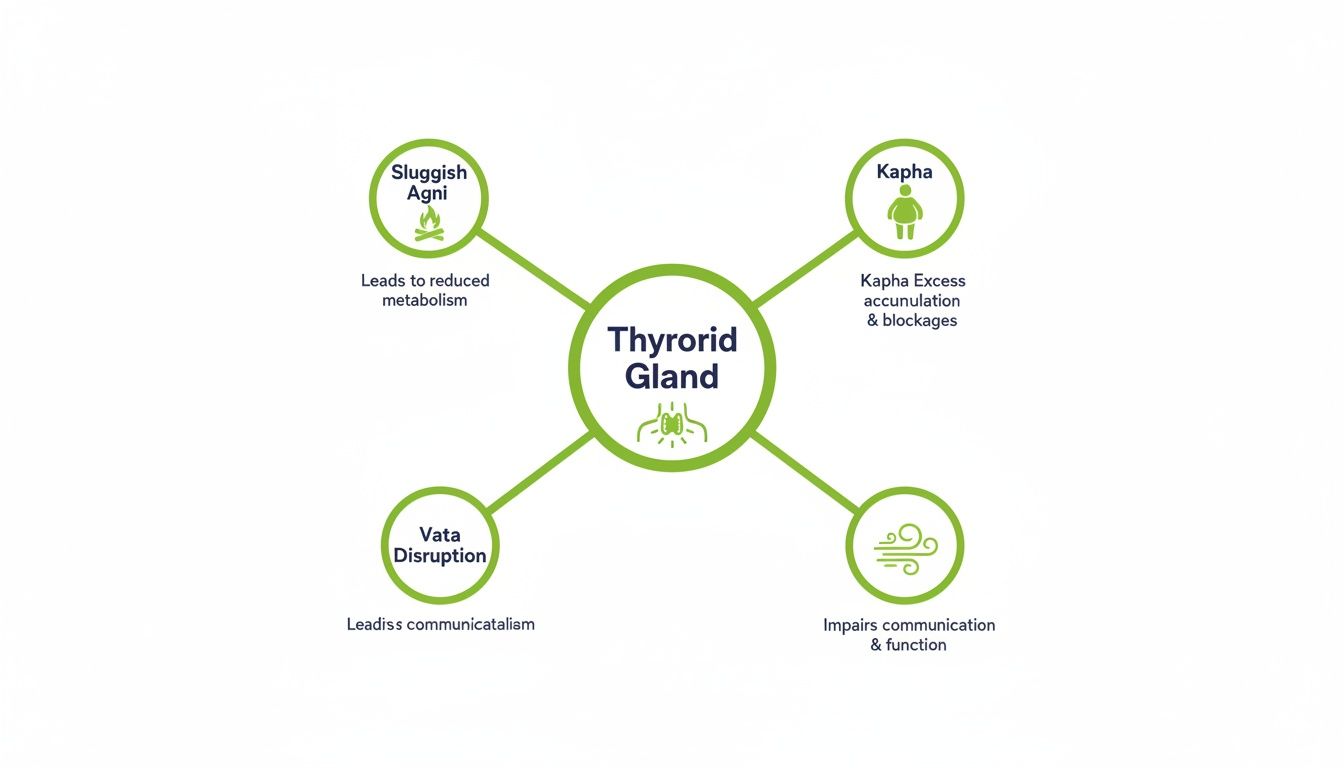
As you can see, a weak digestive fire (Agni), an excess of the heavy Kapha dosha, and disruptions in the airy Vata dosha all converge to throw the thyroid gland off balance.
This holistic view connects the dots between your daily life and how you feel. It shows that your fatigue, weight gain, and low mood aren't just random occurrences. They are the direct consequence of a deep metabolic imbalance that needs to be cleared from the source. A proper hypothyroidism ayurvedic treatment always starts by clearing out this Ama to let the body heal and restore its natural function.
Ayurvedic Herbs: Nature’s Support for Your Thyroid
Once you’ve started to clean up your diet and lifestyle, certain Ayurvedic herbs can really accelerate the healing process. Think of these botanicals not just as supplements, but as intelligent allies that work with your body. They help to rekindle your metabolic fire, clear out congestion, and nourish the thyroid gland back to health.

Unlike a one-pill-fits-all solution, Ayurveda uses specific herbs to get to the root of the problem. Let's look at some of the most trusted herbs in our arsenal.
Kanchanar: The Lymphatic Cleanser
Kanchanar is one of the most important herbs in Ayurveda for any kind of glandular issue. You can picture it as a gentle but powerful drain cleaner for your lymphatic system, which often gets thick and congested when Kapha dosha is high.
This remarkable herb systematically breaks down and clears blockages, especially around the head and neck where your thyroid is located. By cleaning these channels, Kanchanar ensures that the thyroid can receive the nourishment and hormonal signals it needs, which helps reduce swelling and improve its function.
Guggulu: The Metabolism Booster
Guggulu is a powerful resin that has been used for centuries to fire up Agni (digestive and metabolic fire) and manage weight. If you're dealing with the stubborn weight gain and high cholesterol common in hypothyroidism, Guggulu is a game-changer.
It has a direct stimulating effect on the thyroid gland, encouraging it to produce more hormones. On top of that, its potent anti-inflammatory and fat-burning qualities help tackle medo-dushti (impaired fat metabolism), a key factor behind the sluggishness and toxic build-up.
When used together, herbs like Kanchanar and Guggulu have a beautiful synergistic effect. Kanchanar clears the path, and Guggulu provides the spark to get your metabolic engine running smoothly again.
Ashwagandha: The Stress Defender
You simply can’t ignore the impact of chronic stress on your hormones. It throws Vata dosha out of balance and puts a heavy strain on your entire endocrine system. This is where Ashwagandha, a world-renowned adaptogenic herb, truly shines.
An adaptogen is a special kind of herb that helps your body adapt and become more resilient to stress, whether it’s physical or emotional. Ashwagandha calms the nervous system and supports the adrenal glands, which helps to normalise the critical communication pathway between your brain and your thyroid. A stressed body can’t heal, and Ashwagandha helps create the calm internal environment needed for recovery. Many also find that Ashwagandha is one of the best ayurvedic medicines for immunity, offering a holistic boost to your overall well-being.
To help you understand how these herbs fit into a treatment plan, here's a quick summary of their roles.
Key Ayurvedic Herbs for Hypothyroidism and Their Actions
Herb | Primary Ayurvedic Action | Benefits for Hypothyroidism |
|---|---|---|
Kanchanar | Lekhana (Scraping), Granthihara (Reduces Growths) | Clears lymphatic congestion (Kapha), reduces goitre, and improves circulation to the thyroid. |
Guggulu | Deepana (Metabolism Stimulating), Lekhana (Scraping) | Stimulates thyroid function, helps manage weight and cholesterol, and scrapes Ama (toxins) from tissues. |
Ashwagandha | Rasayana (Rejuvenating), Adaptogenic | Reduces stress (Vata), supports the adrenal-thyroid axis, and boosts energy and resilience. |
These herbs, usually prescribed in specific combinations by a qualified practitioner, are the heart of an effective Ayurvedic approach. They don’t just put a plaster on the symptoms; they work deeply to cleanse, stimulate, and protect your body, gently guiding it back to its natural state of balance and vitality.
Panchakarma: Your Ayurvedic Detox for Thyroid Health
Before we even start with herbs or specific foods, we need to clear the way for healing. If the body's internal highways are clogged, even the best remedies won't reach their destination. This is where Panchakarma, Ayurveda’s signature detoxification process, becomes a cornerstone of any effective hypothyroidism ayurvedic treatment. It’s not just a simple cleanse; think of it as a deep, systematic reset for your entire body.

The main goal here is to get rid of Ama—the deep-seated metabolic toxins that have built up over years. Ama is a sticky, heavy gunk that comes from a weak digestive fire (mandagni). It’s this very substance that clogs up the channels (srotas) that are meant to nourish your thyroid gland, leading directly to its sluggish performance.
Clearing the Path for Healing
Panchakarma isn't just one single treatment. It’s a carefully planned sequence of therapies designed to gently coax these stubborn toxins out of your tissues and then guide them out of your body for good. Since hypothyroidism is primarily a problem of excess Kapha dosha, certain procedures are especially powerful.
Two therapies are particularly key for this condition:
Vamana (Therapeutic Emesis): This is a closely supervised therapy designed to expel excess Kapha and liquefied Ama from the upper parts of the body, like the stomach and respiratory system. By clearing out this heavy congestion, Vamana helps you feel lighter and shakes off that sluggishness so common with an underactive thyroid.
Virechana (Therapeutic Purgation): This therapy zeroes in on cleansing the lower digestive tract, specifically targeting the liver and gallbladder. It’s brilliant at removing toxins that are putting a damper on your metabolism and helps to get your digestive fire, or Agni, burning brightly again.
Think of it like this: Panchakarma creates a clean slate. It hits the reset button on your metabolism, ensuring that any herbs or dietary changes you make afterwards can actually be absorbed and put to use properly.
The power of this kind of deep cleaning is backed by real-world results. For example, a retrospective study looked at 32 female hypothyroidism patients in Maharashtra. After a 16-week Ayurvedic programme that included at least two detox procedures and oral medicines, every single participant reported complete relief from their symptoms. You can read more about this impressive thyroid detoxification research for yourself.
Beyond the Main Procedures
Other Panchakarma therapies also play a vital supporting role. Nasya, which involves administering medicated oils through the nasal passages, is incredibly valuable. It helps clear the channels in the head and neck, providing direct stimulation to the area around the thyroid gland and improving the entire endocrine communication network.
By going through this purification process with a trained practitioner, you're laying the best possible foundation for long-term recovery. It’s an essential first step in helping your body find its way back to its natural balance. To get a more complete picture, you can learn more about what Panchakarma in Ayurveda is and its five ancient therapies.
Weaving Ayurveda Into Your Life for Thyroid Health
True healing from hypothyroidism in Ayurveda isn’t just about taking herbs. It’s a holistic approach that weaves balance into the very fabric of your daily life. The food you eat, the routines you keep—these are your most powerful tools for reigniting your metabolic fire (Agni) and calming the heavy, slow-moving Kapha dosha. Think of this as your practical guide to creating an environment where your thyroid can finally begin to flourish.

The central idea is refreshingly simple: choose foods and activities that are light, warm, and stimulating. These qualities are the perfect antidote to the cold, heavy nature of an aggravated Kapha that can leave you feeling bogged down. This isn't about harsh restrictions; it's about making conscious, mindful choices.
Foods to Stoke Your Inner Fire
Your plate should be filled with foods that are easy on your digestion and help get your Agni roaring again. Imagine you’re trying to coax a dwindling campfire back to life—you wouldn’t throw on a giant, damp log. Instead, you'd add small, dry pieces of kindling. The same principle applies here.
Let's look at some key dietary shifts you can make:
Warm, Cooked Meals are Your Friend: Raw, cold foods are a real challenge for a sluggish digestive system. Favour gently steamed vegetables, nourishing soups, and well-cooked grains over big, cold salads or icy smoothies.
Spice Things Up: Spices are nature's gift to digestion. Don't be shy with warming spices like ginger, turmeric, cinnamon, black pepper, and cumin. They are fantastic for giving your metabolism a gentle nudge.
Fill Up on Fibre: Whole grains such as millets and quinoa, alongside a variety of legumes, are brilliant for keeping your digestion moving and preventing the constipation that so often comes with an underactive thyroid.
Don't Fear Fat: The right fats are absolutely crucial for producing hormones. Small amounts of high-quality ghee and coconut oil are excellent choices, as they are known to support metabolic health.
In Ayurveda, how you eat is just as important as what you eat. Try to eat in a calm, settled environment without screens. Chew your food until it's almost liquid and really taste each bite. This one small change can make a huge difference in how well you digest your food and absorb its nutrients.
Daily Rhythms for Lasting Balance
Your daily routine, what we call Dinacharya in Ayurveda, creates a stable, predictable rhythm for your body. This consistency is incredibly calming for the nervous system and helps regulate your natural hormonal cycles. It’s all about creating a supportive structure for your body to thrive in.
See if you can integrate some of these powerful habits into your day:
Honour Your Sleep: Try to be in bed by 10 p.m. and wake with the sun. Deep, restorative sleep is non-negotiable for hormone balance and allowing your body to repair itself.
Soak Up the Sun: Just 15-20 minutes of morning sun can work wonders. It’s our best natural source of Vitamin D, which is vital for both a healthy immune system and proper thyroid function.
Befriend Your Stress: Chronic stress is like poison for your endocrine system. Find a practice that helps you unwind, whether it's five minutes of deep breathing, a short meditation, or a quiet walk in nature.
Yoga and Pranayama: Targeted Support for Your Thyroid
Certain yoga postures and breathing techniques can offer direct support by improving blood flow to the throat and calming the entire nervous system.
Sarvangasana (Shoulder Stand): Often called the "queen of asanas," this powerful inversion gently compresses the thyroid gland, which helps to stimulate its activity.
Matsyasana (Fish Pose): This is the perfect counter-pose to the shoulder stand. It opens up the throat and neck, bringing fresh circulation to the thyroid area.
Ujjayi Pranayama (Ocean Breath): This special breathing technique creates a soft, vibrating sound in the back of your throat. This gentle friction is thought to act like an internal massage for the thyroid gland.
By consciously weaving these diet and lifestyle practices into your daily life, you’re doing so much more than just managing symptoms. You are becoming an active participant in your own healing journey, building a strong foundation of balance that supports not just your thyroid, but your overall vitality from the inside out.
Common Questions About Ayurvedic Thyroid Treatment
Embarking on any new health journey always brings up questions. It's completely natural. When you're looking into an Ayurvedic treatment for hypothyroidism, getting clear, straightforward answers is key to feeling confident and ready to start. Let's tackle some of the most common concerns to help you understand what to expect on the path to better thyroid health.
Can I Stop My Thyroid Medication with Ayurvedic Treatment?
This is probably the first question on everyone's mind, and the answer is an emphatic no. You should never stop your prescribed thyroid medication without your doctor's guidance. Ayurveda is best seen as a powerful partner to your conventional treatment, not a sudden replacement for it. The real goal here is to get to the root of the problem—the deep-seated imbalances that led to the thyroid issue in the first place.
Here’s a helpful way to think about it: Ayurveda works on cleaning the engine (your metabolism) and fine-tuning the whole car (your body) so it can eventually run smoothly on its own. As your body starts to function better, your doctor will likely see improvements in your lab reports. Based on that solid medical evidence, they may be able to safely and gradually lower your medication dose over time. The safest and most effective path is always one where your medical doctor and your Ayurvedic practitioner work together.
How Long Until I See Results from Ayurvedic Treatment?
There's no one-size-fits-all answer here, as the timeline is different for everyone. How severe your condition is, how long you've been dealing with it, and how consistently you stick to the plan all play a huge part. Ayurveda isn't about a quick fix; it's about deep, lasting healing.
That said, many people start to feel better in smaller ways—like having more energy, better digestion, or clearer thoughts—within just a few weeks. However, seeing measurable changes in your thyroid hormone levels (like TSH, T3, and T4) can take a few months of consistent effort. Patience is your best friend on this journey. Real, sustainable change comes from steady progress, not a sprint.
Ayurveda’s strength lies in restoring the body’s own incredible ability to heal itself. It's a gentle, gradual process that respects your body's natural rhythms, which is why the health improvements are so much more profound and long-lasting.
Is the Ayurvedic Diet for Hypothyroidism Restrictive?
"Restrictive" isn't quite the right word. It's more about smart, mindful eating. The whole point is to choose foods that fire up your digestive metabolism (Agni) and counteract the heavy, sluggish qualities of Kapha dosha. Instead of a long list of "don'ts," it’s a guide to eating in a way that truly supports your body.
The focus is on things like warm, freshly cooked meals, vibrant digestive spices like ginger and turmeric, and plenty of fresh vegetables. You'll be encouraged to cut back on heavy, cold, and highly processed foods that can clog up your system and create metabolic toxins (Ama). The best part? A good practitioner will help you create a personalised plan that is not only healing but also genuinely enjoyable, making it easy to stick with for the long haul. For more tailored advice, you might want to look into an ayurvedic doctors online consultation.
Are Ayurvedic Thyroid Herbs Safe?
When they are prescribed by a qualified and experienced Ayurvedic practitioner, these herbs are incredibly safe and effective. It's so important to remember that herbs are powerful natural medicines—they aren't something to experiment with on your own. A trained professional will take the time to understand your unique body constitution (prakriti), your current imbalances (vikriti), and your overall health to select the right herbs and dosages just for you.
This highly personalised approach is what guarantees both safety and success. It minimises any potential for side effects and unlocks the profound healing power these ancient botanicals can offer on your journey back to health.
At JJ Herbals, we're dedicated to bringing you authentic, farm-to-bottle Ayurvedic solutions to support your wellness. Our formulas are made with 100% natural, organically grown ingredients to help you find balance and vitality again. Explore our range of products designed to support your health goals at https://www.jjherbals.com.
Comments