.png)
Signs of Low Testosterone Levels: Key Indicators and When to See a Doctor

Most people think of testosterone as just the “male hormone,” the fuel for sex drive and big muscles. While it’s certainly important for those things, that’s a bit like saying a quarterback only throws the ball. In reality, testosterone is more like the master conductor of a man’s entire physiological orchestra.
It directs everything from how you build muscle and store fat to your mood, mental sharpness, and energy levels. Understanding the signs of low testosterone levels really starts with appreciating just how many jobs this one hormone does.
What Is Testosterone and Why It Matters
At its core, testosterone is a powerful hormone, mostly made in the testicles, that sends chemical signals all over your body. It's the key that unlocks many of the traits we associate with masculinity, but its work doesn't stop after puberty. Throughout your life, it’s constantly working behind the scenes to keep dozens of critical systems in balance.
When your testosterone levels are where they should be, you feel strong, sharp, and full of life. But when those levels start to drop, the ripple effects can touch almost every part of your physical and mental health. This isn't just a sign of getting older; it's a fundamental chemical shift that can leave you feeling like a shadow of your former self.
The Hormone’s Core Responsibilities
Testosterone doesn’t just do one thing; it's a multitasking powerhouse. Think of it as the foundation for your overall vitality.
Here’s a quick look at some of its most critical roles:
Fuelling Sex Drive (Libido): It’s the primary driver behind your interest in sex.
Building Muscle Mass and Strength: Testosterone is essential for synthesising protein, which is how your body builds and maintains muscle.
Keeping Bones Strong: It’s a key player in maintaining bone density, helping to protect you from fractures as you age.
Managing Fat Distribution: Healthy levels help your body decide where to store fat, preventing it from accumulating around your midsection.
Powering Mood and Energy: This hormone is closely linked to your motivation, confidence, and get-up-and-go.
Sharpening Your Mind: It also supports your ability to concentrate, remember things, and even process spatial information.
Realising how many systems rely on testosterone is the first step. Low testosterone isn't about a single symptom; it's about a cascade of potential issues that can arise when this vital hormone isn't doing its job properly.
Ultimately, testosterone is a cornerstone of men's health. When it runs low, it’s like trying to run a high-performance engine on low-grade fuel—everything slows down, becomes less efficient, and just doesn't work right. That's why spotting the signs of low testosterone levels early is so important for tackling health problems before they get worse.
Decoding the Physical Signs of Low Testosterone
When your testosterone levels start to dip, your body is often the first to let you know. These physical signs aren't just minor inconveniences; they're your body's way of signalling that a crucial hormone might be out of balance. Learning to recognise these clues is the first, most important step in figuring out what's going on under the surface.
One of the most common complaints is a profound, unshakable fatigue. We’re not talking about the usual tiredness after a demanding day or a tough workout. This is a deep-seated exhaustion that a good night's sleep just doesn't seem to touch, leaving you feeling like you're running on empty from the moment you wake up.
Changes in Muscle and Fat
Another major red flag is a frustrating shift in your body's build. You might be hitting the gym just as hard as ever, but suddenly, you're struggling to build—or even just hold onto—your muscle mass. It can feel like you're putting in all the work for none of the reward.
This happens because testosterone is the key that unlocks muscle protein synthesis, the very process your body uses to rebuild and grow muscle fibres after you exercise. When your testosterone is low, that process becomes sluggish and inefficient, turning muscle growth into a real uphill battle. This is why many physical signs of low T, such as gaining fat while losing muscle, are directly tied to the importance of body composition for your overall health.
At the same time, you might notice you’re storing more body fat, especially that stubborn kind that settles around your midsection and chest. Testosterone plays a big role in managing your metabolism, and when there's less of it, your body is more inclined to store fat instead of burning it for fuel.
Think of testosterone as a project manager for several key physical systems, including your muscles, bones, and even your mood.
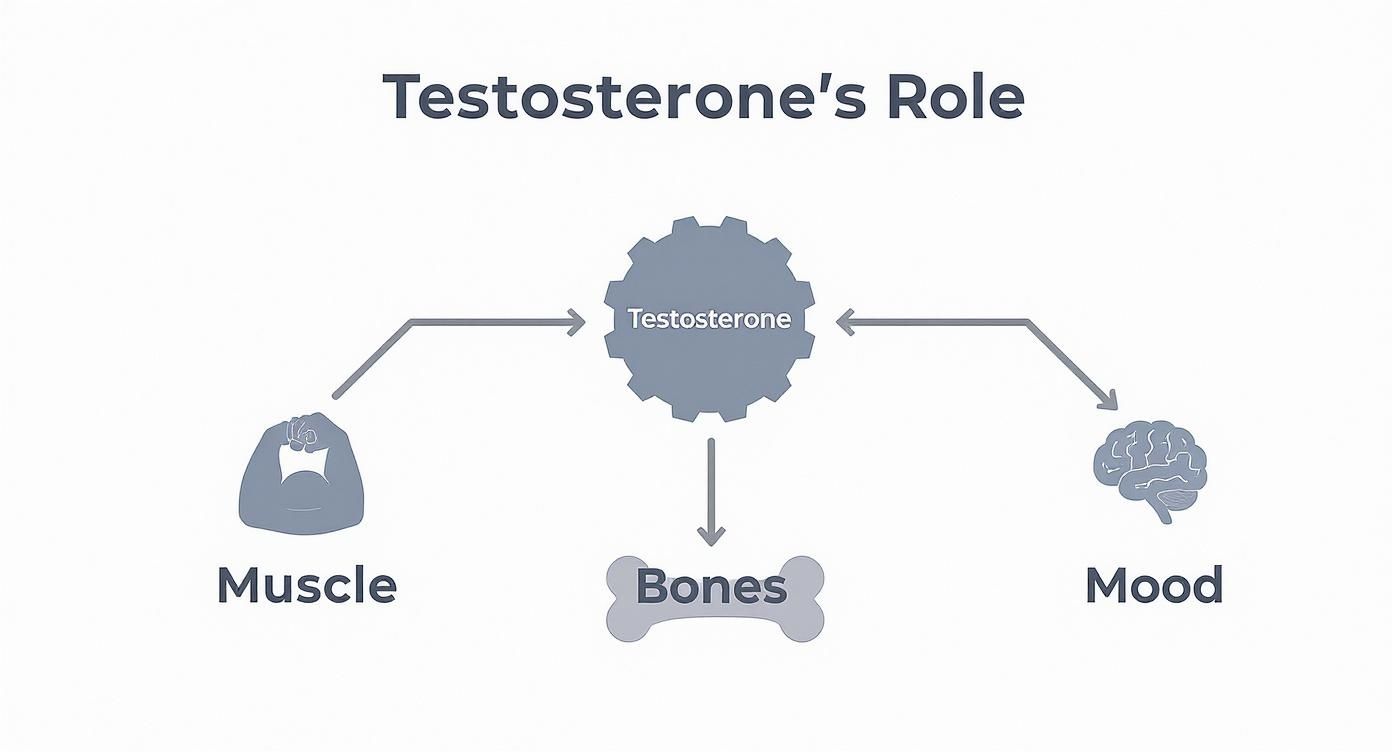
As the infographic shows, a drop in this hormone doesn’t just impact one thing; it can set off a chain reaction across your entire body.
Other Telltale Physical Indicators
Looking beyond energy levels and body composition, there are several other physical clues that can point to low testosterone. These signs can be subtle at first, but they're crucial pieces of the overall puzzle.
Here’s a quick summary of the main physical signs and why they happen.
Common Physical Signs of Low Testosterone and Their Mechanisms
Physical Sign | What It Looks Like | The Biological Reason |
|---|---|---|
Deep Fatigue | A constant feeling of exhaustion that sleep doesn't resolve. | Testosterone is vital for energy production and motivation. Low levels can lead to persistent tiredness. |
Muscle Loss | Difficulty building or maintaining muscle, even with regular workouts. | Testosterone drives muscle protein synthesis, the process needed for muscle repair and growth. |
Increased Body Fat | Noticeable fat gain, especially around the abdomen and chest. | This hormone helps regulate metabolism. Without enough, the body tends to store fat more easily. |
Reduced Body Hair | Thinning of facial, chest, or pubic hair. | Testosterone is responsible for stimulating and maintaining the growth of body and facial hair. |
Weaker Bones | Increased risk of fractures or a diagnosis of osteopenia/osteoporosis. | Testosterone is essential for maintaining bone mineral density and strength in men. |
These symptoms are your body communicating a potential problem. They aren't a reflection of your effort or discipline, but rather important biological clues that deserve attention.
And this isn't a rare issue. In India, for example, a study revealed that roughly 26.1% of men in urban areas have low testosterone. This is often tied to the pressures of modern life, like chronic stress, poor diet, and alcohol use. Unfortunately, because of a lack of awareness and a reluctance to talk about these kinds of health issues, many men go undiagnosed.
The Mental and Emotional Impact of Low T
Beyond the physical stuff, some of the most frustrating signs of low testosterone are the ones that happen inside your head. It’s not just about building muscle; testosterone plays a huge part in regulating your mood, your ability to focus, and your general get-up-and-go. When your levels dip, it can feel like a persistent mental fog has rolled in, making everything just a bit harder.
Think of testosterone as the chemical messenger that keeps your brain's motivation and clarity centres firing on all cylinders. When there isn't enough of it, you might find yourself struggling to concentrate at work or losing interest in projects you used to love. It’s a subtle but draining shift that chips away at your confidence and overall enjoyment of life.

This mental cloudiness often goes hand-in-hand with some noticeable mood changes. Many men find they become more irritable or have a much shorter fuse than they used to. Little things that you once brushed off can suddenly feel like a massive deal, creating friction in your relationships at home and on the job.
Navigating Mood Swings and Irritability
Feeling like you're on an emotional rollercoaster is a classic sign of a hormone imbalance. One minute you feel perfectly fine, and the next you’re snappy or down in the dumps for no apparent reason. This isn't a character flaw; it's your brain reacting to not getting the hormonal signals it needs to stay on an even keel.
This unpredictability can easily trap you in a vicious cycle. Feeling irritable leads to tense conversations, which creates more stress. That stress then pumps out more cortisol, a hormone that actively works against testosterone production, pushing your levels even lower. It’s a downward spiral that’s tough to escape without getting to the root of the problem.
Low testosterone isn't just about feeling tired; it’s about a fundamental shift in your mental state. Recognising that these feelings of brain fog, irritability, and low motivation have a biological cause is the first step toward finding a solution.
The Connection to Motivation and Confidence
Another major mental hurdle is a nosedive in motivation. Hobbies that used to be your escape start to feel like a chore, and goals that once fired you up now seem pointless. This isn't just you being lazy; it's directly tied to testosterone's role in your brain's reward system. When the hormone is in short supply, that sense of ambition and competitive drive can really take a hit.
Naturally, this can do a number on your self-esteem. When you're struggling to keep up mentally or just feel wiped out all the time, it's easy to start feeling frustrated with yourself. These mental and emotional signs are just as real and just as important as the physical ones. It’s crucial to understand that it’s not "all in your head"—it's often the direct result of a very real chemical imbalance in your body. Getting the hormone issue sorted can be what finally clears the fog and gives you back that sense of control.
How Testosterone Levels Affect Your Sex Drive
When people talk about low testosterone, a drop in sex drive is often the first thing that comes to mind. But it's a bit more nuanced than most realise. This isn't just about physical ability; it's about the fundamental desire for intimacy. A good way to think about it is to see testosterone as the spark that ignites your libido. If that spark is weak, the fire just won't start, no matter how much you want it to.
This slow fade in sexual desire can be incredibly confusing and even distressing. It often creeps up on you, leaving you wondering why you're just not "in the mood" anymore. It’s crucial to understand this isn't a reflection on you or your partner—it's a very real biological reaction to a hormonal dip.

Naturally, this shift can put a real strain on a relationship. If it’s not talked about openly, one partner can feel rejected or confused. Pinpointing the hormonal root of the problem is the first step toward tackling it with understanding and finding a way forward together.
The Role in Erections and Performance
While libido is all about desire, testosterone also has a critical supporting role in the physical side of things—specifically, erections. It's a common misconception that low T is the sole cause of erectile dysfunction (ED), but it's undoubtedly a major contributor for many men.
Here’s how it works: testosterone helps your brain signal the release of nitric oxide. This tiny molecule is a powerhouse; it tells the muscles in the penis to relax, which allows blood to rush in and create an erection. If your testosterone levels are too low, that initial signal is weak or might not get sent at all. The result? Difficulty achieving or maintaining an erection.
Think of it like a two-part system. Testosterone helps fire up the desire for sex, and it also helps kickstart the physical mechanics needed to perform. When you notice a decline in one or both, it’s a strong sign that your hormone levels might need a closer look.
One of the earliest clues can be a drop in spontaneous erections—the kind that happen overnight or when you wake up. It’s a subtle change, but for many, it’s the first sign that their testosterone is falling out of its optimal range.
Normalising the Conversation
It’s completely understandable to feel worried when you notice these changes. The key is to see them for what they are: important health signals, not personal failures. Just like feeling constantly tired or losing muscle mass, a change in your sexual health is your body’s way of saying something is out of balance. For anyone interested in natural approaches to vitality, learning about the best Ayurvedic testosterone booster can offer a helpful perspective.
Simply acknowledging these signs is the most empowering step you can take. It paves the way for a real conversation with your doctor, who can help you get to the bottom of it and map out a plan. It’s about more than just getting your physical health back; it's about restoring your confidence, too.
Understanding the Causes and Risk Factors
So, you’ve noticed some of the signs of low testosterone. That's the first step. But the real key to getting a handle on it is understanding why your levels might be dropping in the first place. It's rarely a random event; more often than not, it’s a mix of your body's natural timeline, underlying health issues, and your day-to-day habits. Knowing the potential causes helps you walk into your doctor’s office ready for a meaningful conversation.
The most common reason for a dip in testosterone is simply getting older. For most men, testosterone peaks in the late teens and early twenties. After you hit 30, it's perfectly normal for those levels to gradually decline by about 1% every year. The problem arises when this drop is steeper or starts much earlier than it should, bringing on those frustrating symptoms.
Primary vs Secondary Hypogonadism
When doctors dig into the "why," they typically start by figuring out where the issue is coming from. They usually classify it into two main categories, which helps them target the right treatment.
Primary Hypogonadism: You can think of this as a problem at the factory itself. The issue is with the testicles, which for some reason just aren't producing enough testosterone. This could be caused by anything from a direct injury to a genetic condition like Klinefelter syndrome.
Secondary Hypogonadism: This is more of a communication breakdown. The factory is fine and capable of producing testosterone, but it’s not getting the orders from head office—in this case, the brain. The pituitary gland and hypothalamus aren’t sending the right signals to kickstart production.
Making this distinction is a crucial diagnostic step because it points your doctor toward the most effective way to help.
Chronic Health Conditions and Their Impact
Certain long-term health issues are notorious for messing with testosterone levels. It often turns into a vicious cycle, where one condition makes the other worse. Obesity is a huge one. Fat cells aren’t just for storage; they actively produce an enzyme called aromatase, which converts your precious testosterone into oestrogen. The more body fat you carry, the more this conversion happens, lowering your available testosterone.
Type 2 diabetes is another major player, and for men in India, this connection is especially strong. Research has shown that hypogonadism is far more common in diabetic men. In fact, one major study found that a staggering 20.7% of men with diabetes had low testosterone. If you want to dive deeper into the science, you can read the full research about these findings and see just how important screening is.
It’s a two-way street. Low testosterone can actually make you more insulin resistant, increasing your risk of metabolic problems. At the same time, having poorly managed diabetes can further crush your testosterone production. It's a loop that has to be broken from both ends.
How Lifestyle Choices Affect Your Hormones
Finally, don't underestimate the power of your daily habits. Chronic stress is a testosterone killer. It pumps up your levels of cortisol, the "stress hormone," which directly gets in the way of testosterone production.
Beyond stress, things like poor sleep, a diet that’s missing key nutrients like zinc and vitamin D, drinking too much alcohol, and simply not moving your body enough can all knock your hormones out of whack. The bright side? These are all things you have a great deal of control over. For men looking to get a head start on supporting their hormonal health, exploring a guide to the best supplements for men over 40 can offer some really practical advice.
When to Talk to a Doctor About Your Symptoms
If you've been nodding along while reading this, recognising yourself in the signs of low testosterone, that's your cue. It's time to stop guessing and get some real answers. Trying to self-diagnose based on a checklist of symptoms is a bit like trying to fix your car's engine just by listening to the sounds it makes—you need a professional to look under the bonnet.
Taking that step to see a doctor might feel daunting, but it's actually quite straightforward. The first conversation is simply about you. You'll discuss what you've been feeling, so be as open as you can about everything, whether it's your flagging energy, your mood, or changes in the bedroom. This personal account is the crucial first piece of the puzzle for your doctor.
What to Expect from a Diagnosis
The gold standard for diagnosing low testosterone is a simple blood test. It's not about guesswork; this test measures the precise amount of testosterone in your bloodstream, giving you and your doctor a clear, data-backed picture of your hormonal health.
You'll likely be asked to come in for the test in the morning, usually between 7 a.m. and 10 a.m. There’s a good reason for this. Your testosterone levels are naturally at their highest early in the day before they gradually dip. A morning test captures this peak, which is essential for an accurate diagnosis.
Remember, having one or two symptoms doesn't automatically mean your testosterone is low. It's when several signs start to form a persistent pattern, one that genuinely impacts your daily life, that getting a professional diagnosis becomes the most powerful step you can take.
This is particularly relevant for middle-aged and older men in India. Studies have shown a significant number of men in this age group experience age-related testosterone deficiency. In fact, research points out that conditions like type 2 diabetes can dramatically increase the risk, making it even more important for men with other health issues to get checked. You can read more about it in this study on testosterone deficiency among Indian men.
Ultimately, getting professional advice takes away the anxiety of not knowing. An accurate diagnosis gives you concrete answers and, more importantly, puts you on the path to finding the right solution. If you're ready to get to the bottom of your symptoms, booking a doctor consultation is the first, most proactive step you can take toward feeling like yourself again.
Common Questions About Low T
When you start digging into the signs of low testosterone, a lot of questions naturally come up. Let's tackle some of the most common ones to give you a clearer picture and help you figure out what to do next.
Can I Fix Low Testosterone with Lifestyle Changes Alone?
For many men, the answer is a resounding yes. Your lifestyle is an incredibly powerful lever for hormonal health.
Things like cleaning up your diet—making sure you get plenty of zinc and vitamin D—and hitting the gym for regular resistance training can make a real difference. Don't underestimate the power of a good night's sleep, either; it's when your body does most of its hormone production.
However, it's important to be realistic. While these habits are fantastic for supporting your body's natural processes, they might not be enough if you're dealing with clinically diagnosed hypogonadism. In those cases, medical treatment is often necessary.
What About Those Testosterone Boosters I See at the Chemist? Are They Safe?
You've probably seen them—the shelves are packed with supplements all promising to skyrocket your testosterone. It's wise to be cautious here.
The supplement market is largely unregulated, and many of these products haven't been scientifically proven to work. When wrestling with low T symptoms, it's natural to look for help anywhere you can find it. If you're looking into product reviews, you might come across information on the effectiveness of a Testo Boost supplement. The key is to understand that these over-the-counter options are entirely different from medically prescribed Testosterone Replacement Therapy (TRT).
Always talk to your doctor before starting any new supplement. A healthcare professional can look at the ingredients, check for safety, and help you decide if it’s the right move for your specific health situation. This is the best way to avoid wasting money or, worse, taking something harmful.
At JJ Herbals, we believe in supporting your vitality the natural way. Our Ayurvedic solutions are crafted to help you feel your absolute best.
Comments