.png)
A Guide to the Top Ayurvedic Brands in India
- DeVeNdRa NaTh
- Dec 25, 2025
- 11 min read

If you're looking for the top Ayurvedic brands in India, names like Dabur, Himalaya, and Patanjali probably come to mind. They’re the titans of the industry, thanks to their deep roots and enormous product lines. These brands have done a masterful job of bringing traditional formulations into the modern home, making Ayurveda a familiar name across the country.
Decoding India’s Ayurvedic Wellness Market
The renewed interest in Ayurveda isn't just a fleeting trend. It’s a real shift in how people think about health, with a growing number of us turning towards natural, holistic solutions. Today’s consumers want products that are not only steeped in tradition but are also backed by transparent quality standards. This surge in demand has kicked the market into high gear.
The numbers speak for themselves. The Indian Ayurvedic products market was valued at around INR 875.9 billion and is expected to climb to an impressive INR 3,605.0 billion by 2033. That's a compound annual growth rate of about 16.17%. Established players like Dabur, Patanjali, Himalaya, Vicco, and Biotique currently hold a massive slice of this booming market.
But this guide isn't just a simple ranking. We're going to dig deeper, comparing these brands on the things that truly matter to you, the consumer.
Heritage and Trust: How long has the brand been around, and what’s its reputation built on?
Formulation Philosophy: Do they stick to classical texts or create their own modern formulas?
Quality and Purity: What kind of certifications (like GMP or ISO) do they have? What do their quality checks look like?
Consumer Focus: Who is their ideal customer? Is it someone looking for everyday wellness or specific treatments?
Understanding these factors is key to choosing a brand that aligns with your personal health philosophy and specific wellness goals, whether you need a daily supplement or a targeted therapeutic solution.
Using this framework, we'll help you see the differences between mass-market giants and specialised newcomers. We'll also look at how unique farm-to-bottle brands like JJ Herbals are raising the bar for purity and traceability. For more insights, you can always explore our thoughts on JJ Herbals' approach to natural health. By the time you're done reading, you’ll have a much clearer picture of which brand is the right fit for you.
Comparing the Legacy Giants of Ayurveda
When you walk into almost any store in India, a few familiar names dominate the Ayurvedic aisle: Dabur, Himalaya Wellness, and Patanjali. These brands are the titans of the industry, having successfully woven Ayurveda into the fabric of modern Indian life. They didn't just sell products; they made traditional wellness accessible to everyone.
Each of these powerhouses has a unique story and a distinct place in the market. Dabur, with its roots stretching back to 1884, is the grand old patriarch of Indian Ayurveda. It built its legacy on generations of trust, with products like Dabur Chyawanprash and Dabur Red Toothpaste becoming household staples long before "wellness" was a trend.
Then you have Himalaya Wellness, which started its journey in 1930. They carved a different path by focusing on a more scientific, research-driven approach. Himalaya was one of the first to truly bridge the gap between ancient texts and modern clinical validation, giving its herbal remedies a stamp of scientific credibility. Their iconic liver tonic, Liv.52, is a perfect example of this philosophy in action.
Approach to Formulations and Market Strategy
The real market disruptor, of course, was Patanjali Ayurved. Launched in 2006, it completely reshaped the landscape. Riding a powerful wave of "swadeshi" sentiment and led by the immense popularity of Baba Ramdev, Patanjali stormed the market with incredibly low prices and a dizzying array of products—from herbal medicines to noodles and soaps.
While all three serve the mass market, their angles are subtly different. Dabur and Patanjali lean heavily into classical formulations and everyday personal care, making them the go-to brands for family wellness. Himalaya often takes a more therapeutic stance, positioning its products as cosmeceuticals or clinically-tested solutions for specific health concerns.
The genius of these brands lies in their scale. Their massive production and distribution networks ensure you can find their products practically anywhere. But this strength also defines their purpose—they are designed for broad appeal, not for highly specialised or artisanal care.
A Side-by-Side Brand Breakdown
To really see how they stack up, it helps to put their core philosophies side-by-side. This quick comparison can help you decide which brand aligns best with your needs, whether you're looking for everyday family products or something more specific.
Comparing India's Legacy Ayurvedic Brands
Here’s a look at how India's most established Ayurvedic companies compare, highlighting their core strengths and who they appeal to most.
Brand | Core Strength | Product Focus | Price Point | Ideal Customer |
|---|---|---|---|---|
Dabur | Unmatched distribution and brand heritage. | Broad-spectrum healthcare, personal care, and food products. | Affordable to Mid-range | The everyday consumer seeking trusted, widely available Ayurvedic staples. |
Himalaya | Scientific research and clinical validation. | Herbal pharmaceuticals, personal care, and baby care. | Mid-range | The consumer who values scientifically backed herbal products. |
Patanjali | Aggressive pricing and "swadeshi" appeal. | Extremely wide range, from medicines to daily groceries. | Highly Affordable | The budget-conscious consumer looking for all-natural alternatives for daily use. |
There's no denying the massive role these brands have played in keeping Ayurveda relevant. They have made sure that basic wellness is always within arm's reach for millions. If you're just starting your journey with Ayurveda or need reliable, affordable products for daily use, Dabur, Himalaya, and Patanjali are solid, trustworthy choices that have truly earned their place in the modern Indian home.
The Rise of Niche and Specialised Brands
While the big, established players brought Ayurveda into nearly every Indian home, a different kind of movement has been gaining ground. A growing wave of consumers is now looking past the familiar mass-market names, searching for something more—products with a genuine connection to authenticity, purity, and specific regional traditions. This consumer shift has opened the door for a new generation of niche and specialised brands to shine.
These companies often work with a "quality over quantity" mindset. Rather than trying to be all things to all people, they concentrate their expertise on particular wellness niches, like chronic conditions, skincare, or holistic therapies. Their real power comes from this focused approach and a relentless commitment to sourcing the very best ingredients.
The Power of Provenance and Purity
Brands like Kerala Ayurveda and Organic India have successfully carved out their own space by building their entire identity on trust and transparency. They get that for today’s health-conscious urban consumer, the story behind an ingredient—where it came from, how it was grown—is just as crucial as the final product. This focus on provenance creates a much stronger, more meaningful connection.
Take Kerala Ayurveda, for example. Founded way back in 1945, it draws directly from the deep-rooted wellness traditions of its home state. Their formulations are often based on classical texts unique to the region, offering a level of authenticity that really speaks to people seeking time-tested, traditional solutions.
In the same vein, Organic India built its brand on the promise of certified organic sourcing. By partnering directly with farmers and championing regenerative agriculture, they give customers a solid assurance that their products are free from pesticides and chemical nasties. This dedication to purity hits home with consumers who are increasingly cautious about synthetic additives in their wellness routines.
The real value these niche brands offer isn't just a product in a bottle; it's a guarantee. They guarantee authenticity through their regional heritage, purity through organic certifications, and effectiveness through highly targeted, often clinically-focused, formulations.
Targeting Specific Wellness Goals
Another thing that sets these specialised brands apart is their laser focus on specific health concerns. While the larger companies offer general, broad-spectrum solutions, niche players create entire product lines aimed at managing chronic wellness, improving digestive health, or promoting mental clarity. This almost clinical approach naturally attracts people who need dedicated support for their particular health goals.
And it's a strategy that's clearly working. While the national giants still hold the largest market share, these regionally rooted and clinically positioned firms are successfully capturing important niche segments. Companies like Kerala Ayurveda and Organic India are consistently recognised as major players precisely because of their emphasis on organic sourcing, clinical validation, and traditional formulations. This reflects a clear trend: consumers increasingly want ingredients they can trace and trust. You can find more on this market shift in recent industry analyses.
By championing transparency, regional authenticity, and targeted wellness solutions, these specialised companies have shown that there’s plenty of room in the market for brands that choose depth over breadth. They’re speaking to a new kind of customer—one who isn't just buying an Ayurvedic product, but looking for a wellness partner they can implicitly trust.
Choosing the Right Ayurvedic Brand for Your Needs
Picking the right name from the top Ayurvedic brands in India isn't about just grabbing a bottle off the shelf. It’s a personal decision, one that should be guided by your own health goals and what you value in a wellness product. What works for your neighbour might not be the best fit for you.
So, where do you start? If you're simply after an affordable, everyday supplement to support your family's general health, a legacy brand like Dabur or Himalaya makes a lot of sense. They've built decades of trust, their products are everywhere, and they're designed for broad, reliable wellness maintenance. They get the job done.
But what if you're tackling a specific health issue? Or if you demand absolute, uncompromising purity in your products? That’s when the conversation changes, and specialised brands really start to shine.
Aligning Brand Philosophy with Personal Needs
The trick is to match what a brand stands for with what you need right now. Imagine you're dealing with a chronic condition and want to know exactly where the herbs in your formula came from. In that situation, a niche brand that stakes its reputation on traceability and small-batch quality is a far better partner than a mass-market option.
This is the kind of thinking that helps you navigate the crowded market to find something truly authentic.
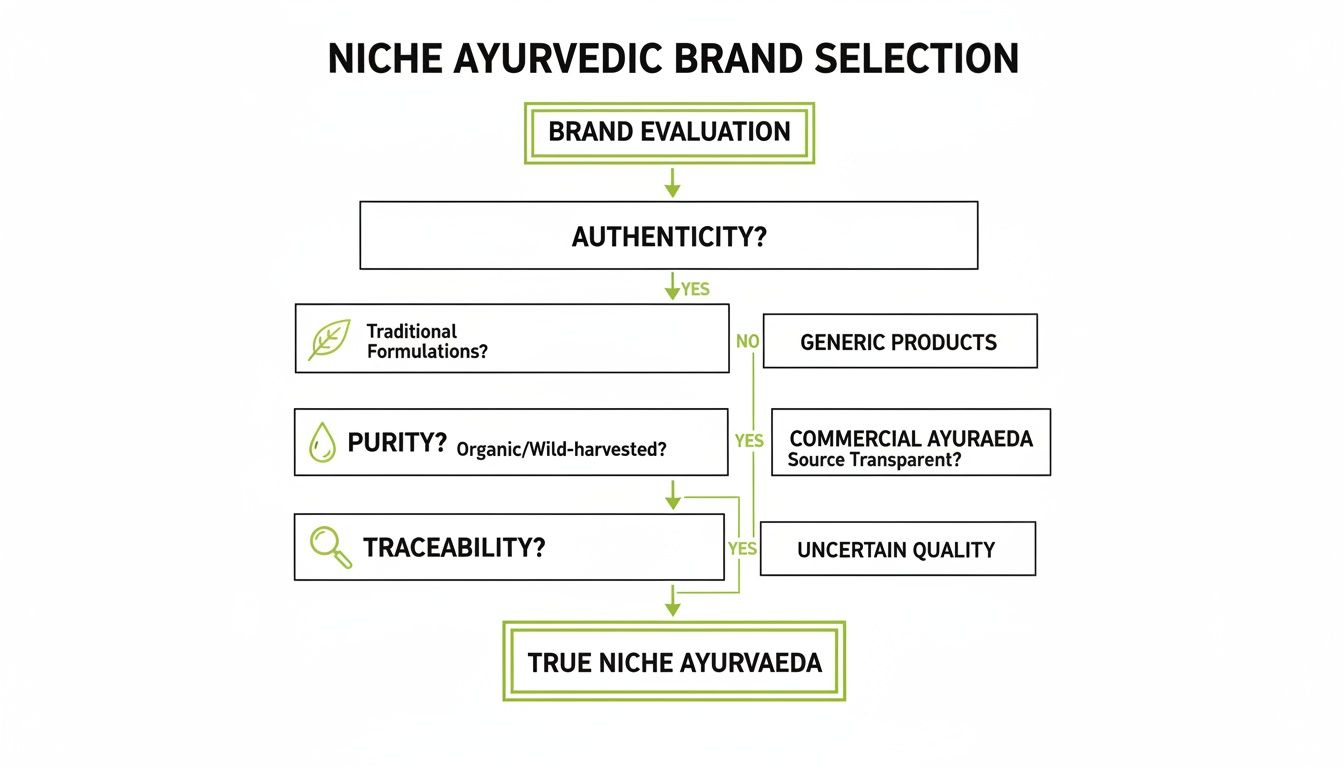
As you can see, finding a genuinely specialised brand means prioritising authenticity, purity, and traceable sourcing—things that matter deeply when you’re serious about your health.
Let's break that decision down into a few key questions you can ask yourself:
General Wellness vs. Targeted Therapy? For daily immunity, a widely available product is perfectly fine. But for something specific like reproductive health, a brand with a specialised, potent formula is simply going to be more effective.
Accessibility vs. Premium Sourcing? The big names offer convenience and low prices. Niche brands might cost more, but you're paying for the assurance of organic, single-origin herbs and a farm-to-bottle promise.
Mass Production vs. Artisanal Quality? Large-scale manufacturing is great for consistency and availability. However, smaller, artisanal batches often mean higher potency because they follow more traditional, careful preparation methods.
"The effectiveness of Ayurveda lies not only in the herbs themselves but in their purity and the personalised wisdom guiding their use. True wellness begins with transparency, from the soil where the plant grows to the consultation that matches it to your unique constitution."
In the end, the best brand is the one that clicks with your health goals and personal philosophy. If you feel your wellness journey needs more than just a standard product, exploring your options is the first crucial step.
For truly tailored advice, nothing beats an expert Ayurvedic doctor consultation. That personalised guidance can bring real clarity, ensuring your choices are perfectly matched to your body's unique needs. It’s often the missing piece of the puzzle.
JJ Herbals and the Farm-to-Bottle Difference

While the legacy brands offer easy access and newer players focus on niche purity, there's another model making waves—one built on complete vertical integration. This is where a company owns every single step of its production line. Among the top Ayurvedic brands in India, JJ Herbals truly embodies this powerful farm-to-bottle philosophy.
Instead of buying herbs from various suppliers, JJ Herbals grows its own key ingredients, like organic Mucuna Pruriens, right on its farms in Kerala. This isn’t just a charming backstory; it’s a non-negotiable commitment to quality control. It means the brand can guarantee that every plant is grown without pesticides, harvested at its most potent stage, and processed under meticulous supervision.
This deep level of oversight speaks directly to what today’s health-conscious consumer is looking for: absolute transparency. When you know exactly where your supplement originates—right down to the soil it grew in—it builds a foundation of trust that mass-market products struggle to replicate.
Specialised Focus on Vitality and Reproductive Health
JJ Herbals channels this passion for purity into a very specific area of wellness. The brand concentrates on creating formulations to support reproductive health, enhance stamina, and bring back a sense of vitality for both men and women. This targeted strategy allows them to develop potent, effective supplements that tackle modern lifestyle issues head-on.
Their signature product, Success Plus, is a perfect illustration. It's not a generic health tonic but a precision-engineered formula combining their farm-grown Mucuna Pruriens with other essential herbs, vitamins, and minerals. This specialisation has earned them over 20 years of customer trust and a dedicated following among people seeking natural ways to boost their energy and performance.
The true difference in a farm-to-bottle model is accountability. By managing the entire supply chain, a brand takes full responsibility for the purity and potency of its products, eliminating the quality uncertainties often found in complex, multi-layered supply networks.
Personalised Guidance a Key Differentiator
Perhaps the most unique thing about JJ Herbals is the emphasis it places on personalised care. Ayurveda has never been a one-size-fits-all discipline, and recognising this, the brand offers free consultations with experienced Ayurvedic doctors. This service is a genuine game-changer, giving customers tailored advice to make sure the supplements are a perfect match for their individual health needs and constitution (prakriti).
This personal touch, combined with a direct-to-consumer sales model, shows a sharp understanding of the modern wellness landscape. With India's social media user base expected to hit around 491 million in early 2025, digital platforms are essential for brands to build real relationships with their customers. JJ Herbals uses this connection not just to sell but to provide authentic, expert-led support—something you rarely find with larger corporations.
You can explore the full range of JJ Herbals products to see how this approach is applied. This direct engagement is part of a bigger market shift where B2C sales are predicted to capture over 60% of the market share. You can read more about this shift in the Ayurvedic market and what it means for consumers.
Your Questions About Ayurvedic Brands, Answered
Stepping into the world of Ayurveda often sparks a few questions, especially when it comes to choosing products for your health. Getting straightforward, practical answers is the best way to feel confident in your decisions. Here, we tackle some of the most common queries people have about India's top Ayurvedic brands.
Making an informed choice means you get the most out of these ancient wellness practices. A little knowledge about certifications, safety, and the types of formulas out there goes a long way.
How Can I Be Sure an Ayurvedic Product is Authentic?
Verifying a product’s authenticity is crucial for your safety and for getting the results you want. The first place to look is for quality certifications. Stamps like GMP (Good Manufacturing Practice) or ISO tell you the brand follows strict, high-quality production standards.
Good brands are also transparent about what’s inside the bottle, providing detailed ingredient lists on their packaging and website. If you see an organic certification, that’s another layer of assurance that you’re avoiding unwanted pesticides and chemicals.
Traceability is really the new benchmark for trust. Brands that manage their entire supply chain—from growing the herbs to bottling the final product—offer the highest level of assurance. This farm-to-bottle model leaves no room for doubt about ingredient quality and purity.
Beyond the official labels, it's always a good idea to check out customer reviews and testimonials. They give you real-world insight into how a product actually works and whether the company is reliable.
Are Ayurvedic Products Safe for Everyone?
Just because they come from natural sources doesn't mean Ayurvedic products are a one-size-fits-all solution. These are potent formulas, and their effects can be very different depending on your unique body constitution (your prakriti), any health conditions you have, or other medications you might be taking.
This is why a generalised approach isn't always the safest bet. It is always a good idea to have a chat with a qualified Ayurvedic practitioner before starting any new regimen. They can make sure the product you’re considering is a good match for your specific health needs and won’t cause any unwanted interactions. Think of it as an essential safety check for your wellness journey.
What’s the Difference Between Classical and Proprietary Formulas?
Knowing the type of formulation helps you pick a product that aligns with what you're looking for.
Classical Formulas: These are the traditional recipes you'll find documented in ancient Ayurvedic texts like the Charaka Samhita or Sushruta Samhita. They are time-tested and true. Many different companies produce these classic formulations, like Triphala or Chyawanprash, by following the same foundational recipe.
Proprietary Formulas: These are unique formulations developed and owned by a single brand through its own research. They often blend traditional herbs with modern scientific understanding to address specific, modern health needs, like boosting vitality or supporting reproductive health. You'll only find these proprietary formulas from the brand that created them.
At JJ Herbals, we bring together the best of both worlds—timeless wisdom and rigorous modern quality control. Our farm-to-bottle approach guarantees unmatched purity in our specialised wellness formulas. See the difference for yourself by visiting https://www.jjherbals.com.
Comments